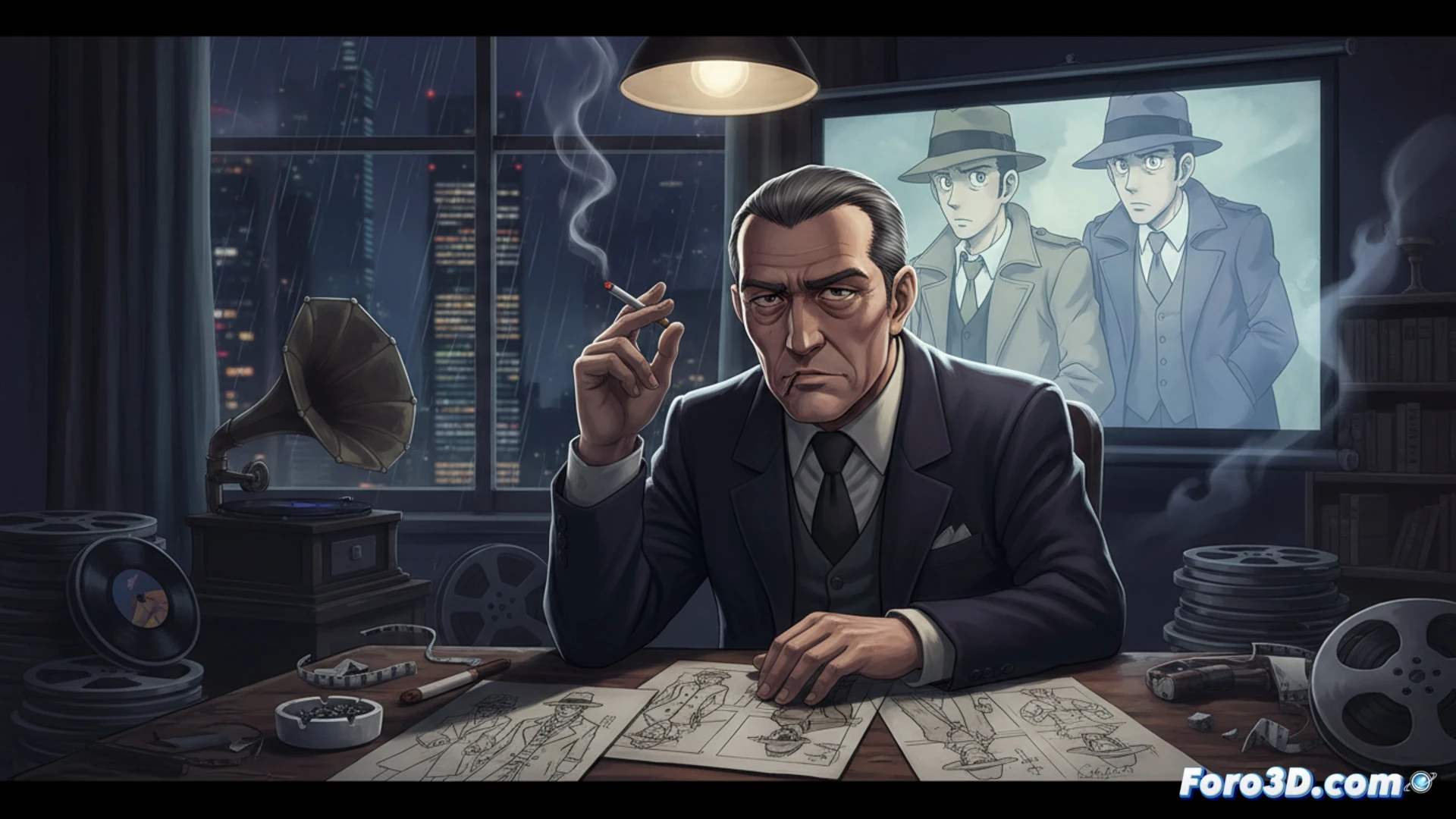
Before Lupin III became the charming thief we all know, there was a man named Masaaki Osumi who tried something different. As the franchise's first director, his vision was darker, influenced by French film noir and jazz. He wanted a sophisticated and cynical tone. The television network did not look favorably upon it and considered it too adult for the era.
Animation that clashed with TV's limits 🎬
Osumi applied high-contrast lighting techniques and film noir framing in the early episodes of Lupin Part 1. His team used more detailed backgrounds and a muted color palette, moving away from the bright style of other anime. However, production was unstable: tight budgets and the weekly broadcast schedule forced changes. The studio's management wanted something lighter to attract children, which created constant tensions.
When jazz and cynicism don't sell cereal 🎷
It turns out that making an anime about a thief who smokes and flirts with femme fatales while a saxophone plays was not what the executives had in mind for Saturday afternoons. Osumi wanted sophistication; the network wanted to sell toys. In the end, they replaced him with a more accommodating director. But hey, at least he left a couple of episodes where Lupin looks like a depressed French spy instead of a cartoon character.