The New Scientist book club delved into Red Mars by Kim Stanley Robinson in April. The experience was positive, though with some reservations. This science fiction novel stands out for its detailed and plausible description of the terraforming of the red planet, as well as the depth of its characters and the complex political and social dynamics among the first colonists.
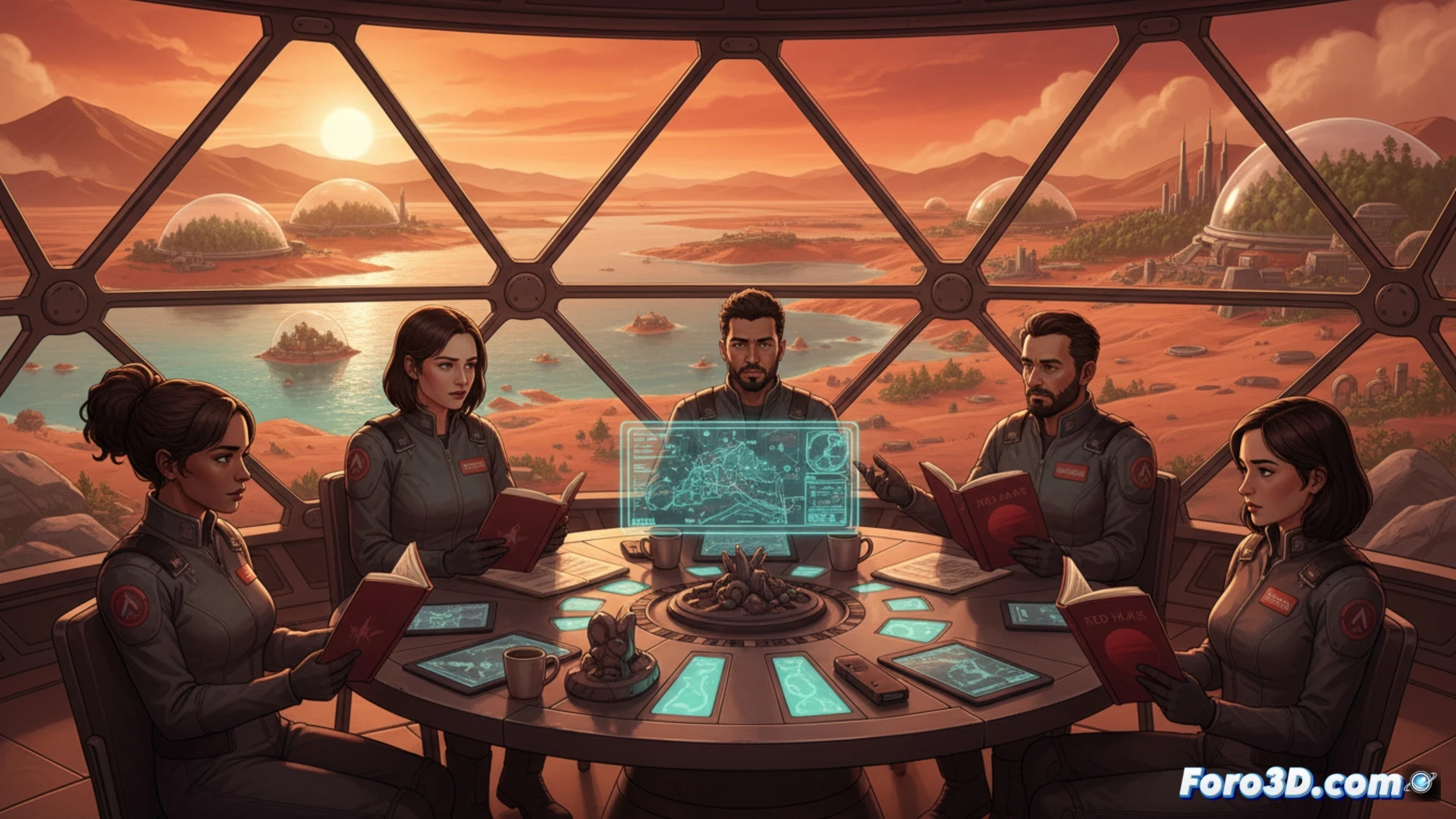
The art of turning a frozen desert into a garden 🌱
Robinson spares no technical detail in explaining how to warm Mars, release its atmosphere, and generate a water cycle. From installing orbital mirrors to introducing modified bacteria and lichens, each step is grounded in real science. The colonists debate the ethics of altering an entire world, facing ecological dilemmas and resource control issues. The novel thus becomes a manual of planetary engineering, where technology is the engine of social change.
When your dome neighbors are a pain 😅
Because yes, you have a state-of-the-art spacesuit, but you still have to deal with the one who doesn't clean up their waste or the one who wants to impose their religion on the colony. Martian politics is a high school drama with murders and revolutions. Robinson reminds us that no matter how advanced technology gets, humans are still experts at making life complicated, even 225 million kilometers from Earth.