In the vast Marvel universe, few characters encapsulate the struggle against oppression as well as Marionette, Princess Mari. Created by Bill Mantlo and Michael Golden, this warrior leader of the Microverse is not only an expert in military tactics but also the symbol of resistance against the tyrant Baron Karza. Her original design, with functional armor and a defiant posture, transcends the page to become an icon of rebellion. Today, in the era of 3D modeling and digital art, her figure offers a perfect canvas for exploring narratives of visual activism.
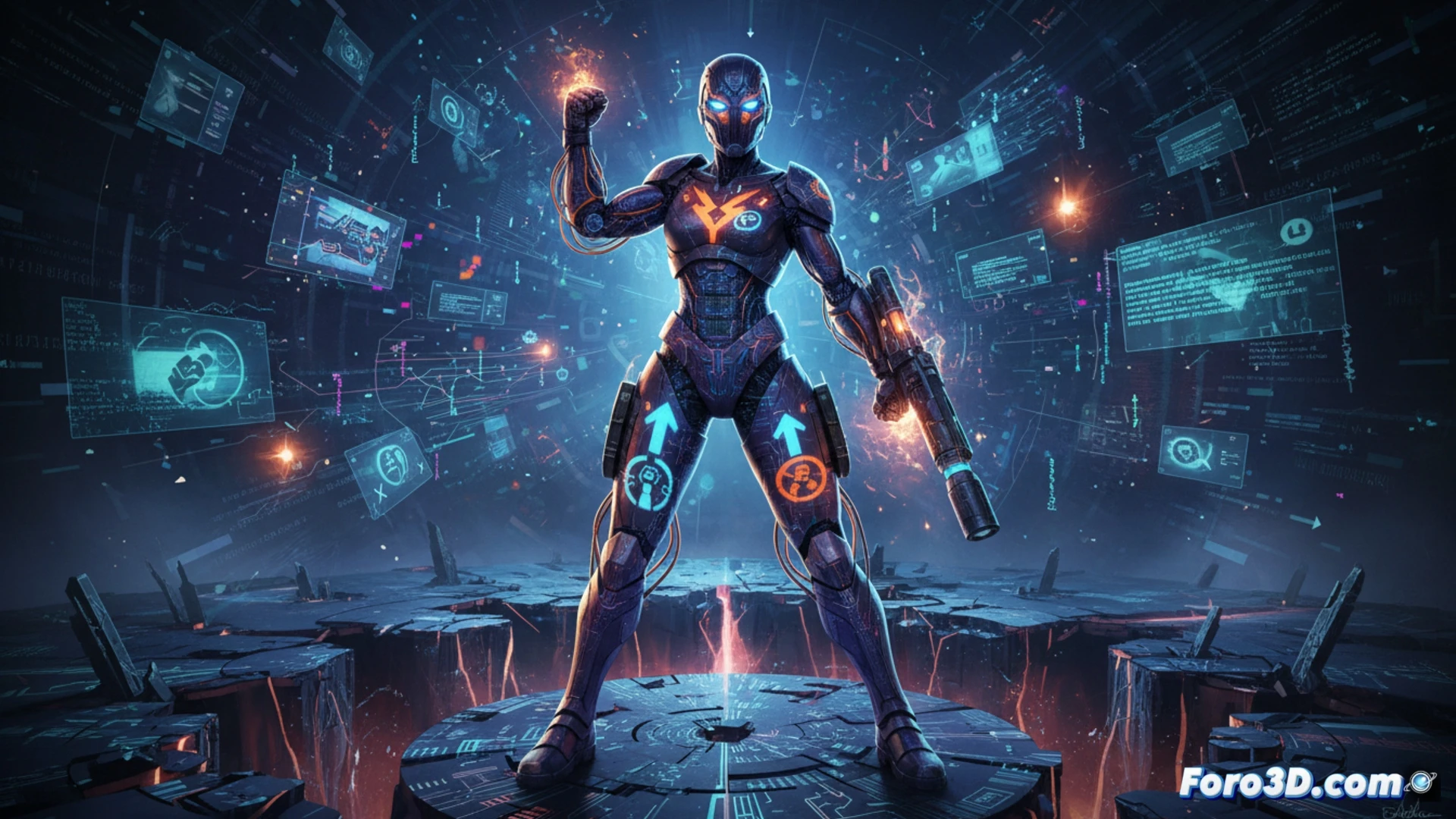
Technical Reinterpretation of Michael Golden's Design 🛡️
Michael Golden's art is characterized by dynamic lines and a sense of movement that defies rigidity. To translate Marionette into the 3D environment, capturing that energy is crucial. The modeling must prioritize the silhouette: a light yet imposing breastplate that reflects her agility in combat. The metallic textures, with wear and scratches, tell the story of a warrior who has endured battles. From the perspective of digital activism, each polygon can serve to amplify her message; an upright pose with sword raised is not only aesthetic but a political statement. The lighting, with hard shadows, reinforces the tension between the light of resistance and the darkness of tyranny.
The Microverse as a Metaphor for Contemporary Struggle 🌌
The Marvel Microverse is not just a science fiction setting; it is an allegory of power systems. Marionette, by leading a resistance against an authoritarian regime, embodies the struggle of any oppressed collective. In contemporary 3D art, her figure can be recontextualized to speak about censorship, surveillance, or inequality. By rendering her armor with materials that simulate digital wear, or by placing her in post-apocalyptic scenarios, artists can connect her story with current social movements. Thus, 3D modeling ceases to be a mere technical exercise and becomes a tool of visual activism, where each render is a cry for freedom.
How can the 3D design of a character like Marionette become a tool of digital activism to make visible the resistance against oppression in marginalized communities
(PS: digital political art is like an NFT: everyone talks about it but nobody really knows what it is)