The democratization of domestic art has found a new ally in electronic ink frames. While the Samsung Frame TV promises to be a television that disguises itself as a painting, devices like the InkPoster demonstrate that true specialization lies in low power consumption and visual fidelity. After six months of continuous use, an e-ink frame proves to be more efficient and aesthetically purer than any LCD screen attempting to simulate a canvas.
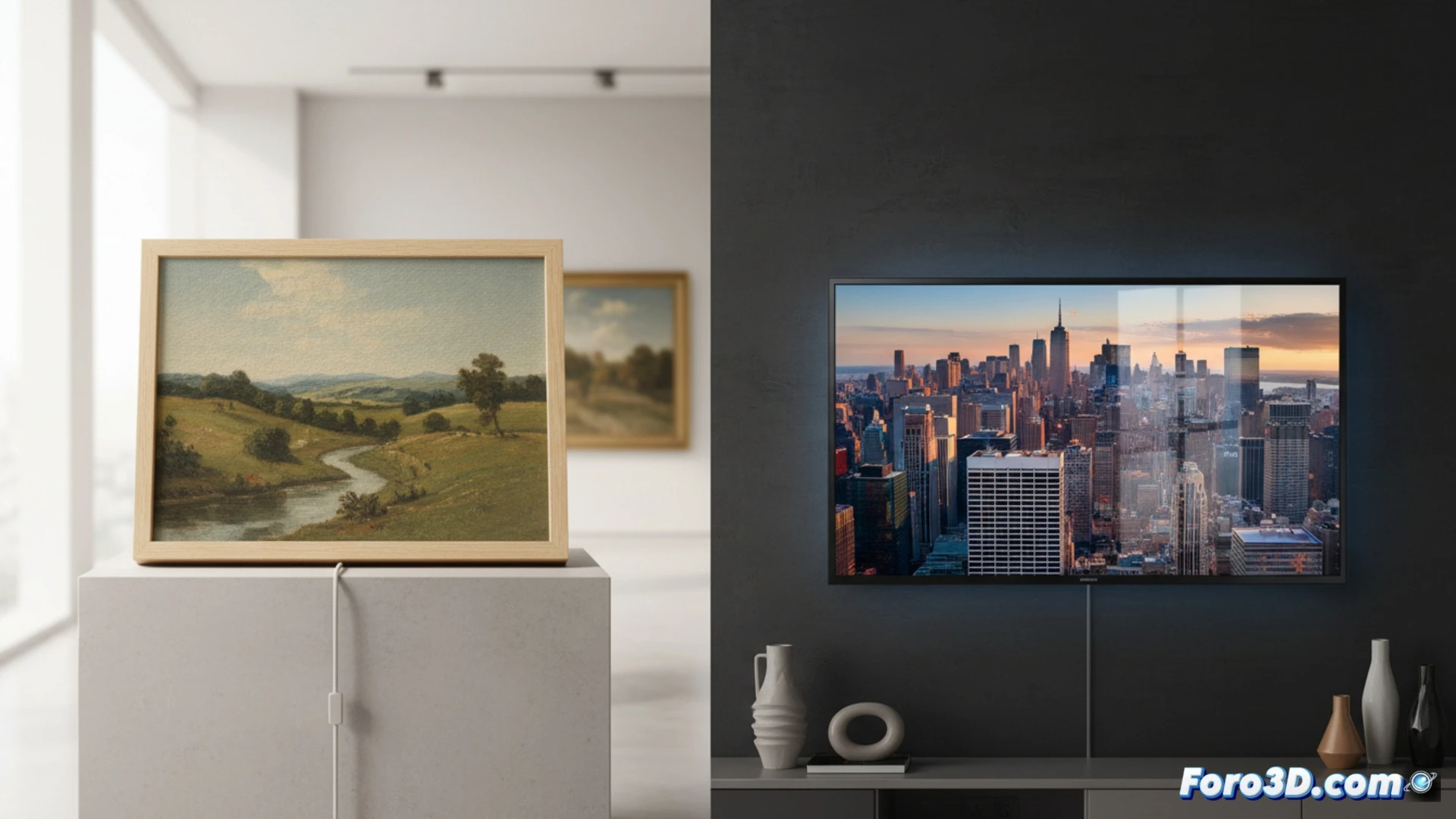
Technical analysis: energy consumption and visual experience 🖼️
E-ink technology consumes energy only when changing the image, allowing a battery to last for months. In contrast, the Samsung Frame TV, being a backlit LCD panel, requires constant electricity even in art mode. Furthermore, the matte surface and the absence of backlighting on the InkPoster eliminate reflections and eye strain, replicating the texture of paper. For the digital activist concerned about the ecological footprint, the e-ink frame represents a sustainable option, while the Frame TV remains an appliance disguised as a gallery. The technical specialization of e-ink makes it the ideal tool for a home curation without multimedia distractions.
The dilemma of functional art: gallery or screen? 🤔
The dilemma is not technical, but philosophical. Someone seeking a device that displays art permanently and with low impact will choose an e-ink frame like the InkPoster, which offers classic collections and a contemplative experience. Someone wanting an all-in-one will sacrifice aesthetic purity for the versatility of the Frame TV. In the niche of art and digital activism, specialization wins: art deserves a medium that does not compete with Netflix, but rather invites reflection and conscious cultural consumption.
Is an e-ink frame that prioritizes low consumption and a static experience more sustainable for digital art, or a hybrid like the Samsung Frame, whose art mode consumes considerable energy resources by being a constantly-on television?
(PS: if your virtual reality setup doesn't change the world, at least let it not lag)