The traditional makeup artist's craft relies on pigments, brushes, and patience. But when it comes to designing a latex effect, a facial prosthesis, or fantasy makeup, 3D technology saves on trial and error. It allows you to model the client's face in software, test textures and colors virtually, and then print exact molds to apply without ruining half a dozen sponges.
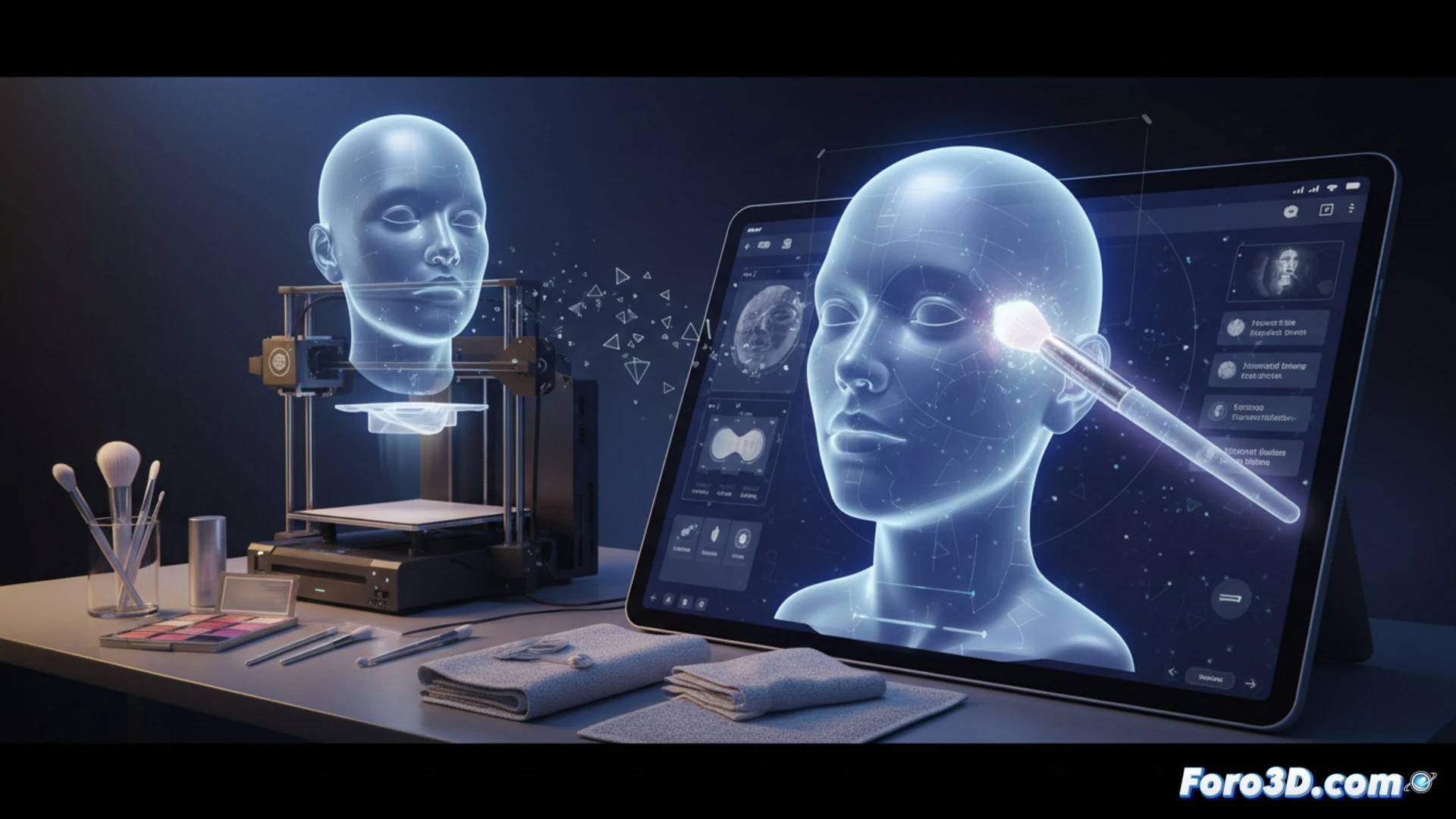
Facial scanning and modeling for hyper-realistic prosthetics 🎭
The process begins with a handheld 3D scanner (like the Revopoint POP 3) to capture the exact geometry of the face. Using programs like Blender or ZBrush, the prosthetic or skin effect is designed. Then, it is exported to slicing software like Chitubox for 3D printing with flexible resin. The result is a mold that fits perfectly. The makeup artist only applies the liquid skin and pigments, reducing adjustment time and touch-ups.
Goodbye to dry putty and plaster on the face 🎨
Before, for a prosthetic nose, the makeup artist would apply wet plaster on the actor, who would cough, laugh, and end up with plaster in their eyelashes. Now, with a ten-minute scan, the software calculates the exact curvature and the printer spits out the mold. The actor just has to sit and wait, without anyone sticking masking tape on their eyebrows. 3D technology doesn't take away talent, but it prevents the makeup artist from having to scrape dry glue off the client's neck.