MapleStory Worlds, formerly known as Project: MOD, has arrived as a creation platform that places the vast visual catalog of the saga in the hands of developers. With a proprietary engine that uses Lua scripting, this Nexon tool allows building everything from minigames to persistent worlds, leveraging thousands of official 2D and 3D assets. For independent creators, it represents a unique opportunity to publish without mastering complex engines.
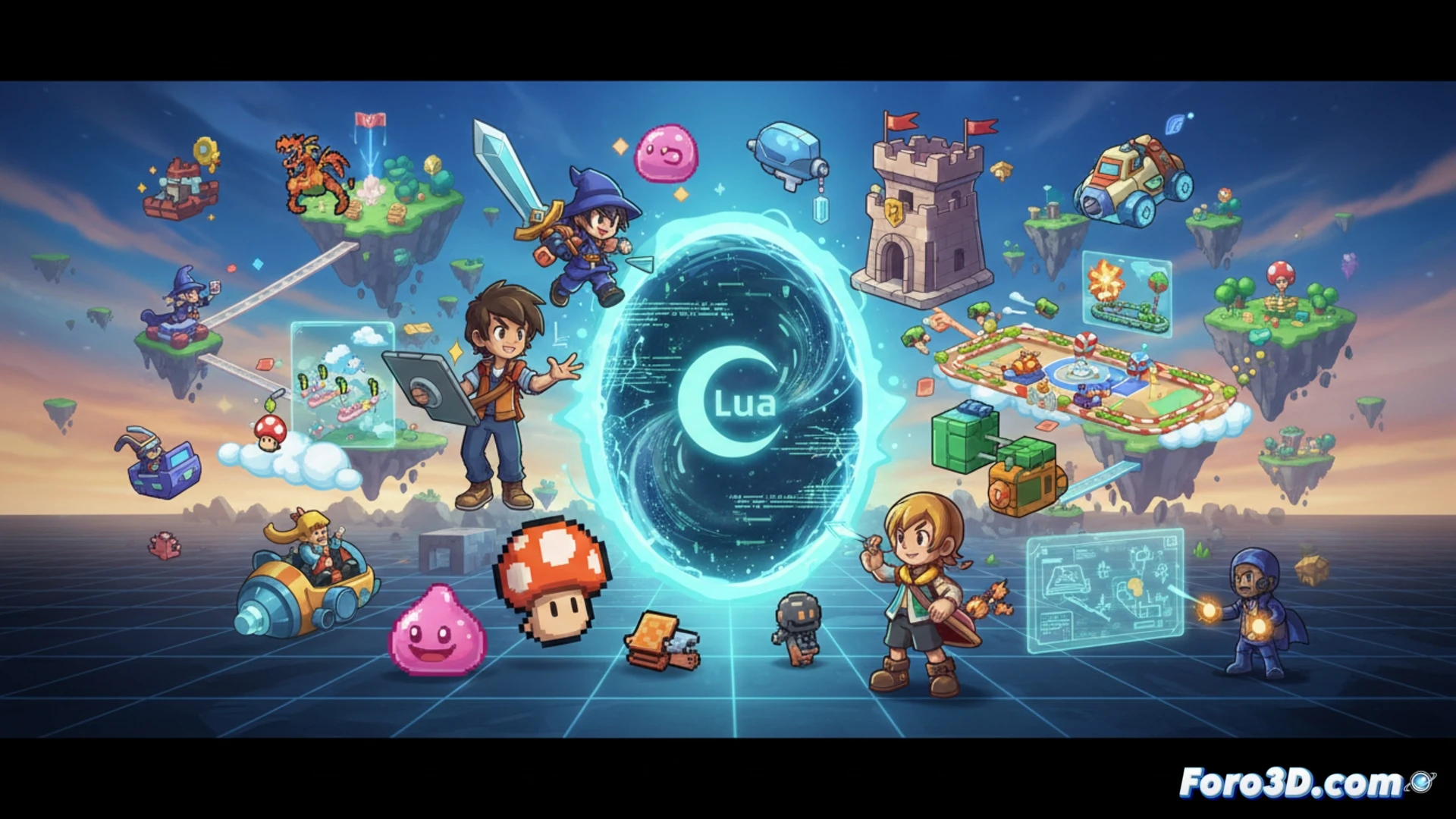
Proprietary engine, Lua scripting, and asset workflow 🛠️
The technical core of MapleStory Worlds lies in its internal editor, which combines a visual object placement system with the power of Lua to define game mechanics. Unlike engines such as Unity or Unreal, here you don't manage shaders or physics from scratch; the proprietary engine already optimizes the rendering of classic sprites and models. The workflow relies on Photoshop to retouch textures or create variants, while Lua scripting allows controlling triggers, events, and server logic. This lowers the entry barrier compared to platforms like Roblox, which requires its own language (Luau) and a closed monetization ecosystem.
A new ecosystem for independent creators? 🎮
Compared to Dreams or Roblox, MapleStory Worlds stands out by offering an already consolidated visual universe and a nostalgic community eager to explore. However, its success will depend on the real flexibility of Lua scripting and Nexon's publishing policy. If it manages to balance drag-and-drop ease with the technical depth developers seek, it could become a perfect bridge between amateur modding and professional video game development.
What technical and creative limitations does the use of Lua in MapleStory Worlds present when trying to implement complex game mechanics that are not predefined by classic assets?
(PS: a game developer is someone who spends 1000 hours making a game that people complete in 2)