In a recent case of a luxury vehicle theft, the forensic investigation moved away from fingerprints to delve into the radio spectrum. The analysis of RF signal shadows made it possible to demonstrate that the owner left the smart key in a blind spot on the facade, facilitating a relay attack. This article breaks down the technical pipeline used to prove the vulnerability, combining GIS tools, 3D modeling, and photorealistic rendering.
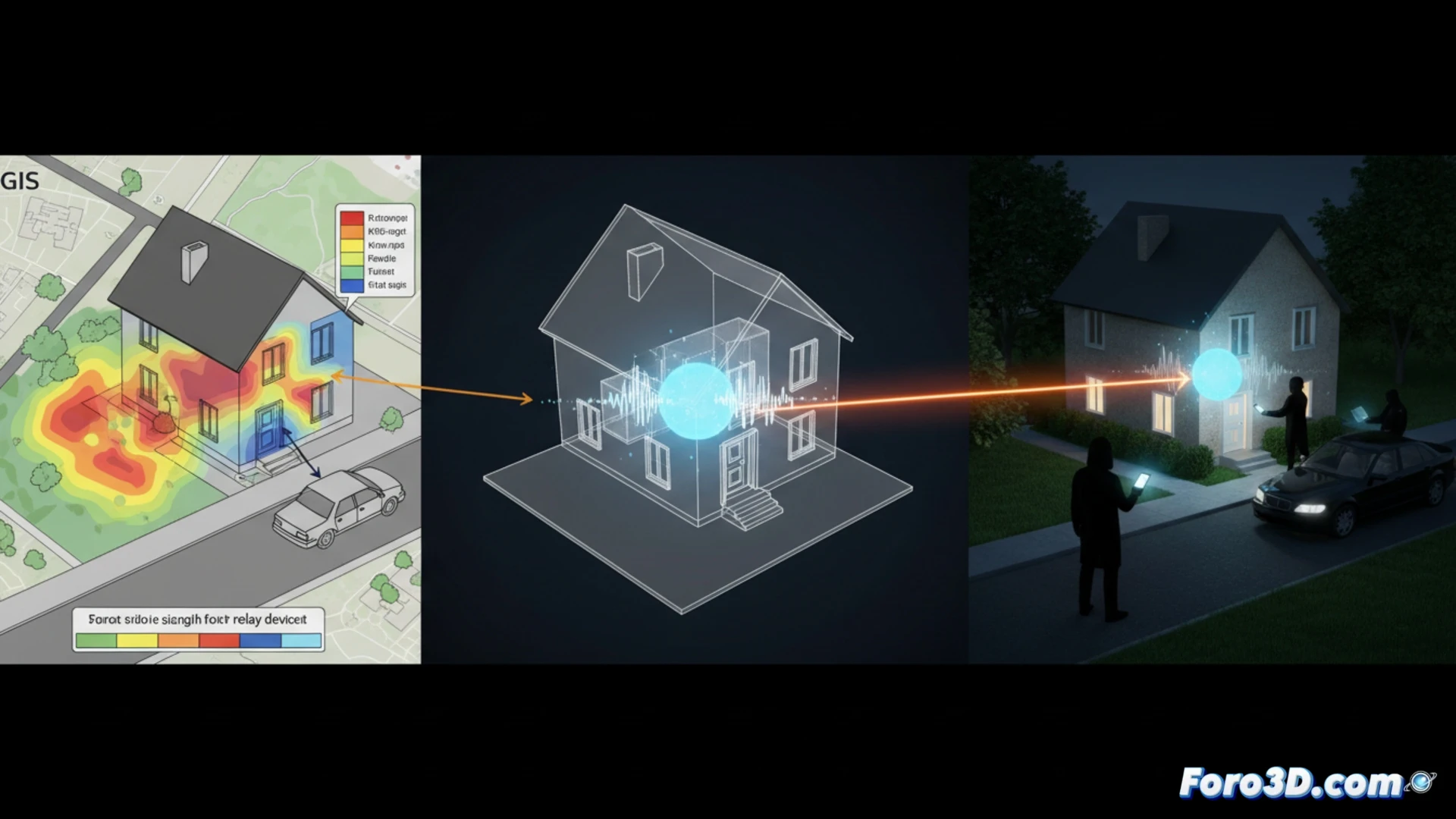
Forensic Pipeline: From RF Capture to Digital Twin 🛰️
The workflow began with capturing signal strength data outside the residence, recording the attenuation caused by walls and street furniture. This data was imported into ArcGIS Pro to generate an RF coverage heatmap, identifying the exact point where the key's signal was strong enough to be relayed. Subsequently, the facade geometry was modeled in SketchUp, integrating the electromagnetic propagation values. Finally, Unreal Engine 5 received the textured model and RF shadow data to recreate the crime scene, allowing visualization of how the thief, positioned on the sidewalk, managed to capture the signal without being detected.
Legal Implications and the New Frontier of Expert Evidence ⚖️
This case sets a precedent in the litigation of technology-related thefts. The recreation in Unreal Engine 5 not only served as a visualization tool for the jury but also allowed experts to demonstrate that the owner was not negligent in placing the key in the hallway, but rather that the architectural design of their home created an unintentional RF lens. For luxury vehicle owners, the lesson is critical: a Faraday key fob is not enough if the signal can bounce off a window. The passive security of the home must now also be audited in the radio spectrum.
What 3D recreation software tools allow for more precise visualization of RF signal paths in a relay theft crime?
(PS: don't forget to calibrate the laser scanner before documenting the scene... or you might be modeling a ghost)