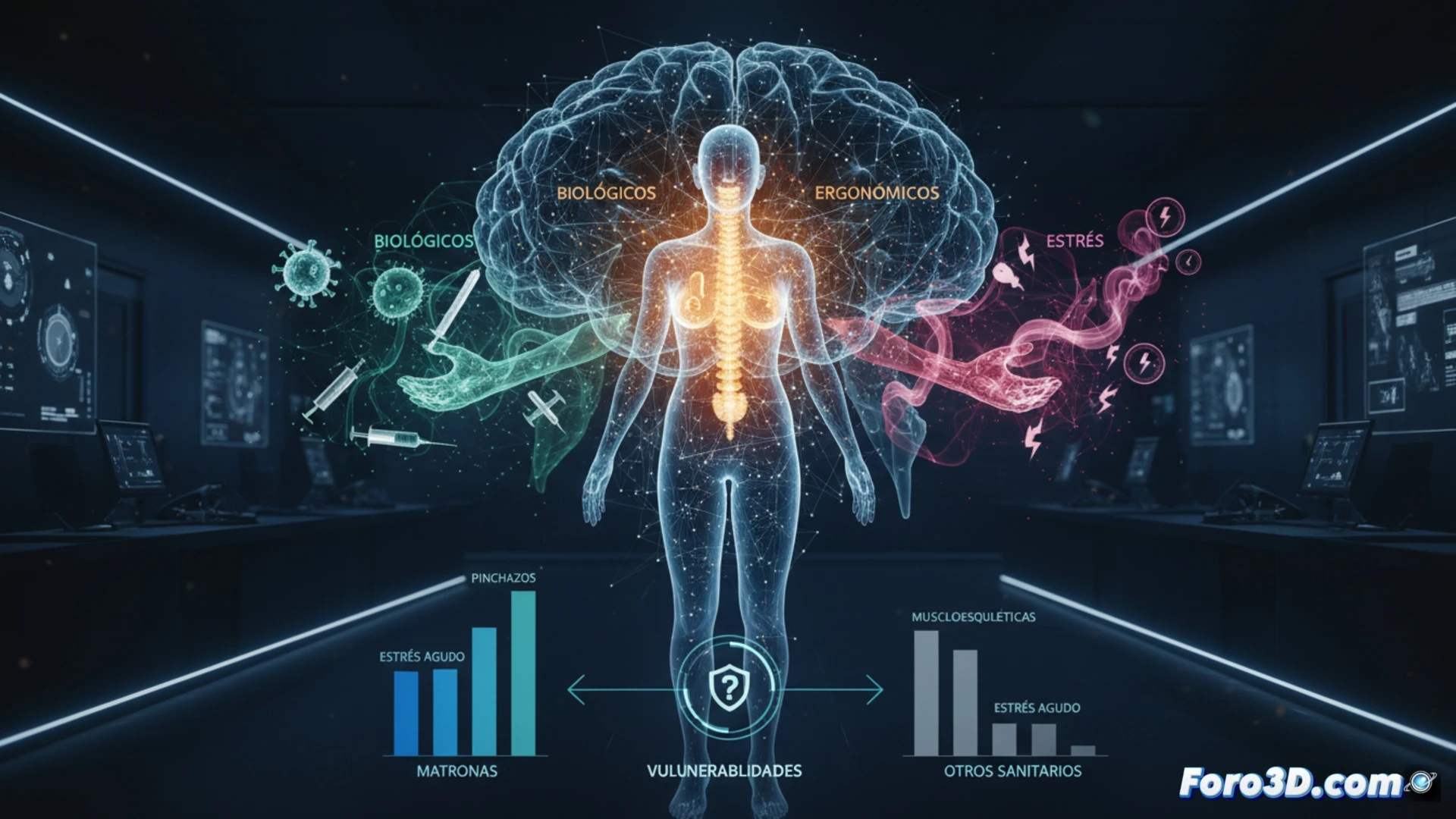
Midwives face a unique combination of occupational hazards ranging from exposure to bodily fluids to fatigue from rotating shifts. This technical analysis proposes visualizing these risks through an interactive 3D infographic, integrating epidemiological data on the incidence of needlestick injuries, musculoskeletal injuries, and episodes of acute stress during obstetric emergencies. The objective is to compare these metrics with other healthcare profiles to identify patterns of vulnerability.
Epidemiological 3D Visualization Methodology 🧬
The infographic will use a dynamic anatomical model to illustrate the most common forced postures during childbirth care, such as prolonged lumbar flexion and repetitive cervical rotation. Heat maps representing the frequency of exposure to biological hazards (blood, amniotic fluid, and secretions) in different body areas will be overlaid on this model. An interactive section will simulate an obstetric emergency scenario (e.g., postpartum hemorrhage), activating indicators of physiological stress and fatigue. Reference data will come from hospital records and occupational health surveys, allowing comparison of the prevalence of musculoskeletal disorders and burnout syndrome in midwives versus surgical nurses and emergency physicians.
Towards Preventive Obstetric Ergonomics 🛡️
The visual representation of these risks not only reveals the high physical and psychosocial burden of the profession but also exposes a gap in preventive training. While anti-needlestick protocols are standardized, stress management from family member aggression or accumulated fatigue from rotating shifts is often underestimated. This 3D approach aims to raise awareness among hospital managers and healthcare equipment designers to integrate specific ergonomic solutions, such as adjustable stretchers or postural support systems, and resilience programs for obstetric emergencies.
How would you show the relationship between obesity and other variables such as socioeconomic status?