Horticulture, despite its bucolic appearance, is a sector with a high incidence of occupational pathologies. Chronic exposure to fertilizers and pesticides, combined with forced kneeling and back postures, creates a complex risk profile that is rarely visualized in an integrated manner. This article proposes the design of an interactive 3D infographic to map these hazards onto a human anatomical model, enabling a visual and quantitative understanding of the physical and chemical wear and tear of the trade.
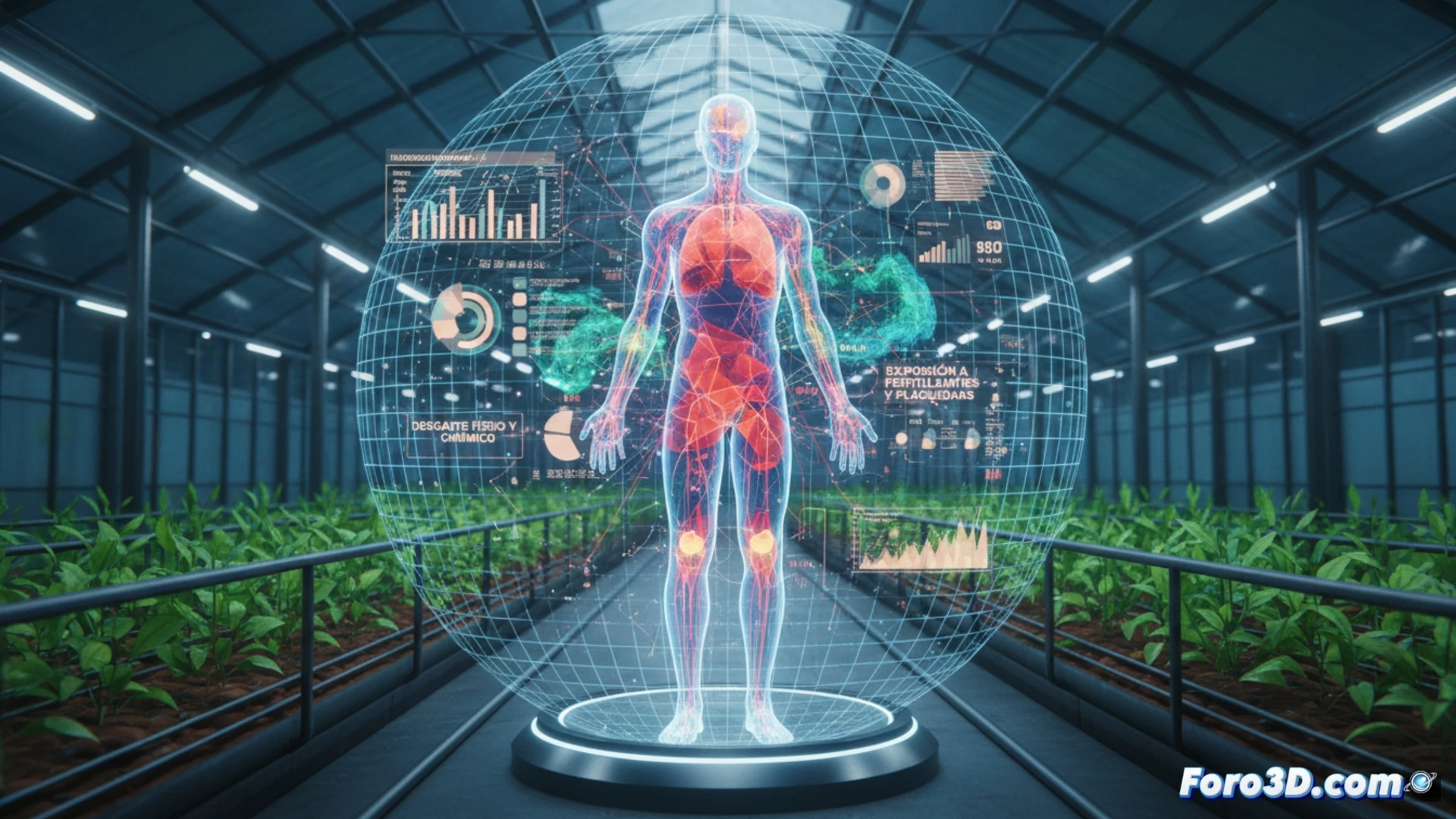
Anatomical Modeling and Visualization of Incidence Data 🧬
The conceptualized tool uses a 3D model of the human body onto which dynamic heat maps are overlaid. The most affected areas are represented with chromatic gradients: the lumbar region and knees light up in intense red to reflect the high incidence of injuries from forced postures, while the respiratory tract and the skin of the hands are tinged with orange to indicate the absorption of allergens and chemicals. The user can rotate the model and click on specific areas to display sectoral statistics, such as the percentage of dermatitis from contact with the soil or the rate of cumulative musculoskeletal disorders. Motorized tools are represented as risk nodes that, when selected, show data on cuts and vibration.
Visualizing Damage to Prevent It 🛡️
Beyond a mere representational exercise, this 3D infographic seeks to change the perception of risk in the sector. By materializing the consequences of prolonged exposure to pesticides and allergens in a virtual body, a powerful awareness tool is generated for workers themselves and for occupational health managers. The goal is that visualizing the incidence of injuries in critical areas like the back and knees will drive the adoption of preventive measures, from using ergonomic knee pads to stricter chemical decontamination protocols.
How can 3D risk map models based on visual pathology incidence data improve the prevention of musculoskeletal disorders in horticulture workers?
(PS: at Foro3D we know that the only epidemic affecting us is the lack of polygons) 🎮