The acoustics of a city are not random; they are a digital signature composed of rebounds, absorptions, and diffractions. For a set designer, modeling this signature in 3D is crucial when designing outdoor events. This article explores how acoustic simulation tools allow predicting sound behavior in squares and streets, optimizing the audience experience before setting up a single speaker.
Simulation of Sound Propagation in Urban Environments 🎵
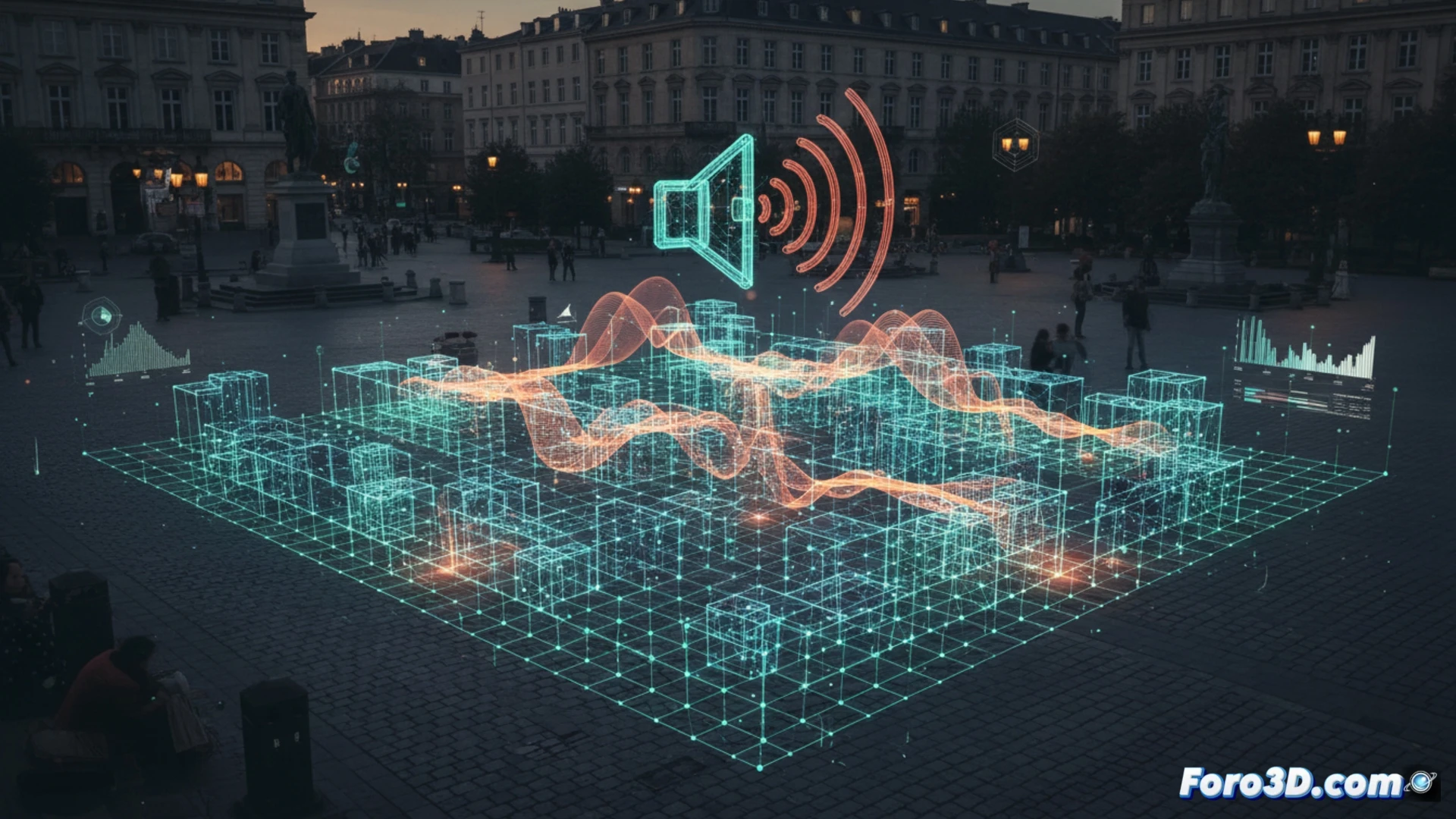
3D modeling of urban acoustics is based on ray tracing algorithms and reflection meshes. By importing a digital twin of a square with glass and concrete buildings, the software calculates how surfaces reflect or absorb frequencies. For example, a glass facade can generate a high-frequency echo, while a vertical garden absorbs low frequencies. This information allows the designer to relocate the stage or adjust the sound system's equalization to avoid dead spots or unwanted reverberations, creating a controlled acoustic bubble within the urban chaos.
Sound as Scenographic Material 🎭
Thinking of acoustics as another material in 3D design changes the game. In music festivals or video mapping, the sound signature of the venue can enhance the visual narrative. A narrow alley can become a dramatic echo chamber, while an open esplanade requires a directional speaker design. By visualizing these dynamics in a 3D environment, the set designer not only places lights and screens but sculpts the sound space, ensuring that every spectator, from the front row to the last corner, experiences the same immersive experience.
How can the unique acoustic signature of a city be translated into 3D mapping data that allows a set designer to recreate the sound atmosphere of a specific urban space on a physical stage?
(PS: architectural mapping is like putting Instagram filters on a building)