A team from the Catholic University of Louvain has developed a body map of hangovers using a mobile application that monitored 34 young adults in real-world drinking environments. Far from being simple dehydration, the results reveal a chemical, immunological, and cognitive collapse that manifests in specific areas of the body. Participants indicated areas of pain, weakness, or numbness in real-time, allowing researchers to correlate subjective symptoms with measurable physiological alterations.
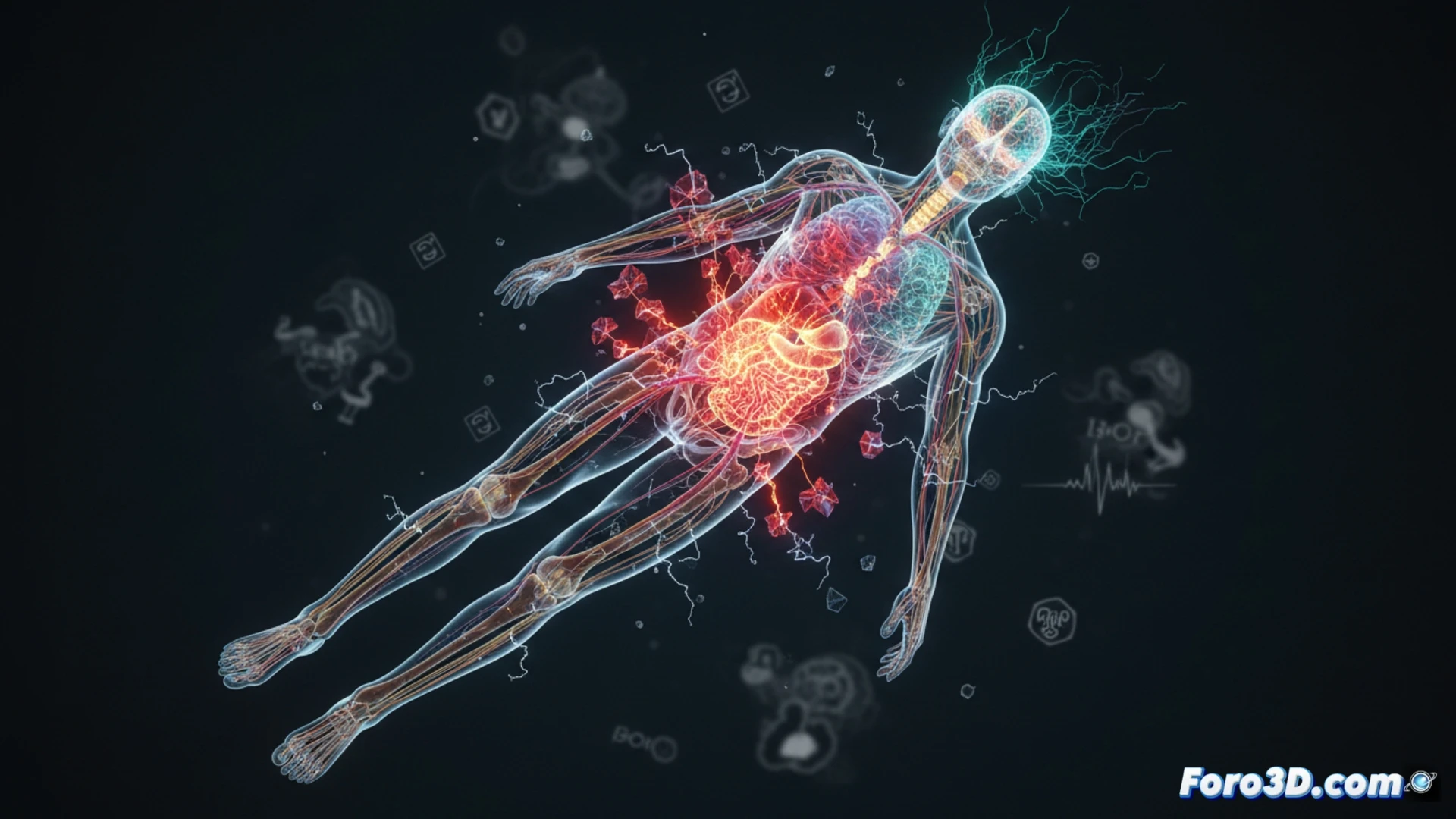
Physiological visualization and symptomatological modeling 🧠
The collected data shows that pain concentrates in the temples and stomach, with a hyperactivation of gastric motility, while numbness and heaviness affect the limbs. These maps are not merely subjective; they align with changes in heart rate and visceral signals recorded by the application. From a 3D biomedicine perspective, this approach allows overlaying reported symptomatology onto digital anatomical models, creating volumetric representations of the multisystemic response. Monitoring in real-world environments offers an authenticity that laboratory studies cannot replicate, balancing scientific rigor with actual alcohol consumption.
From symptom to model: the future of in-situ monitoring 🔬
This study demonstrates that 3D visualization technologies can transform subjective data into functional physiological maps. By integrating heart rate, intestinal motility, and pain distribution into a single anatomical model, it opens the door to clinical applications for diagnosing intoxications or gastrointestinal disorders. The hangover ceases to be an anecdote and becomes a case study on how the human body responds to complex chemical aggressions, validating the use of digital tools in uncontrolled environments.
How could real-time 3D mapping of bodily collapse during a hangover be applied to develop predictive toxicity models for biomedical drugs?
(PS: If you 3D print a heart, make sure it beats... or at least doesn't cause copyright issues.)