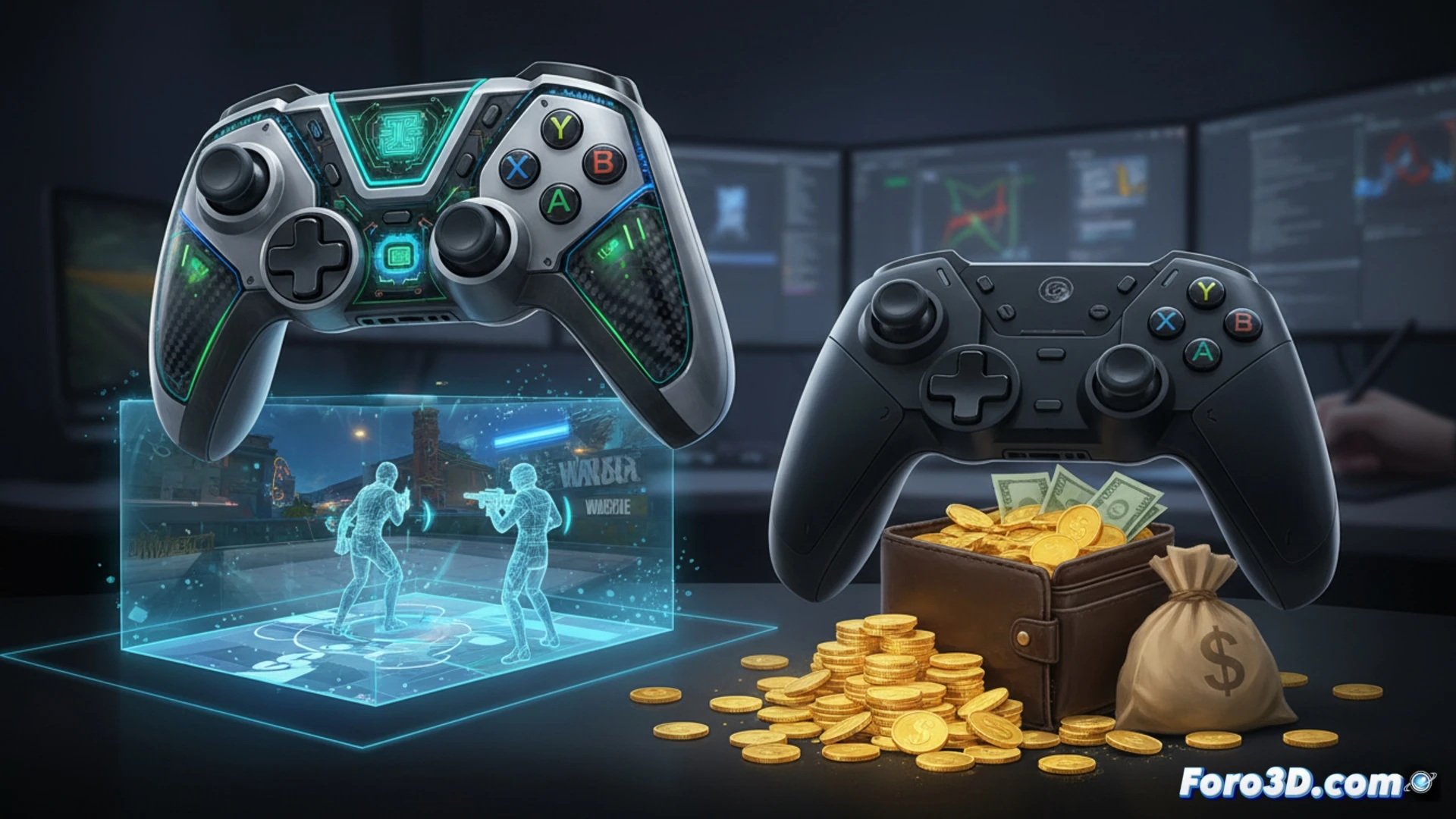
The 200-euro Pro controllers have hit the market promising a decisive advantage in competitive titles like Fortnite or Warzone. With features such as rear paddles, adjustable triggers, and magnetic sensor technology, the question is inevitable: Is this investment worth it for a 3D creator who also seeks precision in their games? We analyze whether the hardware justifies the cost or if it's just a technical luxury. 🎮
Technical Advantages: Hall Effect, Polling Rate, and Reduced Latency 🛠️
The main innovation of these controllers lies in the joysticks with Hall Effect or TMR technology, which eliminate mechanical wear and the dreaded drift, offering far superior durability compared to standard controllers. Additionally, the 2.4 GHz RF connection provides a higher polling rate than Bluetooth, reducing input latency to almost imperceptible levels. The adjustable triggers allow for faster actuation, a tangible advantage in shooting games. For a 3D modeling professional who also games, these improvements in response and precision are comparable to those sought in a high-end mouse for design: less delay, more control, and long-term reliability.
Tool or Crutch? Skill Remains the Key Factor 🧠
Despite the real technical improvements, a Pro controller does not turn an average player into an expert. The latency reduction and drift elimination are advantages that optimize the experience, but they do not replace practice, game sense, or decision-making. For the 3D creator, the analogy is clear: a 500-euro digital pen doesn't draw better than a 100-euro one if there's no talent or hours of work behind it. Therefore, while the investment is justifiable for durability and response, don't expect an expensive controller to improve your level on its own. Skill remains, and will always remain, the most important peripheral.
Can a 200-euro Pro controller reduce input latency enough to make a real difference in reaction time during a Warzone encounter compared to a standard 60-euro controller?
(PS: remember that a powerful GPU won't make you a better modeler, but at least you'll render your mistakes faster)