Mamoru Oshii is the director who transformed anime into a vehicle for philosophical reflection. With Ghost in the Shell, he elevated cyberpunk to an intellectual level, exploring human identity in a technological world. His style, slow and atmospheric, prioritizes contemplation over action. He is not a filmmaker for those seeking fast entertainment; he is a creator who demands patience and attention.
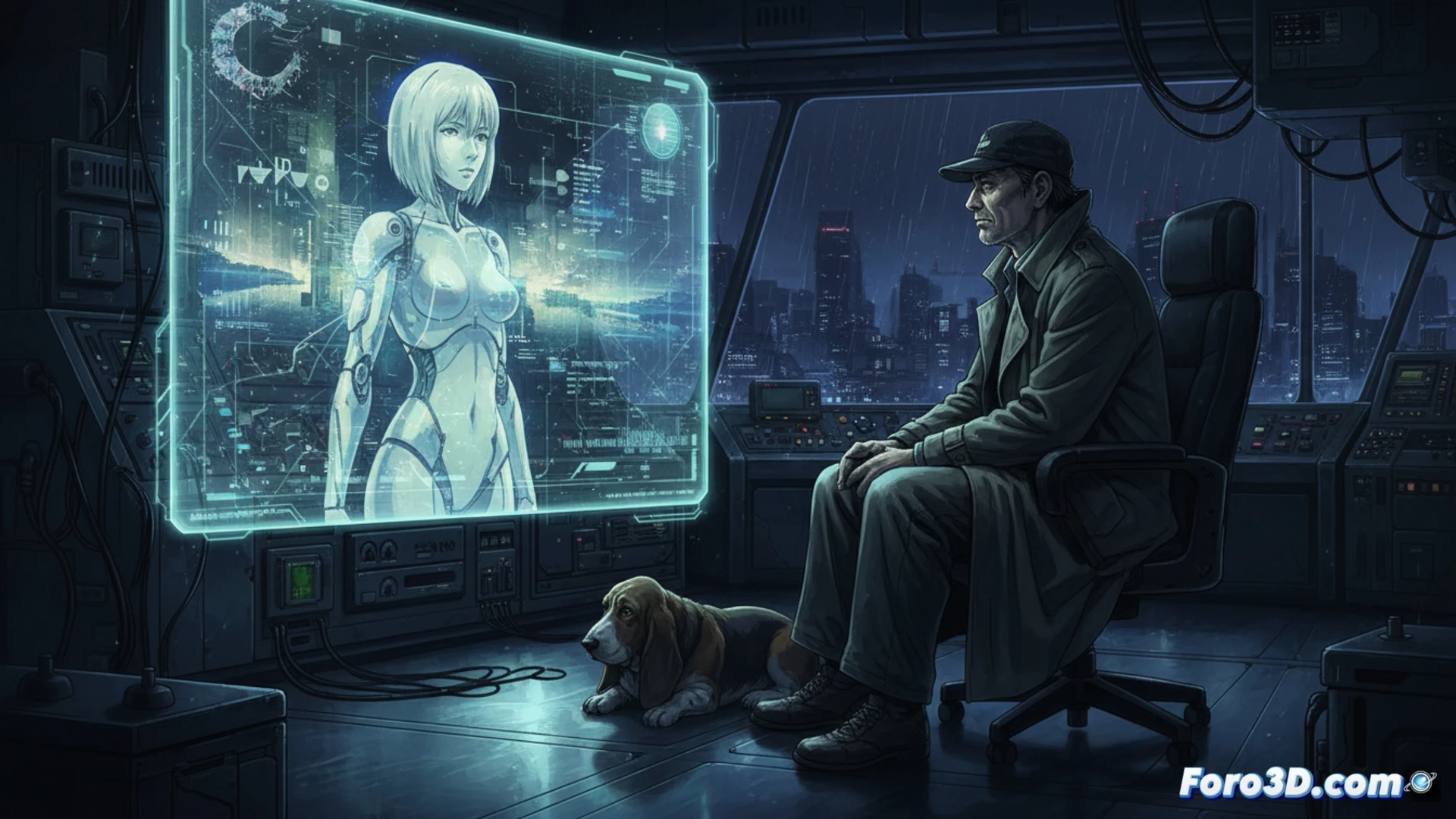
Animation as a canvas for technological philosophy 🤖
Oshii's technical approach relies on the use of detailed backgrounds and long static shots to create an oppressive atmosphere. In Patlabor 2, he employs scale models and traditional animation to portray a militarized Tokyo. His cinema does not depend on constant dialogue; atmosphere and ambient sound are key narrative tools. Animation allows him to build worlds where technology is another character, not just a simple ornament.
Dogs, angels, and other Oshii obsessions 🐕
If something defines Oshii, besides his reflections on consciousness, it is his obsession with basset hounds. They appear in almost all his films, with their droopy ears and sad gaze, as silent witnesses to human chaos. And then there is Angel's Egg, a work so cryptic that probably not even Oshii himself fully knows what it means. Watching it is like trying to solve a riddle while wondering if the director was dreaming.