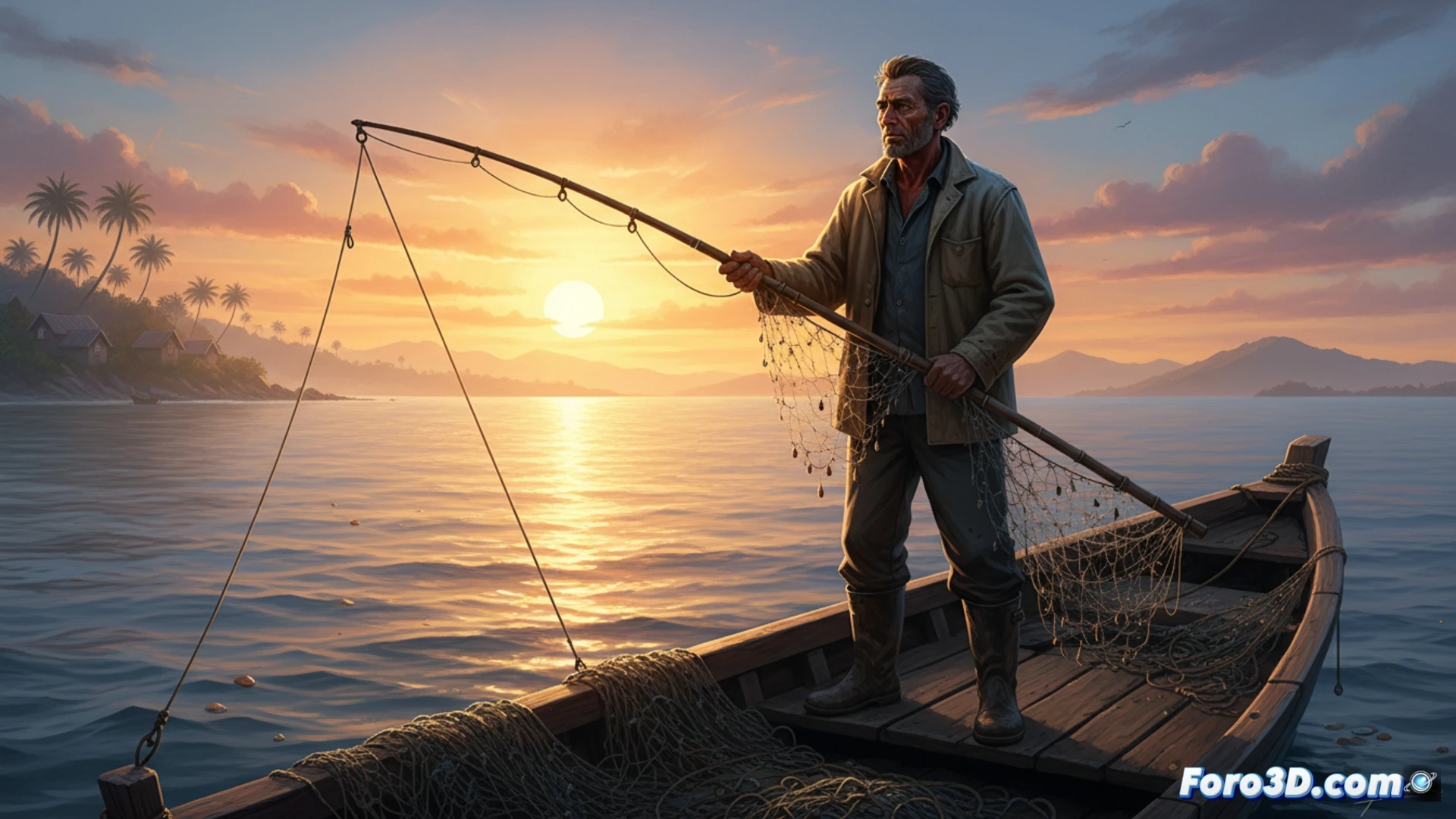
Every summer, thousands of fishermen wake up at 5 in the morning hoping for a big catch. However, reality is stubborn: after hours of waiting, the nets come back empty. Still, the next day they repeat the ritual with the same conviction. What lies behind this routine? Tradition and an almost religious faith that tomorrow will be different. 🌅
The algorithm of hope: why we repeat without results 🎣
From behavioral psychology, this phenomenon is explained by intermittent reinforcement. The human brain, upon receiving a reward unpredictably (like a big fish every ten days), releases dopamine and reinforces the behavior. It is the same mechanism used by slot machines. Fishermen, unknowingly, apply a search-and-error loop without negative feedback. The lack of catches does not cancel the impulse, because the remote possibility of success activates the same neural circuits as a certainty.
Sir, your rod hasn't moved in three hours ☕
The scene is classic: the fisherman, with his thermos of coffee and the patience of a saint, stares at the sea as if expecting a divine message. The water is flat, the fish have gone on vacation, but he remains. He could be sleeping, but he prefers to check that the lack of results is not due to his fishing line. In the end, what he catches is a cold and the certainty that he will return tomorrow. Faith moves mountains, but not fish. 🐟