The craft of luthier combines artistic sensitivity with extreme physical demands. Hours of carving, sanding, and assembly subject hands, wrists, and neck to forced postures and repetitive movements that lead to chronic musculoskeletal disorders. Occupational medicine has identified these risks, but the traditional solution (rest or surgery) clashes with the artisan's need to keep working. This is where additive manufacturing offers a real alternative: customized orthoses that selectively immobilize joints without sacrificing manual dexterity.
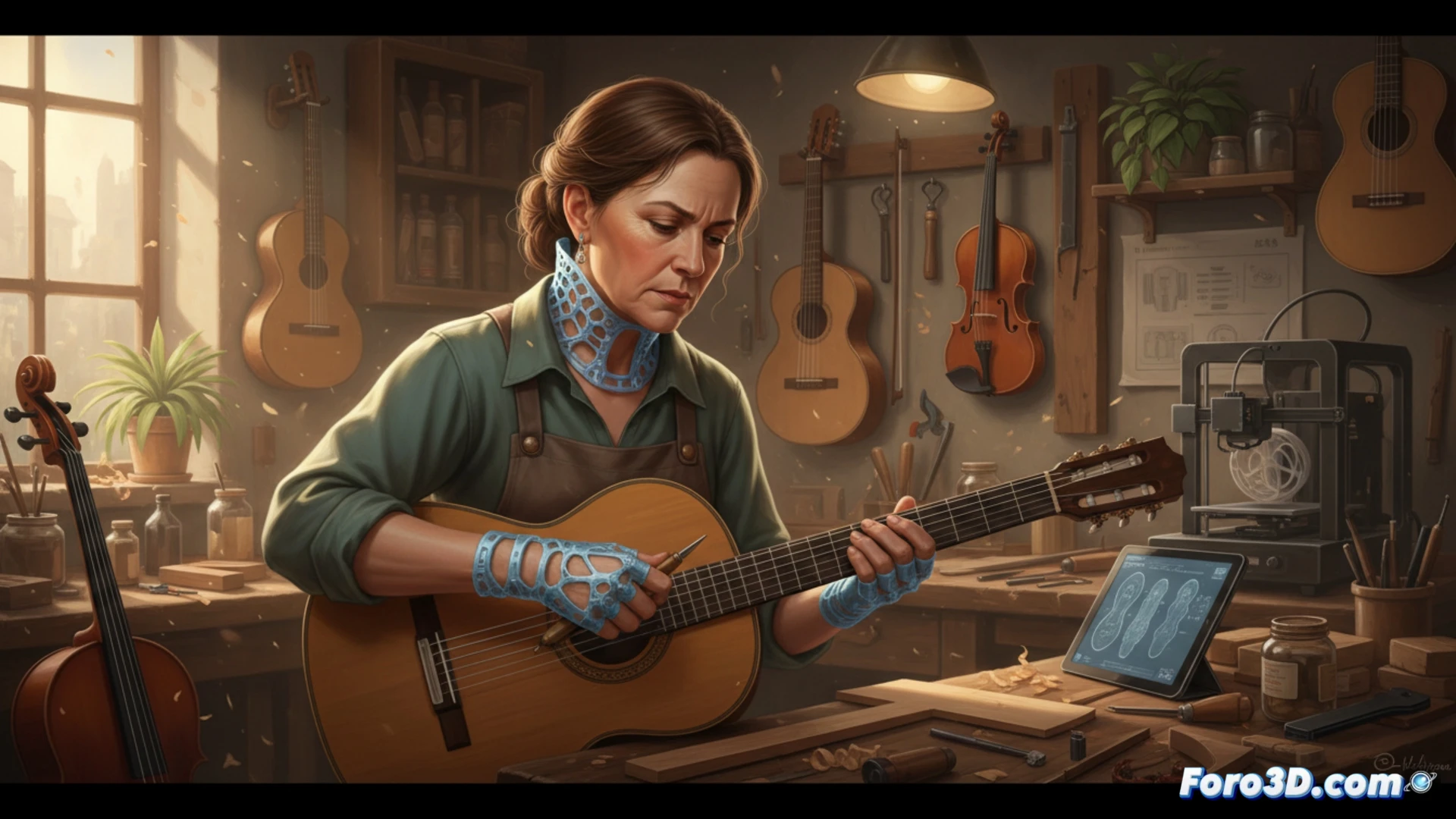
Digitization and parametric modeling for functional splints 🛠️
The process begins with a 3D scan of the luthier's hand in working position, capturing the exact geometry of the fingers and wrist under load. Using parametric modeling software, an orthosis is designed that blocks unwanted lateral movement (ulnar or radial deviation) but allows the controlled flexion needed to hold gouges or saws. Recommended printing materials are flexible TPU filaments (thermoplastic polyurethane) with Shore hardness 85A-95A, offering structural support without absolute rigidity. Ventilation channels are incorporated to prevent sweating during long workdays, and edges are rounded to avoid interfering with the grip of hand tools.
Active ergonomics vs. passivity of conventional treatment ⚙️
Generic pharmacy splints are uncomfortable and limit the luthier's productivity, creating a conflict between health and craft. The custom 3D orthosis resolves this dichotomy by becoming another tool on the workbench. By distributing pressure forces over the palmar arch and relieving neck tension through lightweight cervical supports printed in PLA, visual fatigue and overexertion are reduced. Prevention ceases to be an obstacle and becomes a technical enabler, allowing the artisan to maintain their quality of detail without accelerating joint wear.
How can an orthosis designed through 3D scanning and additive manufacturing prevent the most common chronic injuries in a luthier's hands during manual wood carving?
(PS: 3D prosthetics are so customized they even have fingerprints.)