Luma Dream Machine has burst onto the generative artificial intelligence scene with a promise that until recently seemed distant: producing short video clips where physics and visual coherence achieve surprisingly realistic levels. From a simple text description or a reference image, this tool builds dynamic sequences that respect the lighting, movement, and texture of objects, marking a before and after in the creation of synthetic content accessible to any user.
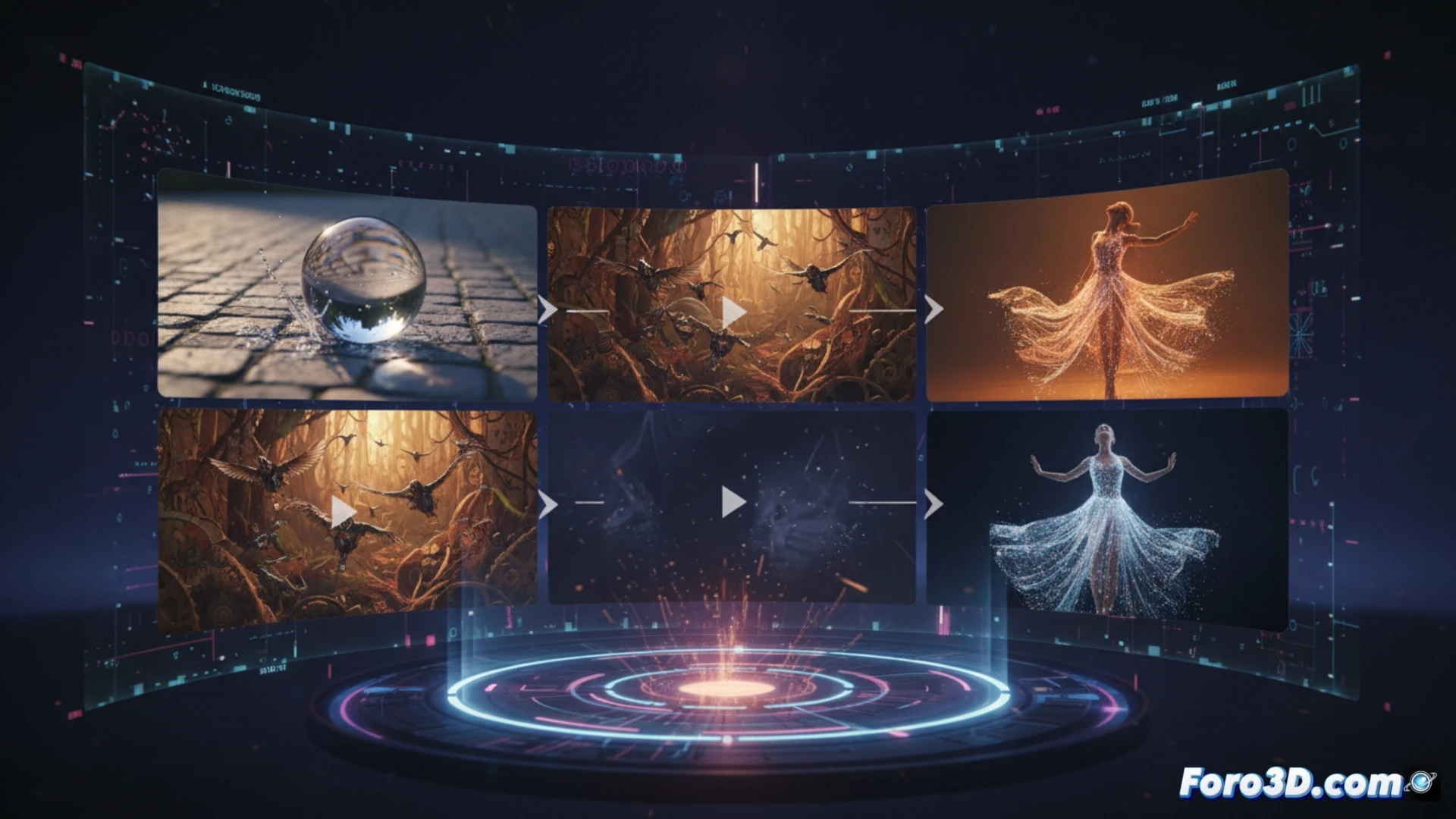
Generation architecture and spatio-temporal coherence 🎬
The technical core of Luma Dream Machine is based on diffusion models trained with large volumes of visual data to understand the laws of motion and perspective. Unlike previous generators that produced abrupt transitions or unrealistic deformations, this system optimizes continuity between frames, simulating particle trajectories, bounces, and elastic deformations with precision. The result is a video where an object thrown into the air follows a believable parabola or a fluid behaves according to basic hydrodynamic principles, raising the quality standard in automatic audiovisual synthesis.
Blurred boundaries and the dilemma of truthfulness ⚠️
The accessibility of Luma Dream Machine democratizes audiovisual production, but also opens a social Pandora's box. Anyone can generate fictional scenes with a documentary appearance, intensifying the risk of misinformation and the erosion of trust in recorded footage. For traditional creators, the tool is both a competitive threat and a new expressive canvas. In this context, digital society faces the urgent challenge of developing authentication systems and visual literacy to navigate an ecosystem where the line between the real and the synthetic becomes increasingly blurred.
How could the democratization of synthetic video through tools like Luma Dream Machine transform our perception of visual truth in digital society?
(PS: moderating an internet community is like herding cats... with keyboards and no sleep)