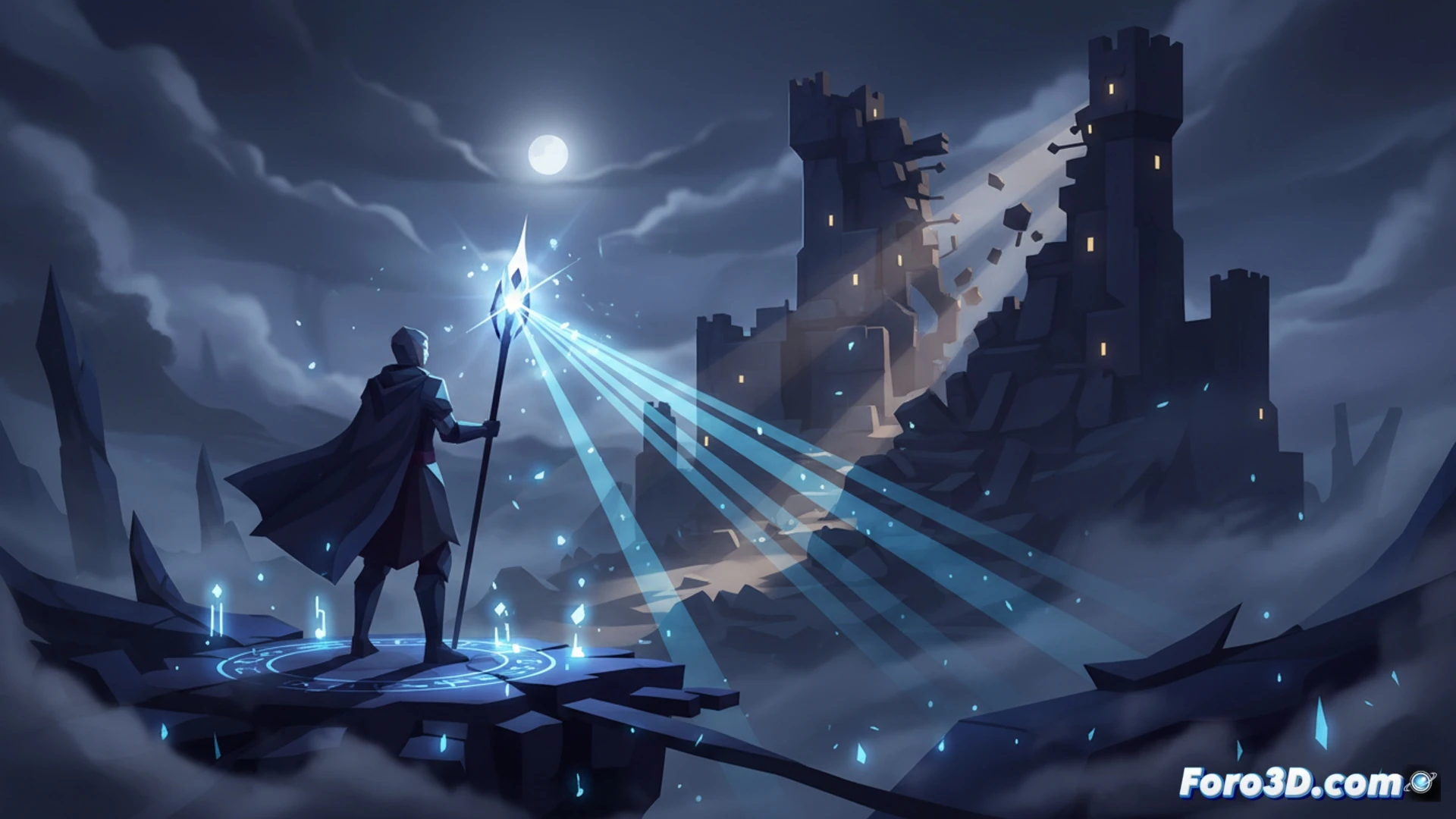
The launch of The Light Brigade in VR demonstrates that low-poly aesthetics are not at odds with a dense and melancholic atmosphere. Developed in Unity, the title achieves a striking visual balance by combining low-resolution models with volumetric lighting and magic particles emerging from misty environments. For independent developers, this approach represents a clear roadmap on how to maximize immersion without sacrificing performance on headsets like Quest or PSVR2.
Volumetrics and Particles: The Soul of Purgatory 🌫️
The technical secret of The Light Brigade lies in the strategic use of volumetric light to create depth in scenes that would otherwise appear flat. In Unity, this is achieved through the Volumetric Fog component from the post-processing package, combined with point lights that pierce through the fog. The magic particles are not mere decorative effects; they act as visual reference points that guide the player's gaze in the darkness. To optimize performance in VR, it is recommended to limit the number of active particles to fewer than 500 per scene and use atlas textures instead of individual materials. It is also crucial to use unlit shaders for low-poly elements, as they ignore dynamic lighting and reduce GPU load.
Lessons for the Independent Developer 🎮
The Light Brigade shows that a small team can visually compete with AAA titles if it prioritizes aesthetic coherence over realism. The limited color palette of grays, blues, and golden highlights focuses the player's attention on interactive elements. For those wishing to replicate this style, Unity offers free assets such as Universal RP and Shader Graph to create custom fog without resorting to expensive plugins. The biggest challenge remains performance: every particle and every light must justify its existence on screen.
How does The Light Brigade manage to combine low-poly aesthetics with a dense and melancholic atmosphere in VR without sacrificing performance or the player's emotional immersion?
(PS: 90% of development time is polishing, the other 90% is fixing bugs)