We analyze the L’Oréal Colorsonic from the perspective of 3D product design. This handheld device for at-home hair coloring integrates an automatic formula mixing system and oscillating nozzles for even application. Its ergonomic casing and complex internal mechanism make it an ideal case study for CAD modeling, photorealistic rendering, and interactive exploded views.
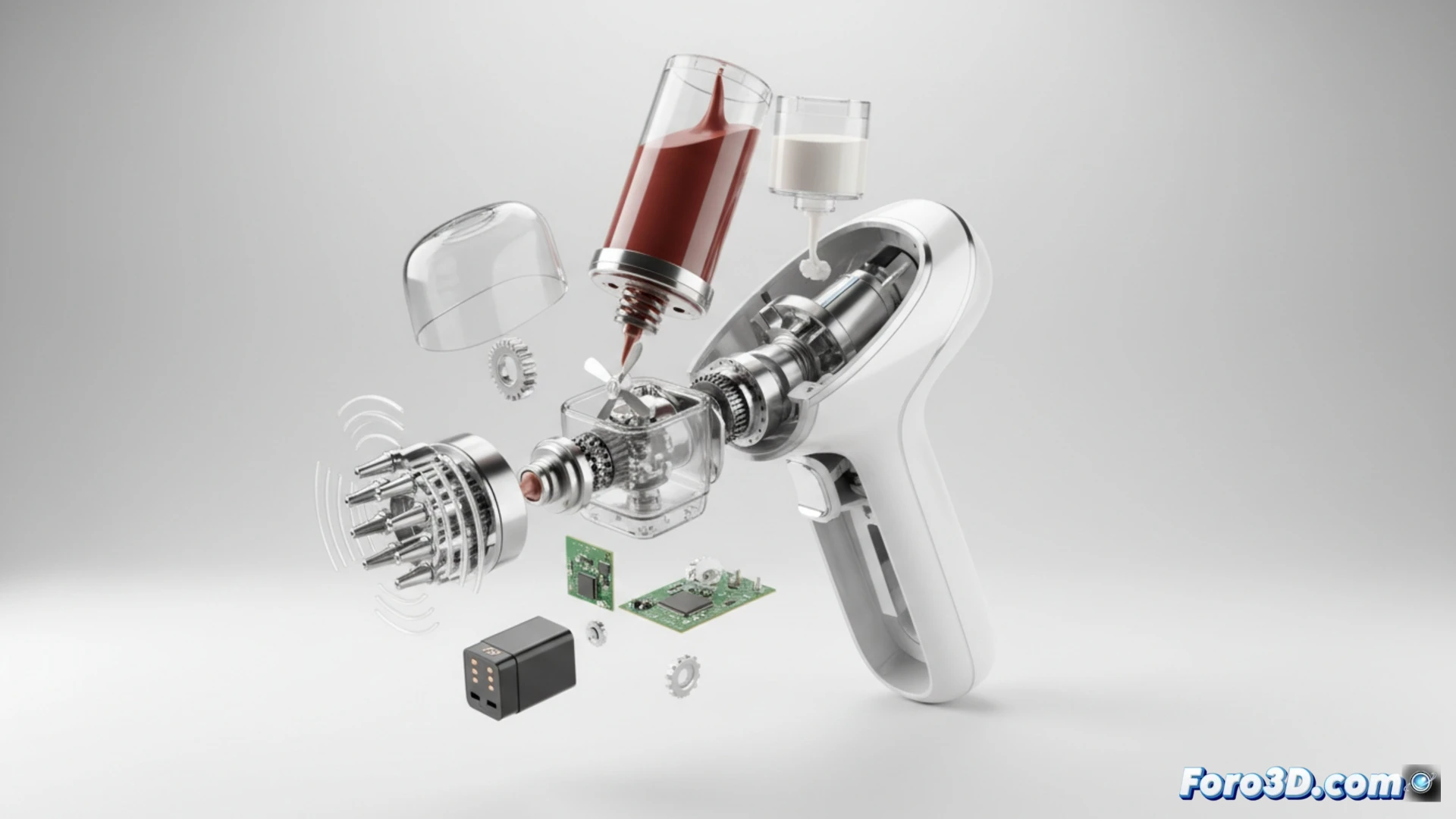
CAD Modeling of the Oscillating Nozzle System and Dye Flow 🎨
The heart of the Colorsonic lies in its application head. In 3D modeling, we must represent the housing of the disposable cartridge containing the formula and developer. The mixing system is simulated using an internal helical duct that combines both liquids just before the outlet. The oscillating nozzles, driven by a micro stepper motor, require a cam and follower design in the CAD assembly. For rendering, a textured polycarbonate material is recommended for the casing and a translucent plastic for the dye reservoir, with HDRI lighting that highlights the reflections of the satin finish. The dye flow can be visualized using particles in a technical animation render.
Reverse Engineering and Interactive Exploded View of the Colorsonic 🔧
Reverse engineering this product involves breaking it down into four sub-assemblies: the ergonomic handle with its lithium-ion battery, the electronic control module with tilt sensor, the peristaltic pumping system, and the oscillating head. An interactive 3D exploded view, created in visualization software like Blender or KeyShot, allows the designer to show how each piece fits together. The key to success in the final rendering lies in simulating the soft rubber texture on the grip and the hard, shiny plastic on the main body, achieving a visual contrast that communicates quality and technical precision.
How was the ergonomic design and integration of internal components in the 3D model of the L’Oréal Colorsonic approached to ensure uniform color flow and an intuitive user experience at home?
(PS: Designing a product in 3D is like being an architect, but without having to worry about the bricks.)