The Logitech Blue Sona arrives on the market as an active dynamic microphone with XLR connection that promises to revolutionize voice recording for content creators. Its integrated ClearAmp technology eliminates the need for external interfaces or amplifiers, offering broadcast-level sound directly from the microphone. For professionals in 3D modeling and simulation, this means being able to record voiceovers or stream live with exceptional clarity, even in home environments with ambient noise.
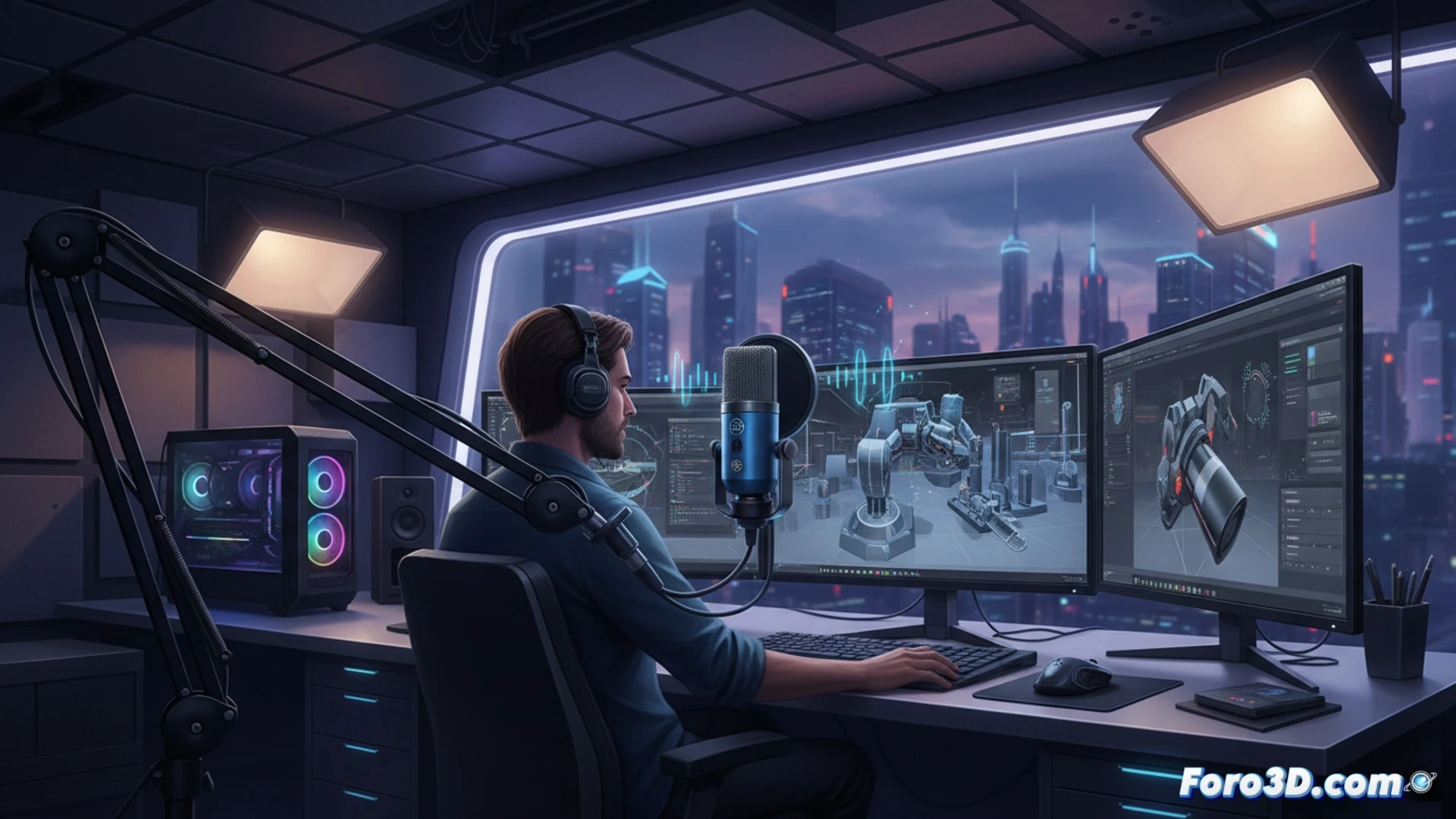
ClearAmp and XLR: Technical performance vs. USB microphones 🎧
The main innovation of the Blue Sona lies in its ClearAmp preamplifier, which provides clean and consistent gain without resorting to external mixing consoles. By using a balanced XLR connection, this microphone offers greater immunity to electromagnetic noise and a more stable frequency response than typical USB microphones. In a home studio dedicated to 3D design, where the hum of powerful computers or cooling fans is constant, the Sona stands out for its cardioid pattern and its ability to isolate the creator's voice, drastically reducing background noise. This allows recording Blender, Maya, or ZBrush tutorials with a clarity that previously required separate professional audio equipment.
Is the Blue Sona the ultimate ally for the 3D creator? 🎙️
For the 3D artist producing video tutorials, design streams, or portfolio presentations, the Logitech Blue Sona represents a qualitative leap in the production chain. Its ease of use (plug and record without complex setups) makes it a practical tool for long work sessions, where viewer listening fatigue is minimized thanks to clear, professional audio. Although its price is higher than a basic USB microphone, the investment is justified when broadcast-quality sound is needed without relying on additional hardware, allowing the creator to focus on what matters: modeling, texturing, and rendering without technical audio distractions.
What concrete advantages does the active dynamic microphone design of the Logitech Blue Sona offer for a 3D artist who needs to record voiceovers or technical commentary in a studio environment with multiple computers and possible fan noise?
(PS: Your CPU runs hotter than the Blender vs. Maya debate)