The 1st Special Forces Group (Airborne) has integrated additive manufacturing as a logistical pillar at Joint Base Lewis-McChord. During a technical symposium, soldiers learned the complete production cycle, from digital design in SolidWorks to adjusting variables such as temperature and layer thickness. The goal is clear: decentralize production and eliminate dependence on slow supply chains.
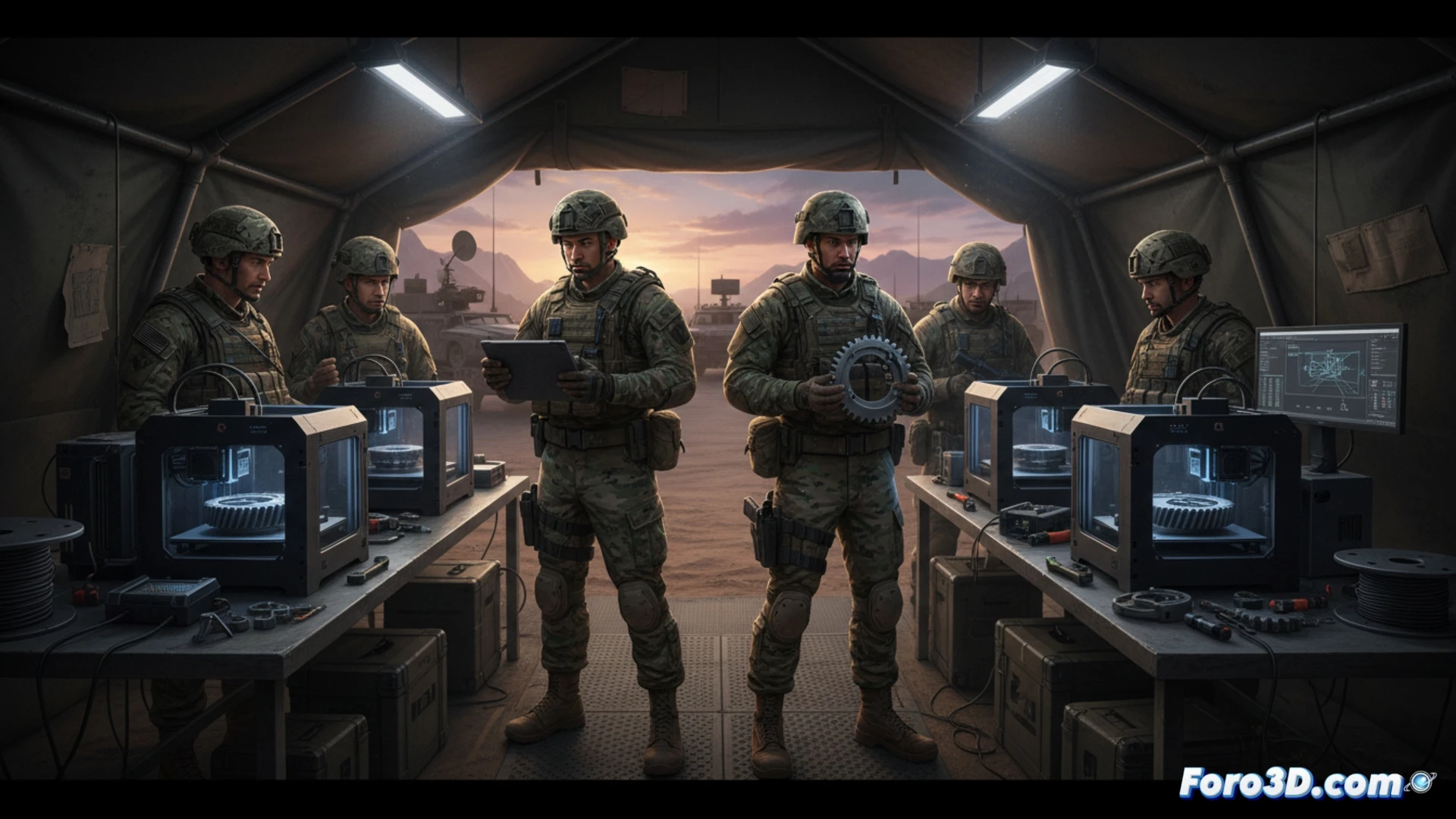
Technical cycle: design, printing, and expeditionary recycling 🔧
Sergeant Clarissa De La Cruz detailed that materials like ABS offer superior durability compared to standard plastics, making them ideal for functional prototypes. The workflow encompasses creating CAD files, calibrating print parameters, and manufacturing final parts. A concrete example is a vehicle handle, which is produced in less than an hour. Additionally, the Recreator 3D system was presented, which recycles plastic bottles into filament, closing the material loop in isolated environments. This model drastically reduces inventory costs and wait times for spare parts.
Tactical impact: from howitzer replica to operational autonomy 🎯
Response speed transforms military logistics. Radio covers, equipment modifications, and training aids are already being manufactured, including a replica of the M777 howitzer used for tactical deception. By producing parts on demand, units recover equipment in hours instead of days. This expeditionary capability not only saves costs but redefines Army readiness, allowing soldiers to solve technical problems in the field without relying on centralized warehouses.
What is the greatest logistical challenge the Army faces when integrating 3D printing into special forces operations to reduce its supply chain in remote environments
(PS: 3D logistics is nice until you try to fit a container where it doesn't fit)