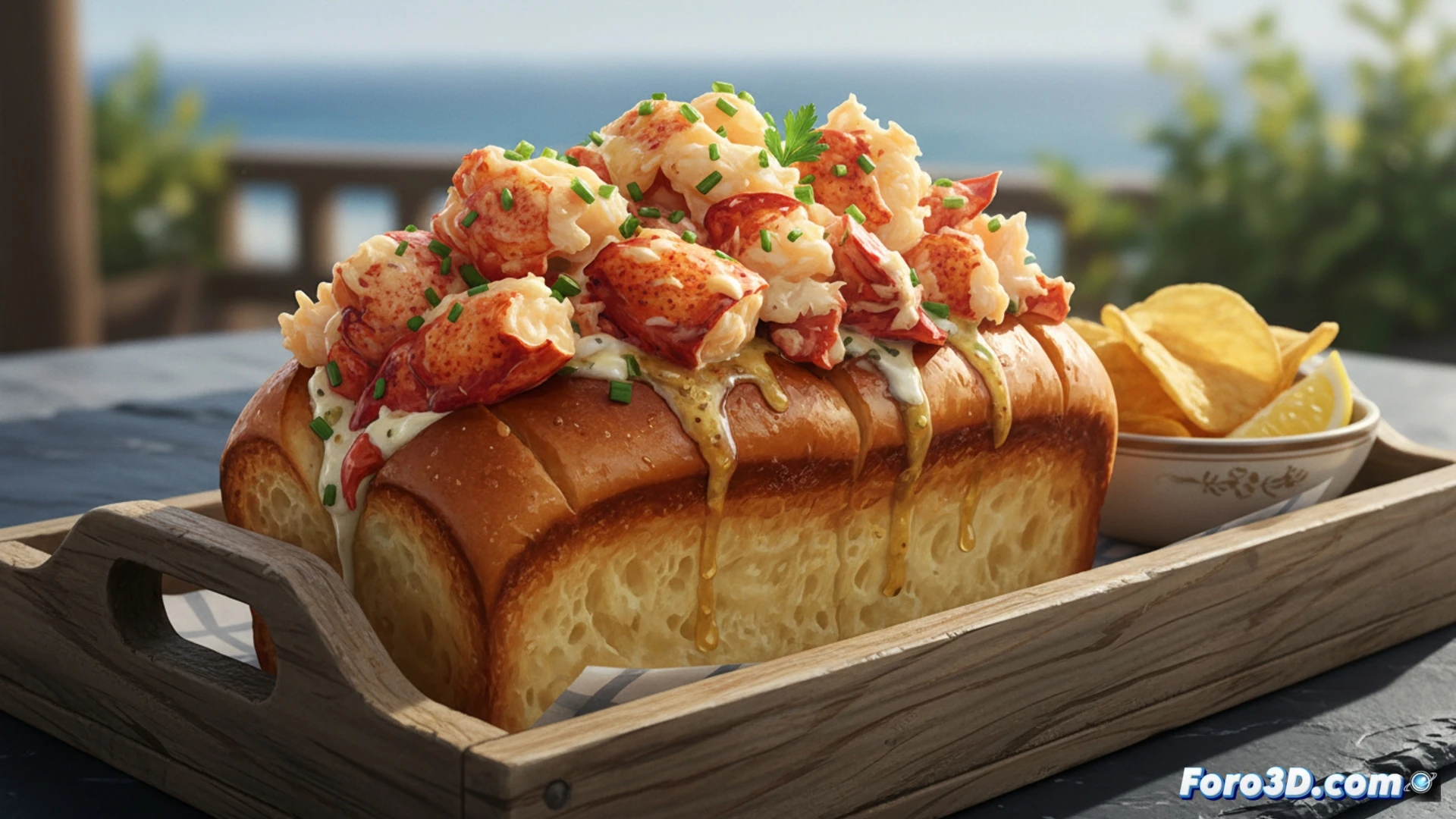
On the coast of New England, the lobster roll is a classic that combines the natural sweetness of lobster with two factions: hot butter and cold mayonnaise. Each bite offers a smooth texture and a taste of the sea that needs no embellishment. This sandwich, served on a soft bun, has become a gastronomic icon that divides opinions but unites palates.
The engineering of flavor: how temperature and fat enhance seafood 🦞
From a technical standpoint, the lobster roll is an exercise in thermal and lipid balance. Butter, rich in butyrates, melts at around 35°C and coats the lobster fibers, enhancing its natural sweetness. In the cold version, mayonnaise emulsifies oil and egg yolk, creating a layer that protects the meat from oxidation. The bun, lightly toasted, provides a crunchy structure that contrasts with the softness of the filling. The result is a system where each component serves a precise function.
The eternal debate: mayonnaise or butter, how to choose a side without offending your family 🤯
Choosing between mayonnaise and butter in a lobster roll is like declaring a civil war at the table. If you opt for mayonnaise, purists will look at you as if you put ketchup on a steak. If you choose butter, modernists will accuse you of being a grandparent stuck in 1950. The practical solution is to order both and say you are a professional indecisive person. In the end, the lobster wins, while we argue as if our lives depended on it.