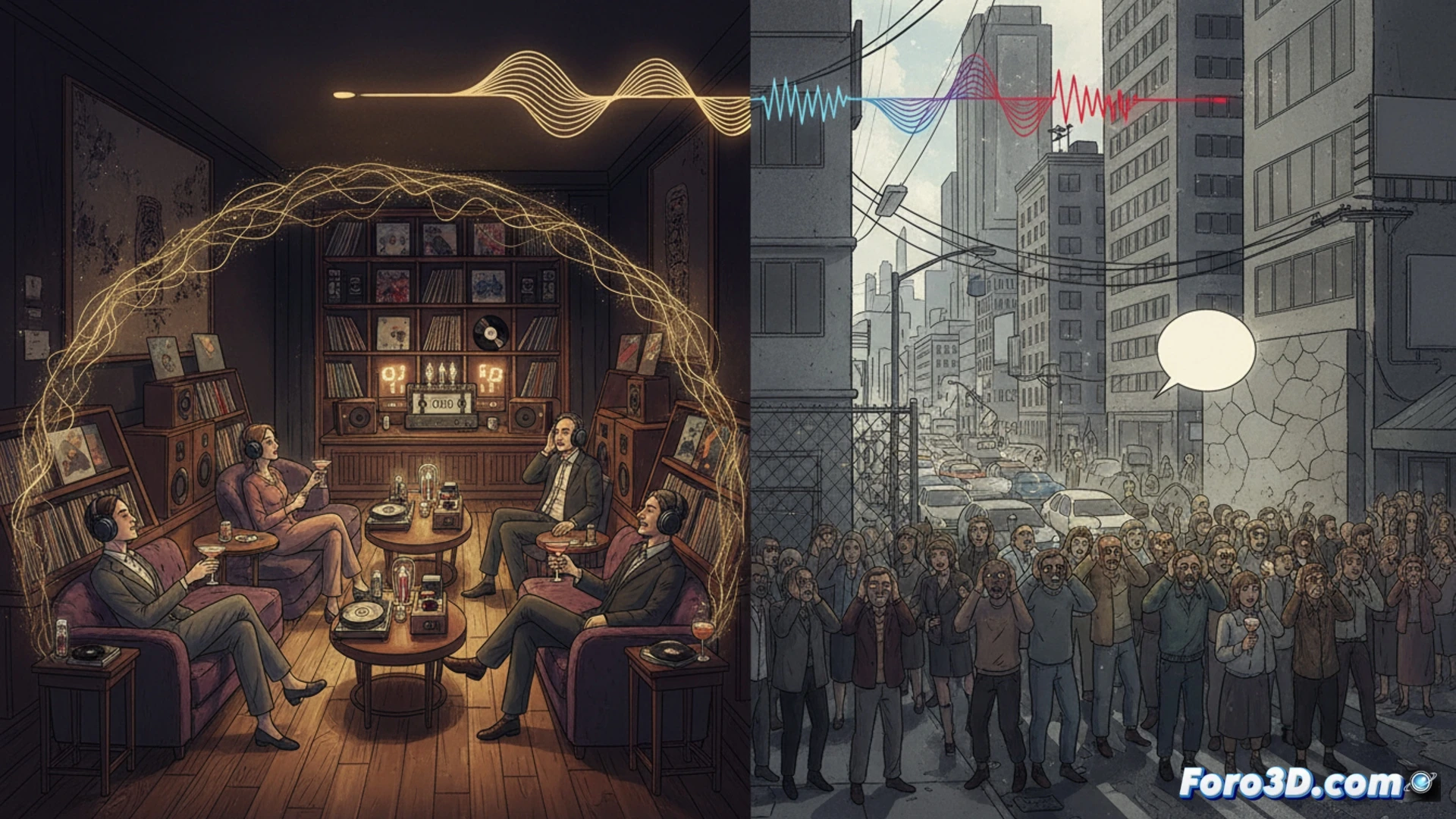
The rise of listening bars, spaces for silent listening with vinyl records and high-fidelity equipment, exposes an uncomfortable paradox. While these oases promise a break from digital noise, access is restricted by the price of entry and consumption. Thus, calm becomes a product for a minority, while the urban majority endures work and environmental noise without a free refuge. The necessary reflection is not to create more paid bubbles, but to demand that sonic disconnection be a citizen's right, regulating public space so that silence is not a class privilege.
Acoustic design as a social and technical filter 🎧
These spaces employ technologies such as fiberglass acoustic panels, wooden diffusers, and double-wall insulation systems to create a critical listening environment. However, their business model replicates an exclusionary dynamic: the cost of these materials and profitability per square meter are only sustainable with high prices. The technical paradox is that the same knowledge about noise control could be applied to public libraries or civic centers, but municipal investment prioritizes other uses. Silence is not lacking in cities; what is lacking are decisions to distribute it.
Paid silence: auditory yoga for hipsters with wallets 💸
So, if you want to meditate with a Miles Davis vinyl, get your wallet ready. These temples of hearing sell you the experience of not hearing a car horn or a drill in exchange for a €6 coffee and a €12 glass of wine. It's like a spa for your eardrums, but without the mud bath. Meanwhile, on the street, the rest of the world puts up with construction noise and the neighbor drilling on a Sunday. Perhaps the next thing will be silence subscriptions: pay €50 a month and you won't hear the person upstairs. The irony is that the right not to hear should be free, but here we are, paying not to listen.