The character Lifeguard, created by Chris Claremont and Salvador Larroca for Marvel Comics, possesses a unique power: automatically manifesting any ability needed to save lives in extreme danger. This secondary character, whose real name is Heather Cameron, represents a fascinating case for 3D modelers. Her versatile design and 90s aesthetic offer an attractive technical challenge, but her commercial or public use involves navigating the complex waters of Disney's copyright. 🏊♂️
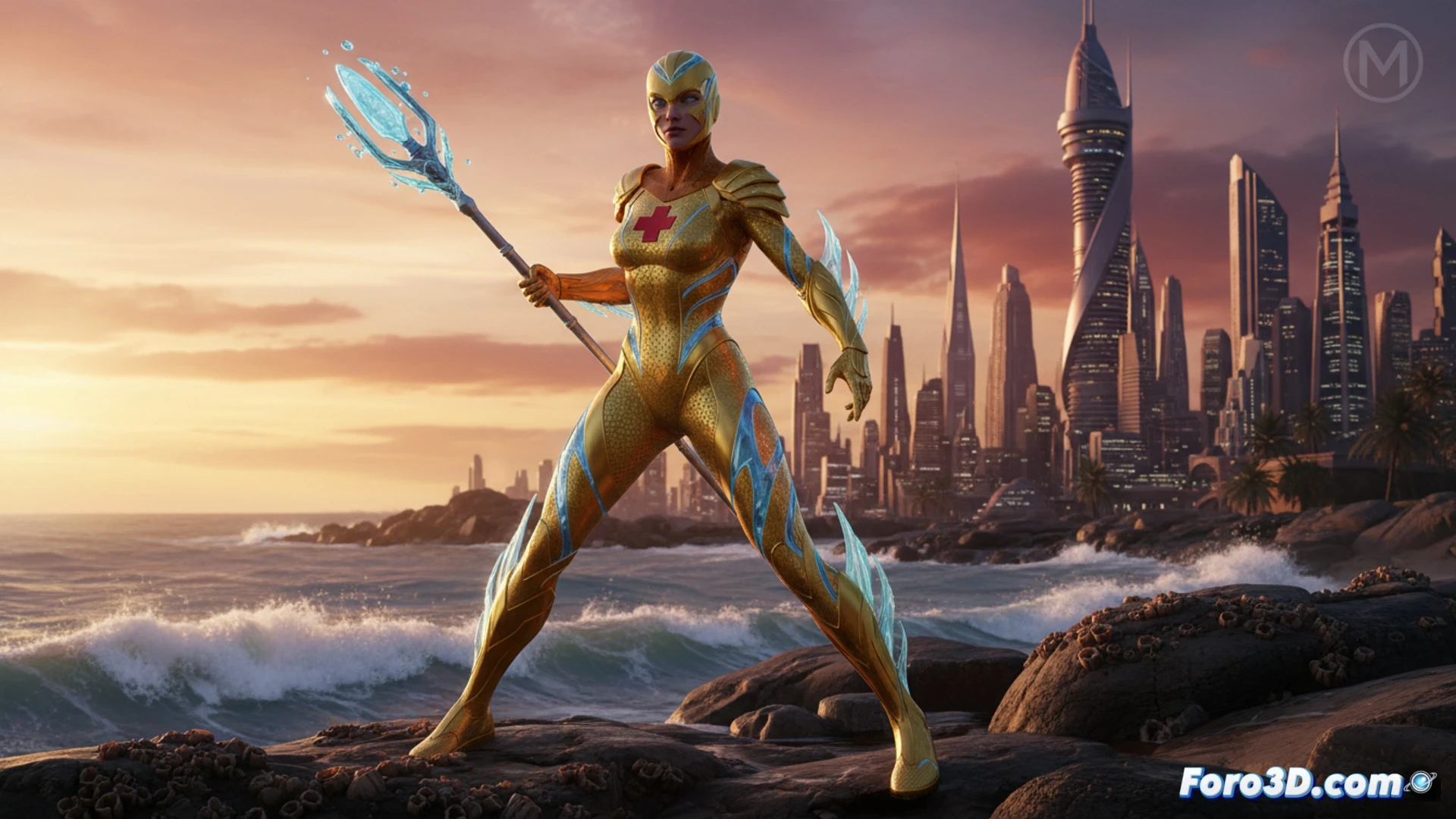
Legal implications in modeling Marvel characters ⚖️
As it is intellectual property of Marvel, a subsidiary of Disney, any 3D model of Lifeguard is protected by copyright from its conception. For a digital artist, there are three key scenarios: personal fan art, which is usually tolerated as long as it is not commercialized; free distribution on platforms like Sketchfab, which may infringe if the character is recognizable; and direct sale, which constitutes flagrant infringement. Disney applies aggressive DMCA policies, removing content and sending cease and desist letters. Even Creative Commons licenses do not exempt liability if the asset reproduces a protected character without express authorization.
Strategies for creating without infringing rights 🛡️
To model Lifeguard safely, the creator must transform the original design until it is unrecognizable, creating a derivative work that does not directly reference the source. Another path is to contact Marvel to obtain a fan art license, although these are usually only granted to large studios. The most viable option is to keep the model in the private sphere, use it as an anatomical or lighting study, and never upload it to public repositories. Remember: in the digital world, Lifeguard's power does not save you from a lawsuit; caution does.
When 3D modeling Marvel's Lifeguard for a non-commercial project, to what extent is it legal to use her distinctive features and the concept of her automatic power without infringing the publisher's copyright?
(PS: Thaler wanted his machine to be an author, I just want my 3D printer not to jam at 3am)