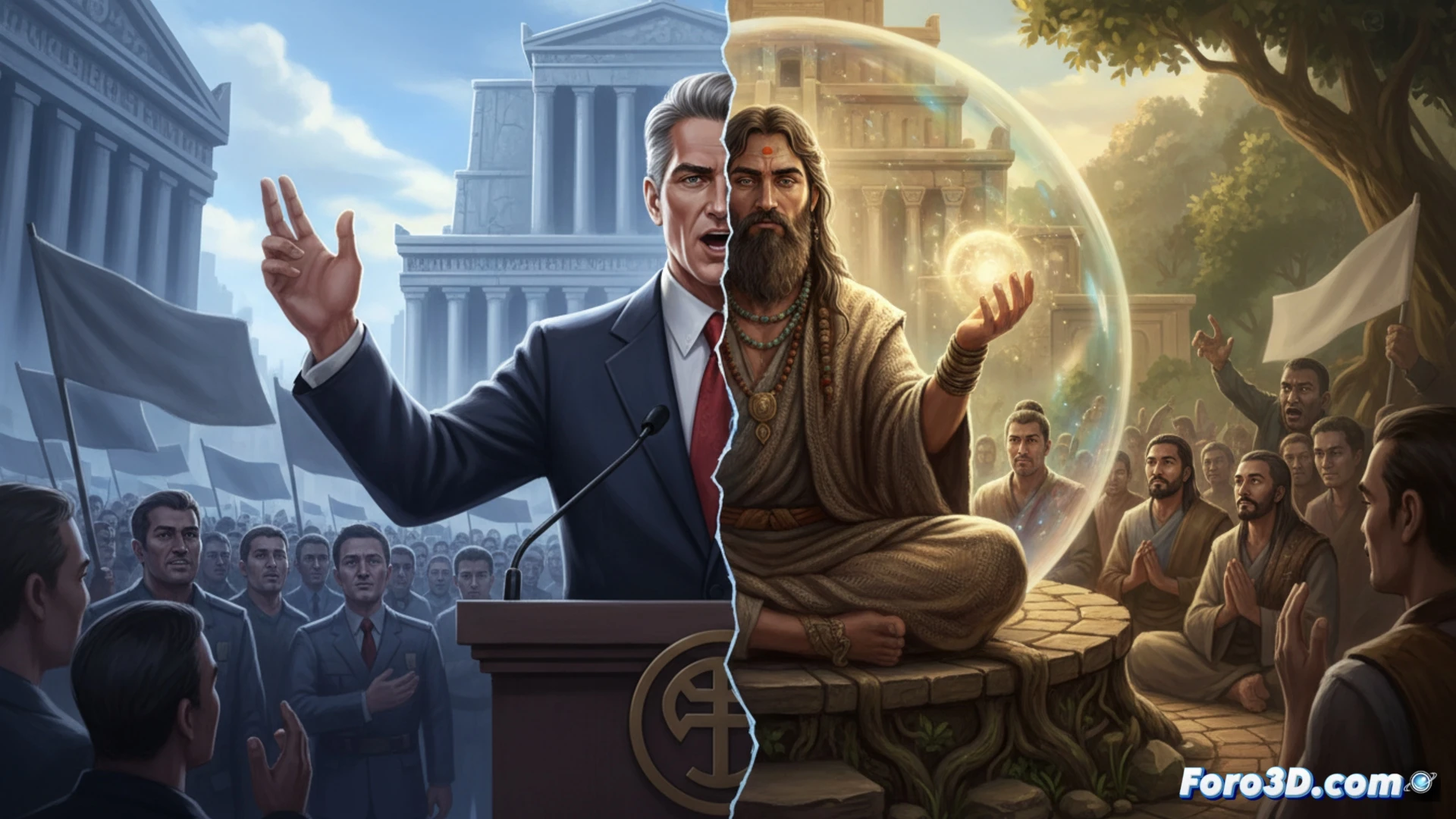
We observe that the power structure in certain political parties resembles that of a cult. A charismatic leader centralizes decision-making, demands absolute loyalty, and controls the narrative. Followers, immersed in an information bubble, adopt a common language and reject external criticism as heresy. This cohesion mechanism is identical to that used by gurus to maintain their authority.
The algorithm as the party's digital catechism 🤖
To replicate this control, parties have adopted technological tools. Encrypted messaging apps and proprietary social networks function as echo chambers. Algorithms prioritize aligned content and silence dissent, creating a parallel reality. Developers design reward systems (points, event access) that reinforce loyalty, a cult-like gamification system that eliminates the need for a physical leader to maintain group cohesion.
The instruction manual didn't include brainwashing 🧠
The curious thing is that many voters believe they are joining a debate club when, in reality, they are in an emotional affinity workshop. The leader promises magical solutions, and the follower buys the complete package: t-shirt, sticker, and an irrational hatred for the outsider. In the end, the only thing missing is selling them the Kool-Aid at party headquarters. The irony is that they drink it with a smile, believing it's a fruit smoothie.