The profession of bookseller hides risks that go beyond paper dust. Reaching high shelves, bending down for low boxes, or carrying stacks of books causes overexertion and forced postures that lead to musculoskeletal disorders and falls. Traditional ergonomics falls short; we need precise data on the body in motion to redesign the workspace.
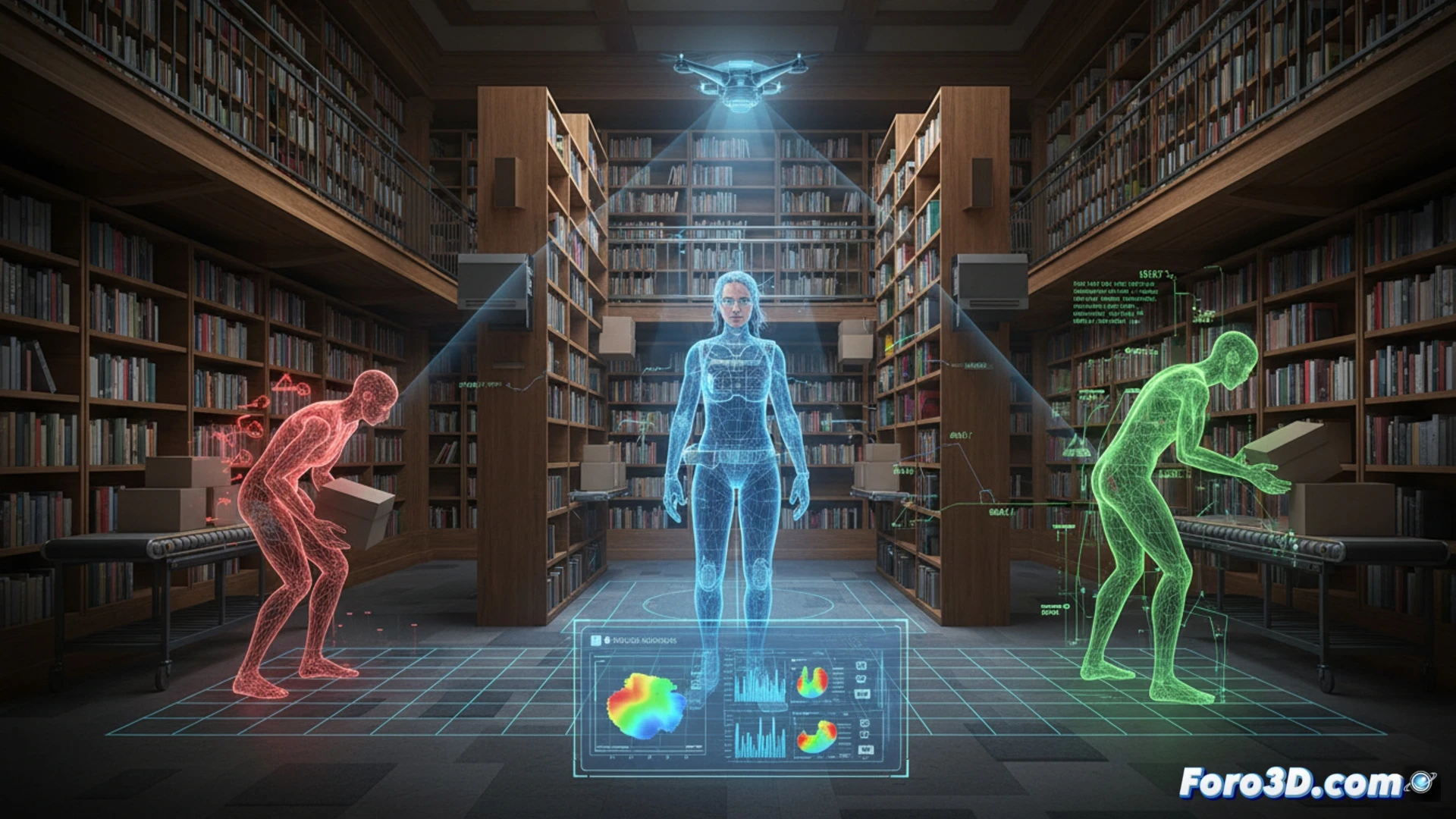
3D Body Scanning: Biomechanical Mapping of the Bookseller 📐
3D body scanning captures the exact morphology of the bookseller in their work environment. Using depth sensors, we record joints during key tasks: reaching the arm to the fifth shelf or bending the trunk to pick up a batch of novels. Anthropometric software calculates risk angles (lumbar flexion greater than 60 degrees, shoulder elevation above 90 degrees). With this data, we model a new shelf layout that keeps the load between the hip and shoulder, reducing fatigue and the risk of falls from ladders.
From Pain to Design: Health as a Priority 💪
It's not just about avoiding paper cuts or dust allergies; postural stress is silent. A redesign based on anthropometric data allows the bookseller to reach 80% of books without stretching or bending. 3D technology does not replace the intuition of the trade, but protects it. An ergonomic bookstore is a safer bookstore, where the worker's body stops being the buffer for poor design.
As a bookseller, what type of anthropometric data collected through 3D scanning is most critical for redesigning shelves and reducing the risk of reaching or lifting injuries.
(PS: Scanning your body for an avatar is like taking a 3D selfie, but without a selfie stick.)