Cycling, as a profession or high-performance sport, exposes the body to specific risks ranging from severe trauma due to falls to chronic injuries from forced postures. Analyzing these dangers through 3D biomechanics allows for visualizing tension in the spine and limbs, as well as simulating the impact of a collision to study fractures and concussions. This article explores how three-dimensional technology can transform occupational risk prevention for cyclists.
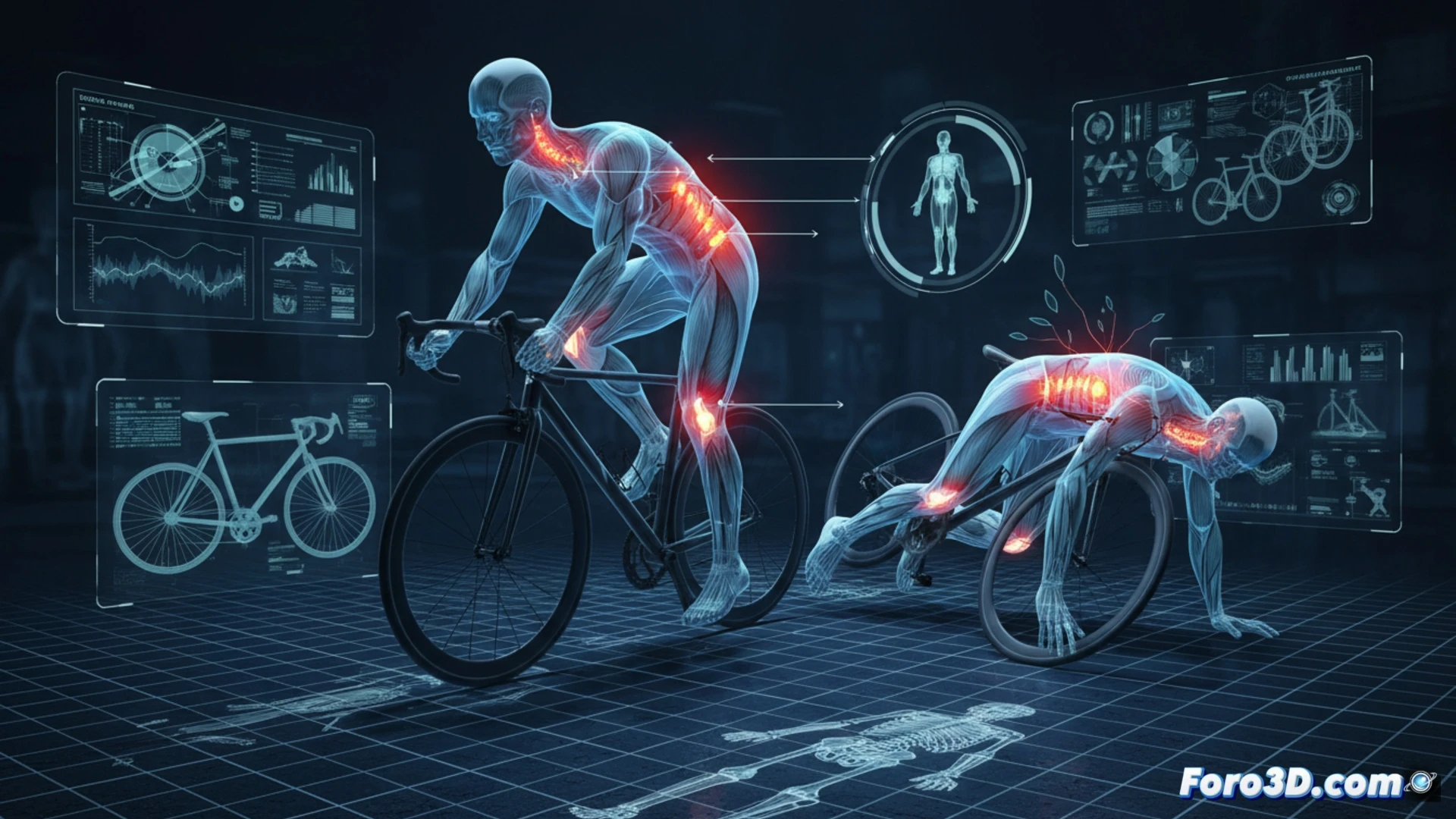
3D Modeling of Forced Postures and Joint Overload 🚴
The cyclist's aerodynamic position generates sustained lumbar and cervical flexion, which, when modeled in 3D, reveals points of disc compression and muscle overload. Using biomechanical analysis software, tension in the lower back and neck ligaments can be mapped, identifying critical angles that lead to lower back pain or cervicobrachialgia. Additionally, the three-dimensional simulation of the knee during pedaling shows how incorrect saddle adjustment or excessive cadence causes friction in the iliotibial band, triggering tendinitis and patellofemoral pain syndrome. These models allow for redesigning the bicycle and posture to minimize joint stress.
Impact Simulation and Structural Fatigue in the Cyclist 💥
A fall or collision can generate forces of up to 10 G on the hip and skull. The 3D simulation of these events, using virtual materials that replicate bone and muscle density, allows predicting the pattern of fractures and contusions. On the other hand, overtraining and fatigue are modeled as a loss of stiffness in soft tissues, showing how dehydration or heat increases the risk of injury. This visualization not only educates the cyclist about their limits but also guides the design of protective equipment and more effective rest protocols.
Would you use automatic player tracking or manual animation for the simulation?