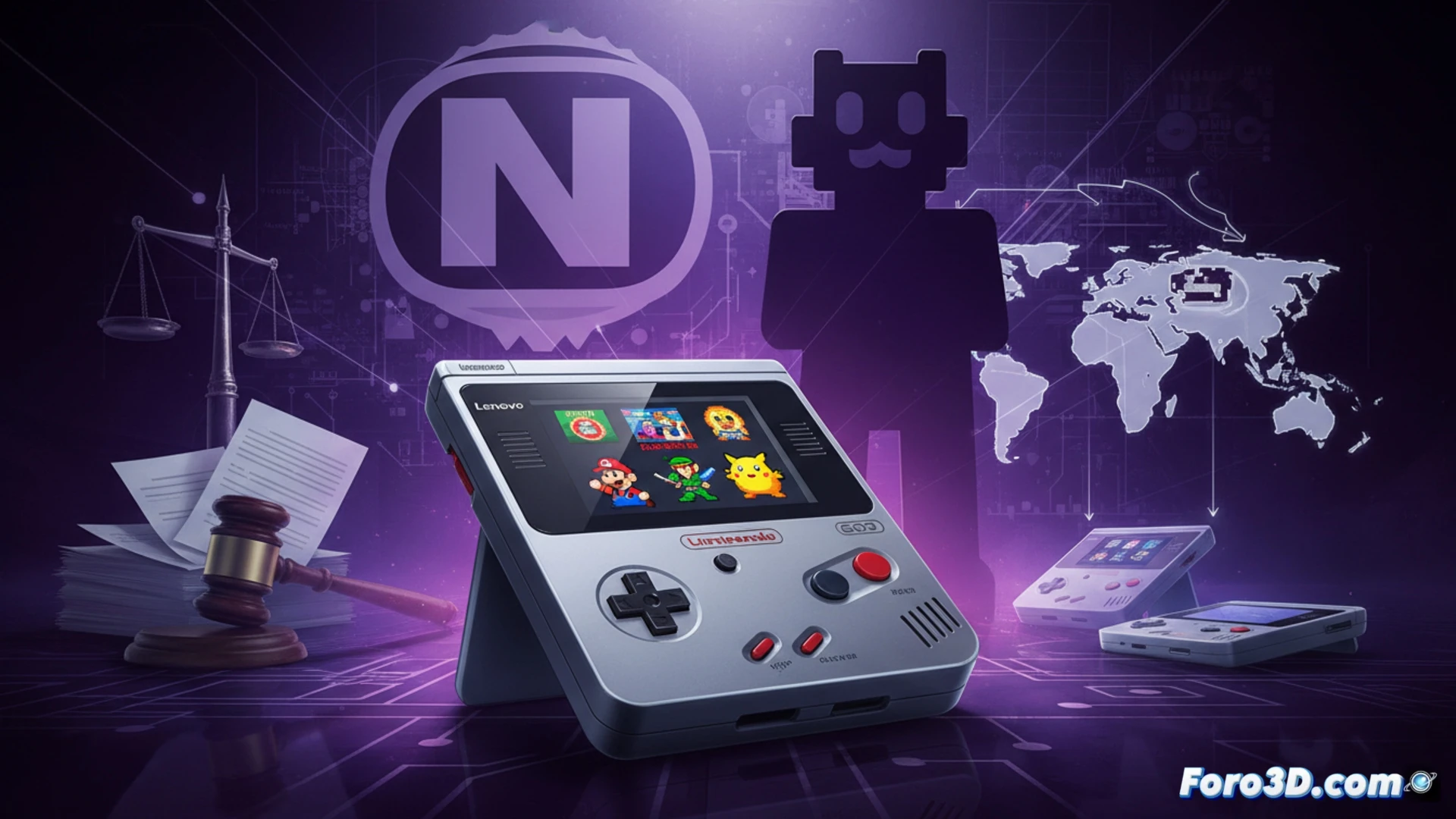
The new Lenovo G02 retro console has sparked interest among nostalgics, but also legal alarms. By including unlicensed Nintendo games, the Chinese firm exposes itself to a potential lawsuit, although it has delegated software responsibility to distributors. This legal shield reflects a growing phenomenon in the cheap console market, where the offering of unauthorized classic titles clashes with intellectual property rights.
Technical Shield: How Lenovo Dodges Software Responsibility ⚖️
Lenovo has designed the G02 as an open platform, where the firmware does not include preloaded games from the factory. It is the distributors who add the ROMs, often without a license, on SD cards or external memory. This approach allows the company to argue that it only sells hardware, while the software is the responsibility of third parties. However, Nintendo usually pursues the entire distribution chain, and the precedent of cases like the NES Classic Mini suggests that the Japanese giant will not stop at this technicality.
Nintendo: The Most Feared Lawyer in the Retro Neighborhood 🎮
Meanwhile, Nintendo is sharpening its legal swords and preparing a batch of cease and desist letters. The G02 is just the latest nail in the coffin of pirate consoles, but Lenovo knows that if things get ugly, it can always blame the store clerk who loaded the games. In the end, the only loser is the buyer, who ends up with a console that, without the ROMs, is worth as much as a Game Boy-shaped paperweight.