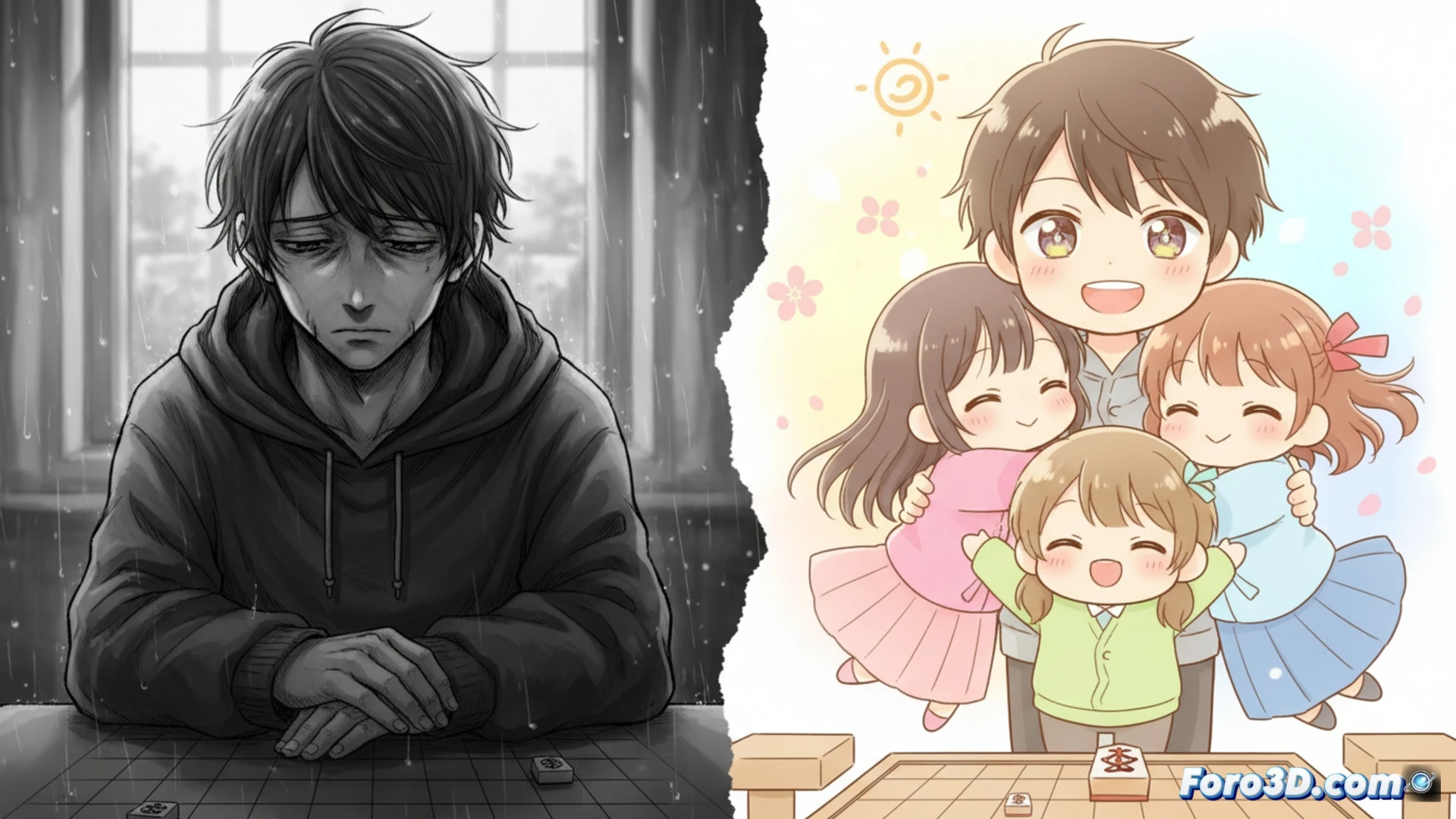
The work of Chica Umino, March Comes in Like a Lion, presents a fascinating case study for contemporary digital art. Its narrative, centered on Rei Kiriyama, a shogi prodigy trapped in loneliness, rests on a unique aesthetic pillar: the alternation between a detail-laden psychological realism and moments of simplified, adorable linework. This contrast is not a mere visual whim, but a narrative tool that reflects the duality of depression and hope.
3D animation techniques to capture the expressiveness of the original linework 🎨
To transfer this expressiveness to a digital environment, 3D animation must abandon the pursuit of photorealism. Instead, priority should be given to non-linear rigging that allows organic deformations, imitating the fluidity of hand-drawn art. The key lies in shading: applying textures with visible edges and flat color palettes for comedic sequences, while for introspective scenes, soft light maps and dynamic shadows that accentuate the protagonist's emptiness would be used. The virtual camera could simulate shaky zooms and asymmetrical framing, replicating the feel of a manga panel.
The silent activism of visual warmth 🌟
Beyond technique, Sangatsu no Lion is a visual manifesto on mental health. The use of graphic simplification for the Kawamoto sisters and their cats is not infantilization, but a mechanism of emotional accessibility. In a digital world saturated with hyper-realistic stimuli, this work demonstrates that art can be a vehicle for social activism: by breaking the barrier of cold realism, it invites the viewer to let down their guard and connect with the vulnerability of others. 3D technology, in service of this hybrid aesthetic, can amplify that message of warmth and community.
How can the hybrid visual language of Sangatsu no Lion, which combines psychological realism with simplified linework, influence the design of visual narratives for contemporary digital activism?
(PS: if your virtual reality installation doesn't change the world, at least let it not lag)