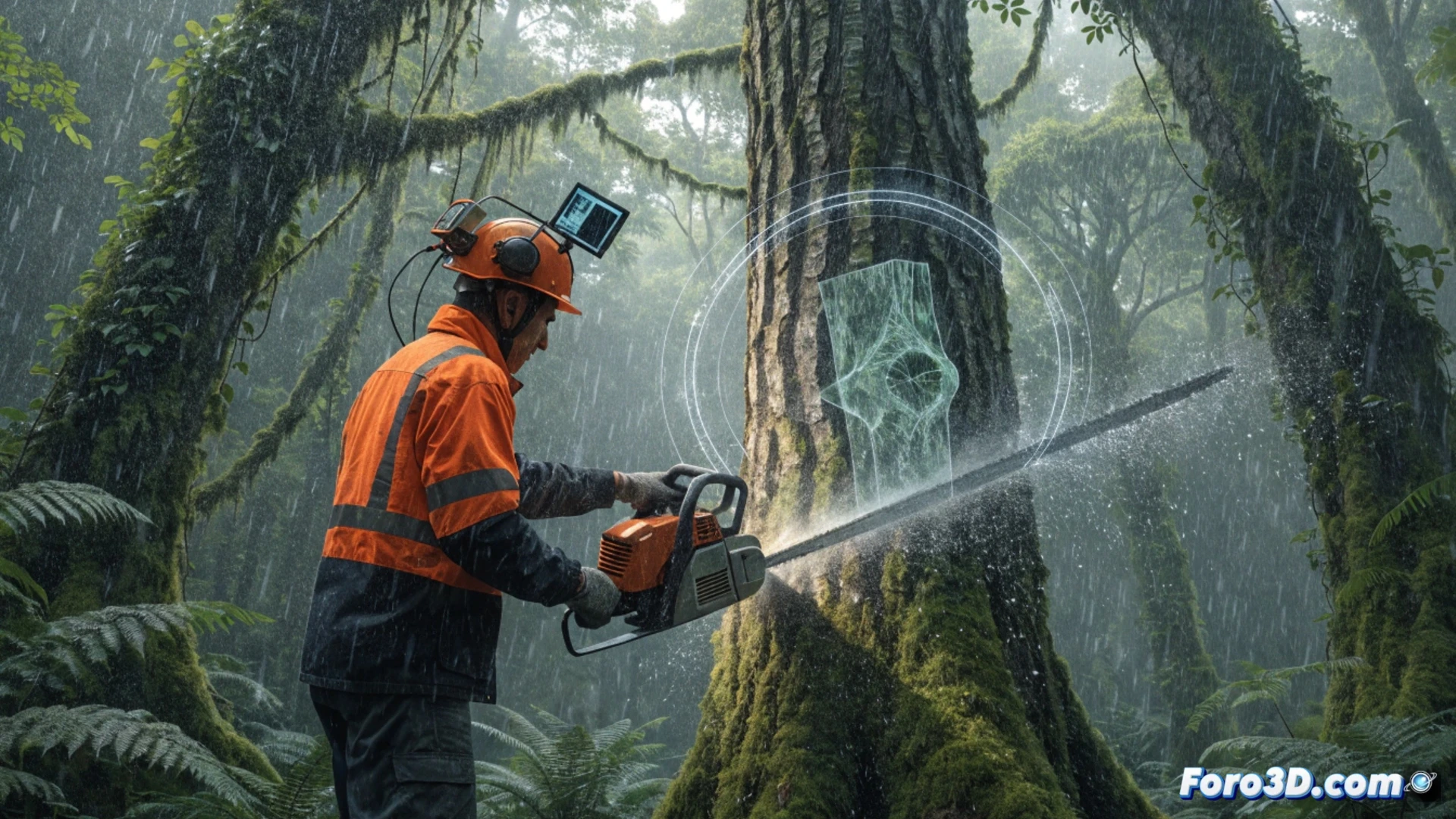
3D technology is not only useful for designing plastic parts or making resin figurines. A lumberjack can use it to analyze the internal structure of a log before cutting. With a portable scanner, they detect knots, cracks, or weakened areas, preventing accidents and optimizing each cut. The job remains tough, but now with precise data.
Scanner and software: the digital axe of the forest 🪓
The process begins with a handheld 3D scanner, such as the EinScan HX or Revopoint POP 3, which captures the log's geometry in minutes. Then, software like MeshLab or CloudCompare is used to clean the point cloud. With Blender or Autodesk Fusion 360, a solid model is generated to simulate cuts and calculate the best felling angle. All without hitting the tree with a ruler.
GPS and chainsaw: when the forest becomes an office 🌲
The best part is that now you can argue with the boss about the felling angle while sitting on a stump, showing a 3D model on the tablet. Of course, if the scanner falls into the mud, you'll go back to measuring by eye, as always. Technology helps, but it won't save you from a branch falling on your head while you check the .stl file.