Leiji Matsumoto, mangaka and director, built his own universe where melancholy and honor sail on ships shaped like ancient vessels. His legacy, the Leijiverse, brings together works such as Space Battleship Yamato, Galaxy Express 999, and Captain Harlock, stylized characters searching for answers in the cosmos. Matsumoto oversaw every adaptation, imbuing his stories with a romantic and existentialist vision that marked entire generations.
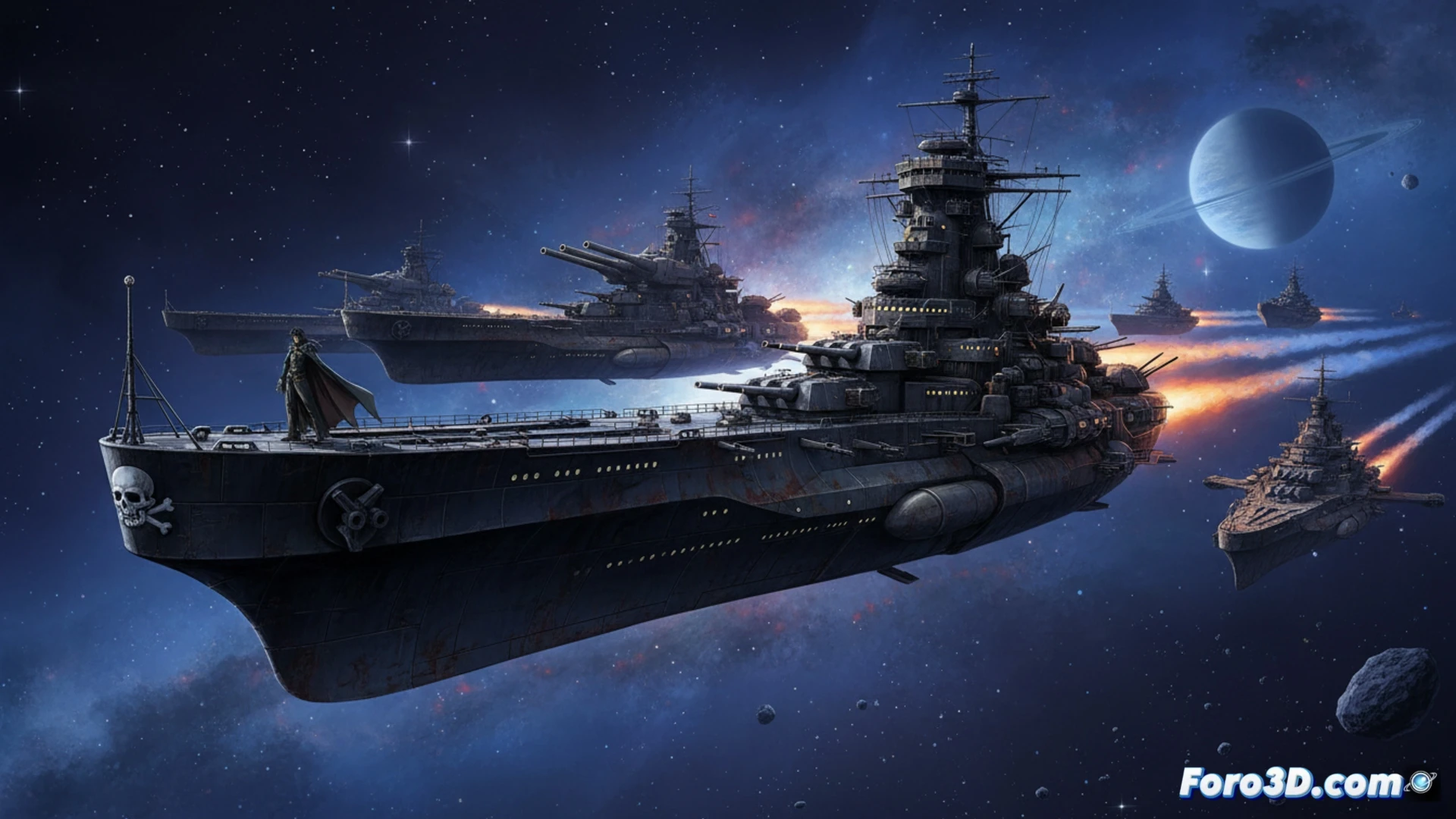
The technical engine behind the Leijiverse: animation and narrative 🚀
Matsumoto did not just draw; he controlled every aspect of the animated production. His ships, with designs evoking sailing vessels and battleships, required limited animation techniques to maintain fluidity in space battle scenes. He used dark backgrounds and light contrasts to reinforce the solitude of space. Furthermore, he imposed a slow pace in the dialogues, leaving silences that accentuate philosophical reflection, something uncommon in commercial animation of the 70s and 80s.
How to survive a space opera without wifi or GPS 🌌
Imagine traveling on the Galaxy Express 999 without being able to consult Google Maps or order a space Uber. Matsumoto's characters spend decades on interstellar trains, dealing with their own existential anguish while the conductor never arrives. That said, at least they don't have to worry about their phone battery: in the Leijiverse, the problems are real, like finding meaning in life before Captain Harlock looks at you with condescension.