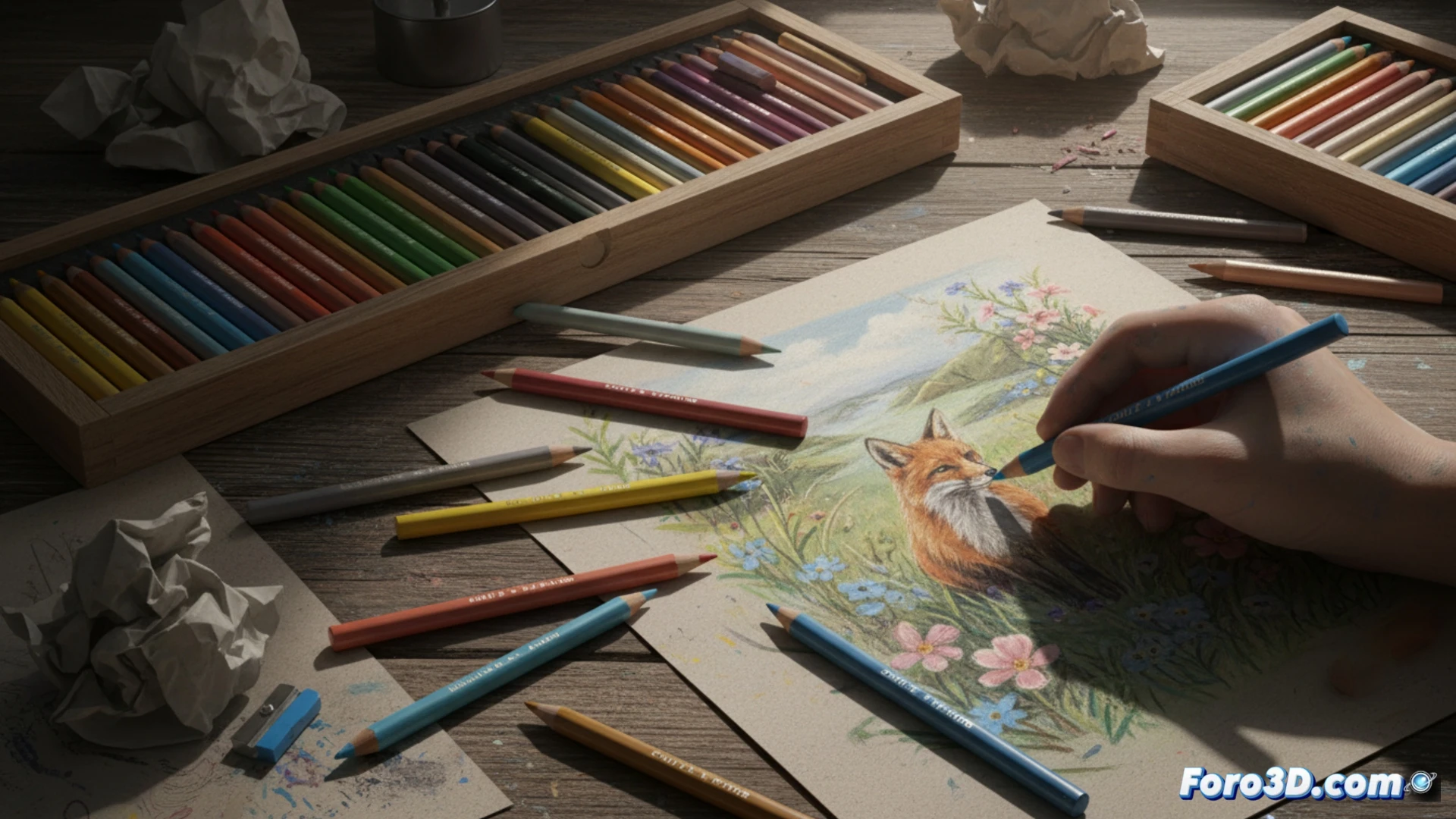
Pastel pencils emerge as an intermediate option between the creative chaos of traditional pastels and the rigidity of the common pencil. Less dust, more control. According to Rosie Hilder, editor of Creative Bloq, this tool revitalizes artistic practice without the mess of wet media. Brands like Derwent, Conté à Paris, and Rubens offer sets from 12 to 60 units, with options for different budgets and some products on sale.
The technique behind the tip: pigment and adhesion 🎨
Unlike soft pastels, these pencils use a dry pigment load encased in wood, allowing for precise strokes without the need for immediate fixative. Their formulation includes binders that promote adhesion to medium or rough textured papers. Layering works best with gradual pressure; a quick stroke produces a semi-transparent color, while several passes achieve opacity. They require no water or solvents, just an eraser for spot corrections.
When the pastel behaves itself and doesn't stain your shirt ✨
Using pastel pencils is like having a dog that doesn't bark or shed hair: all the charm of pastel color without the drama of cleaning the table every five minutes. However, be careful about resting your hand on a freshly made drawing, because the pigment sticks more to your palm than to the paper. The author suggests they are ideal for artists who want to feel bohemian without having to explain why they have orange dust on their nose.