The arrival of Pope Leo XIV in Barcelona will push hotel occupancy to 90% by the end of the month. Pilgrims and tourists will flood the city, generating a significant economic impact on hospitality, restaurants, and shops. Authorities are already preparing reinforcements in security and mobility to manage the high influx at an event that will boost the local tourism sector.
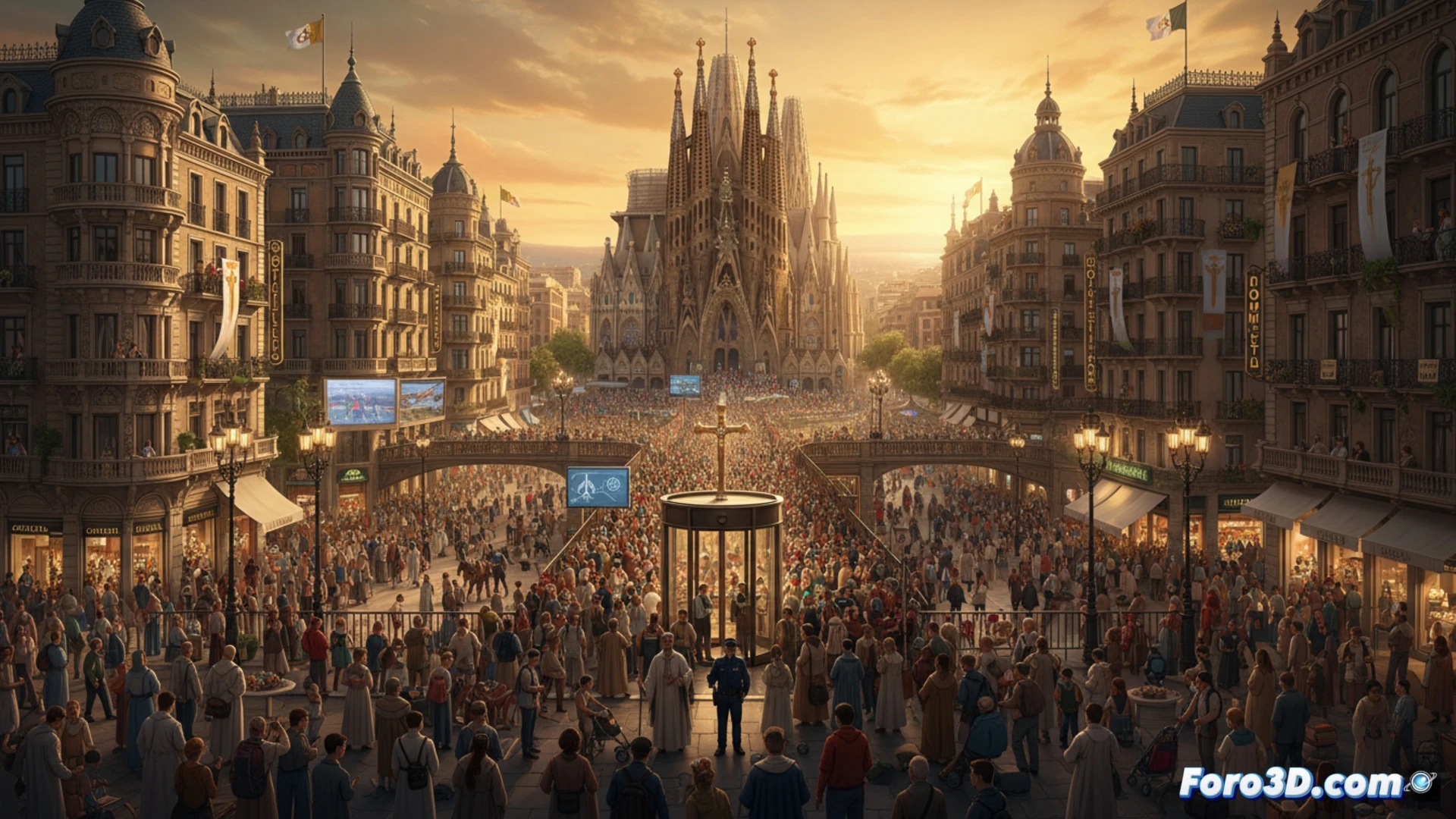
Urban mobility goes digital to absorb the flow of visitors 🚦
The City Council will activate a traffic control center with real-time data and IoT sensors to monitor crowds. Informational screens and pedestrian navigation apps with alternative routes will be deployed. The public transport network will add additional frequencies, and taxis will have priority geolocation. The goal is to avoid congestion at stations and critical points such as the Sagrada Familia or Montjuïc.
Pilgrims, selfies, and the miracle of finding a table for dinner 🍽️
While the faithful seek the papal blessing, restaurateurs will pray for a miracle: that tourists don't ask for a table at 9:00 PM without a reservation. Shops in the city center are already sharpening their payment terminals, ready for the ritual of impulse buying. And, as in any modern pilgrimage, the real challenge will be finding a spot on the subway without a selfie with the Pope getting in the way.