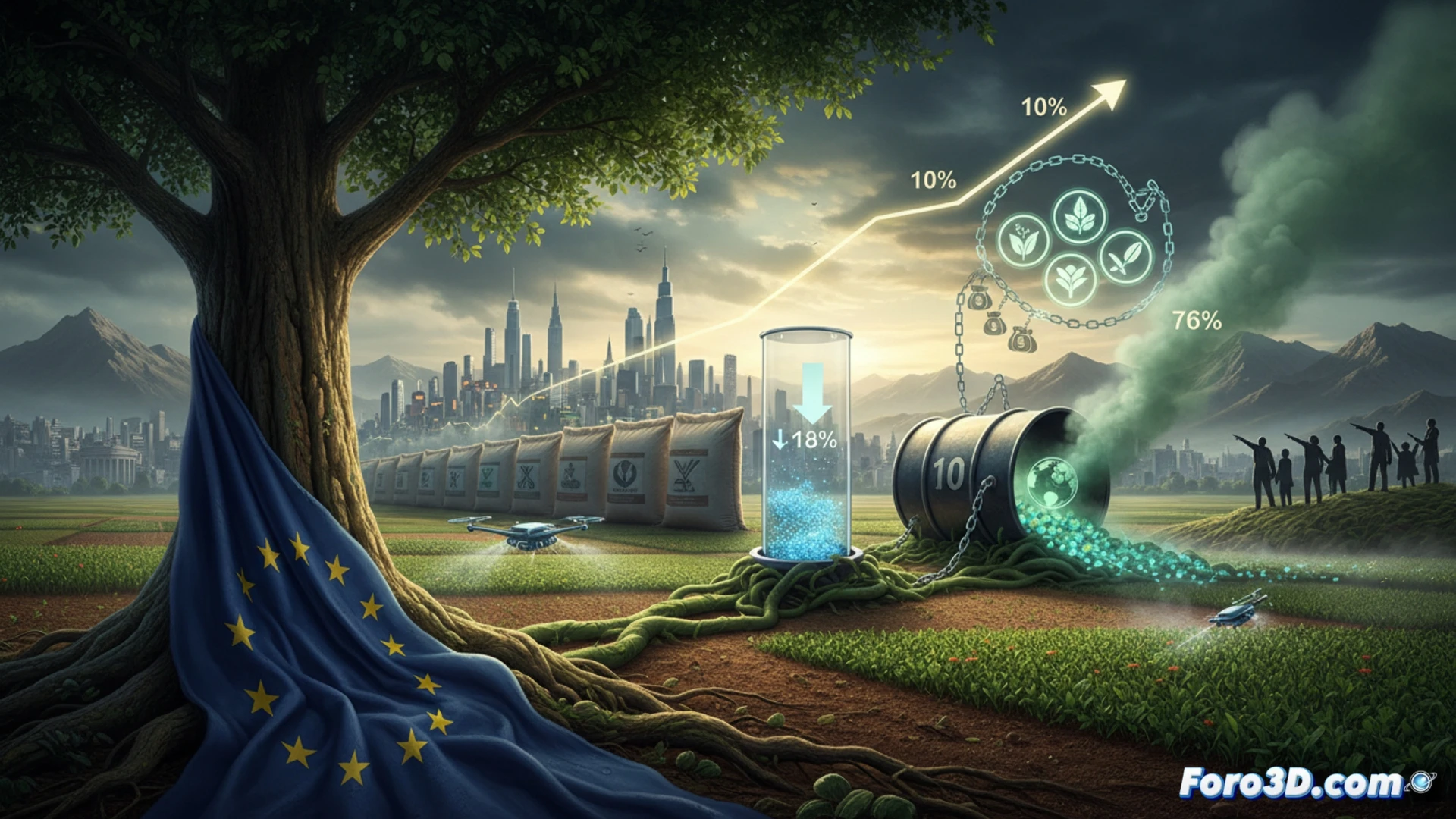
Although the use of pesticides in the European Union has fallen by 18% since 2015, the bloc remains in the global top ten of consumers. In 2024, sales in the five main agricultural countries (Spain, France, Italy, Germany, and Poland) grew by almost 10% compared to the previous year, concentrating 76% of the EU total. Experts point out that non-binding objectives fail to curb the sector's dependence.
Data and trends: the pesticide market in the EU 🌿
The 10% increase in sales during 2024 reflects the agricultural sector's resistance to reducing chemicals, despite the political debates of 2023. The five mentioned countries account for 76 out of every 100 euros spent on pesticides in the EU. Meanwhile, the European Commission maintains voluntary targets, avoiding direct impositions on farmers. According to analysts, this strategy perpetuates intensive use and limits progress towards alternatives such as biological control or precision agriculture.
Fewer pesticides, but more sales: the chemical paradox ⚗️
The EU managed to reduce usage by 18% since 2015, but in 2024 sales rose by 10%. It's like quitting smoking and buying more tobacco just in case. Farmers, attentive, keep the bottles in their pockets while Brussels winks at them. In the end, food security and prices are debated between a voluntary target and a cheap herbicide. The irony: less poison, but more expensive.