On the banks of the River Thames, licensed mudlarks comb the mud in search of historical objects. Jason Sandy, one of these seekers, pursues remnants of the Doves Type, a typeface created in 1900. Its owner threw it into the river in more than 170 nightly trips between 1916 and 1917 to prevent his partner from inheriting it. More than a century later, pieces of this font have begun to reappear as a coveted treasure.
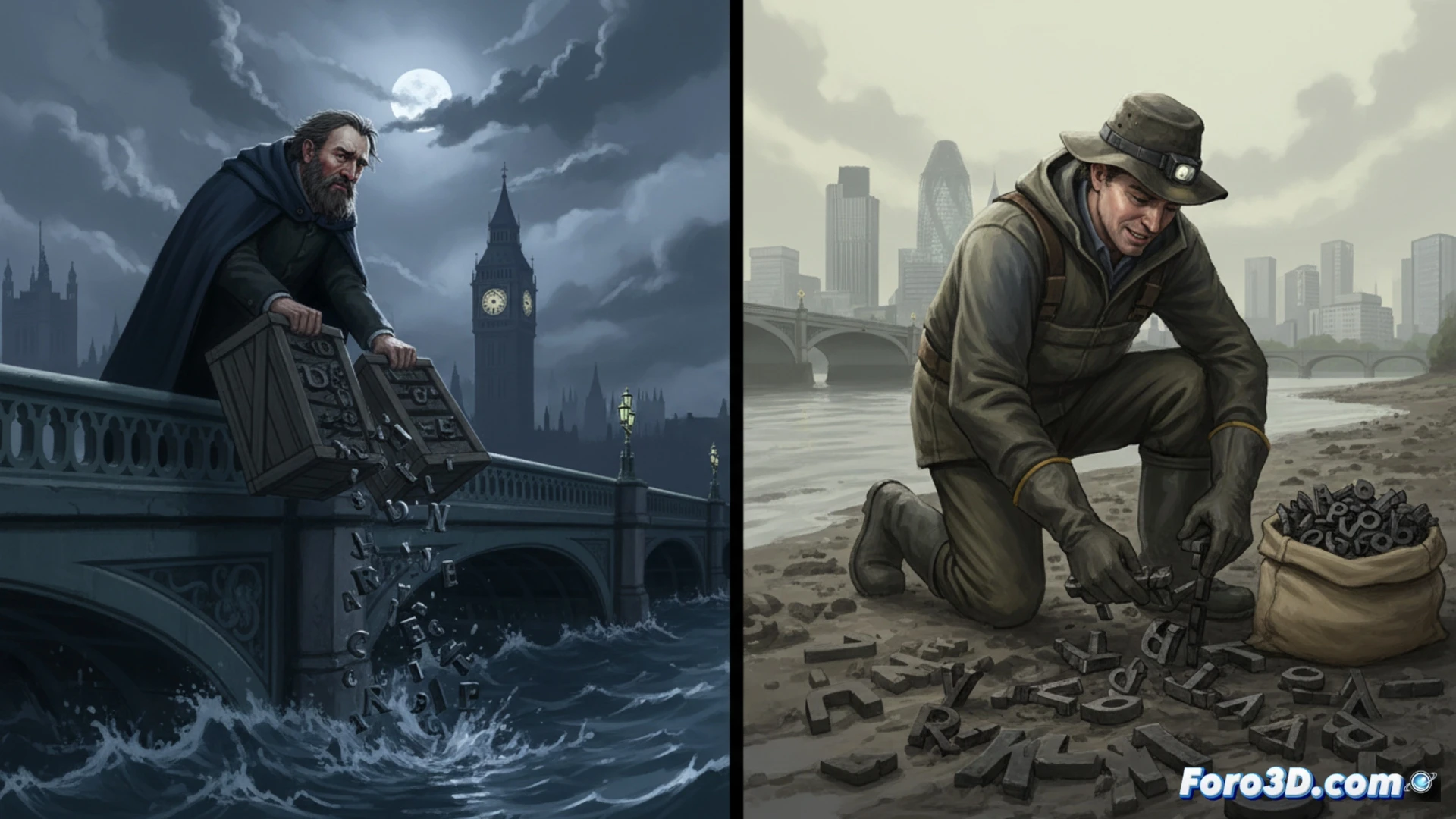
From mud to vector: the digital recovery of a masterpiece 🖋️
The Doves Type, a work of the Arts and Crafts movement, was designed by Thomas James Cobden-Sanderson. After its sinking, typographer Robert Green redrew the characters based on the rescued type pieces. Today, these lead fragments are scanned and vectorized to reconstruct the original font. Sandy combines river archaeology with 3D capture technology to document each piece, allowing current designers to access a typeface that seemed lost forever.
The partner who was left wanting (and the wet letters) 😅
Imagine having a falling out with your partner and, instead of mediating, throwing years of work into the river on nightly boat trips. That's what Cobden-Sanderson did with the Doves Type: 170 trips to the Thames so his ex-partner wouldn't see a single letter. The irony is that today, mudlarks fish out those letters as if they were lead Pokémon. The partner lost, but the treasure hunters gained a font with more history than many manuscripts.