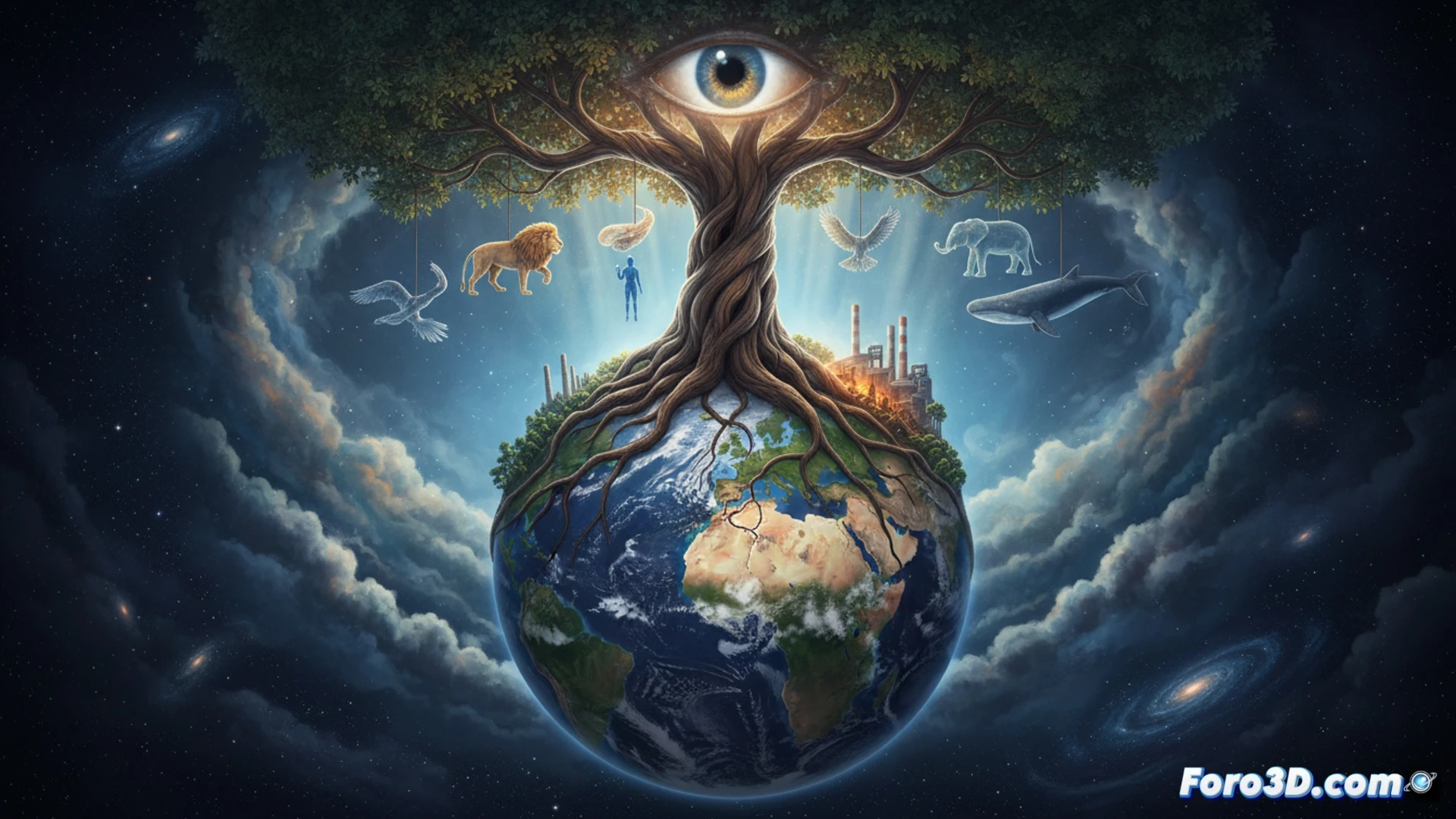
Environmental scientist Andreu Escrivà argues that humanity does not own the planet, but is just another species in the ecosystem. This anthropocentric view, with cultural and religious roots, has led us to an extractive and limitless relationship with nature, generating an ecological degradation that is now evident. Rethinking our role is urgent.
Technology for a more humble coexistence 🌱
In the technological field, the development of environmental sensors and satellite monitoring systems allows real-time measurement of human impact on resources. Renewable energies, such as solar and wind, reduce dependence on fossil fuels. However, these tools are not enough if the extractive logic persists. AI applied to waste management and precision agriculture can optimize land use, but they require a paradigm shift: moving from exploiting to coexisting with ecosystems.
Homo sapiens thinks it's the boss of the planetary office 🤦
It turns out that, after centuries believing we were the owners of the house, it turns out we are just tenants with a precarious lease. And on top of that, we have filled the house with plastics, cut down the garden to put in artificial grass, and complain that the air conditioning bill is going up. Meanwhile, the octopuses and squirrels look at us like someone watching the neighbor who blasts music at full volume on a Tuesday at three in the morning.