Military deterrence has entered a third nuclear era, marked by profound changes in the debate on atomic weapons. Countries such as India, Pakistan, Ukraine, North Korea, and Iran are key players in this new scenario. The military revolution has transformed traditional transparency, giving way to greater opacity and announcements of increases in global arsenals. France has also joined this trend, increasing its own nuclear arsenal.
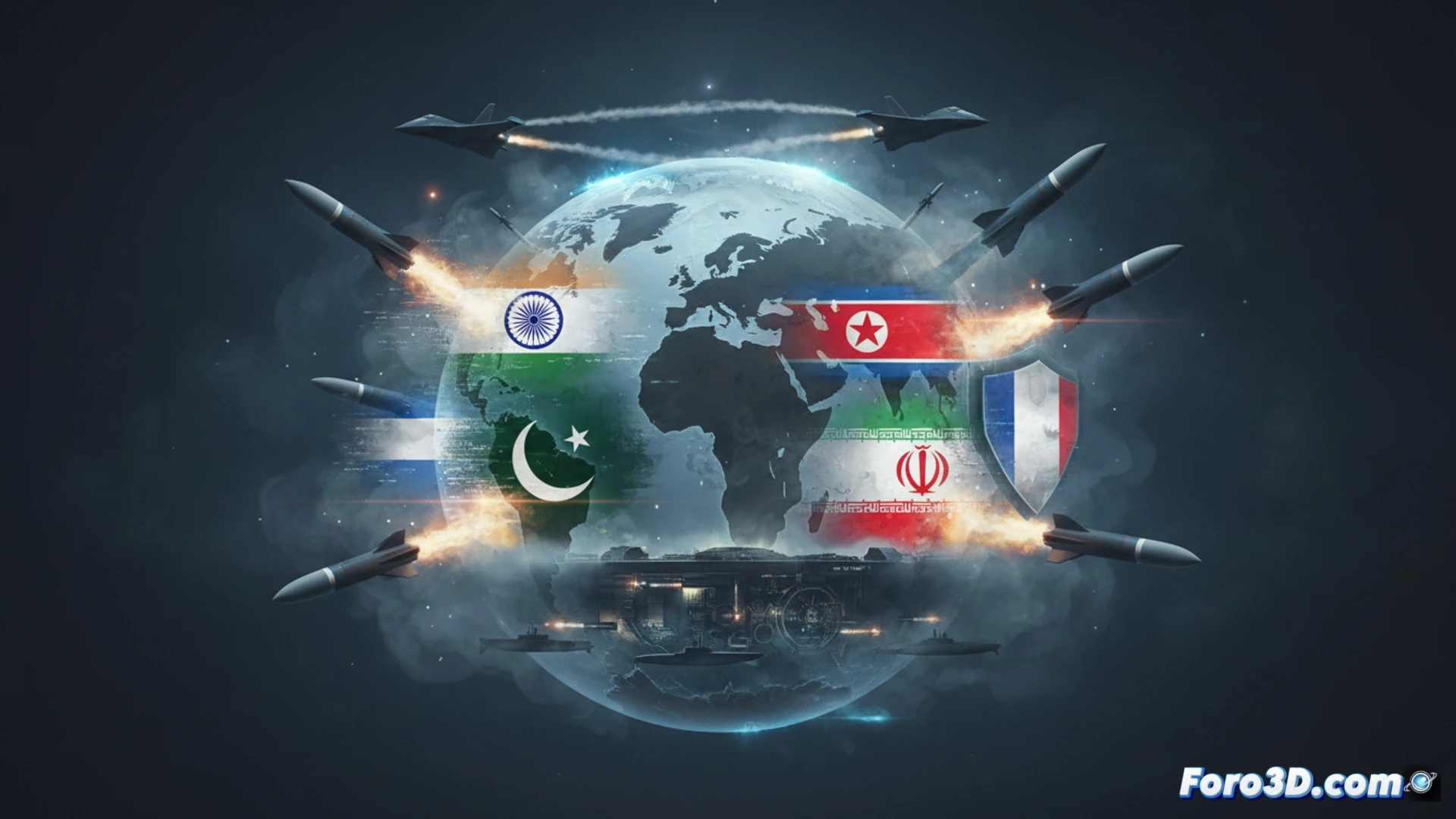
The technological shift towards strategic opacity 🚀
New missile technologies and launch systems have led countries to reduce public information about their nuclear capability. Opacity has become a deterrence tool, where secrecy about the number of warheads or their location generates uncertainty in the adversary. India and Pakistan maintain active programs, North Korea conducts tests without prior notice, and Iran advances its enrichment. France, for its part, modernizes its submarines and medium-range air-to-ground missiles, joining the race without declaring specific objectives.
The nuclear club: everyone wants to be a member, nobody pays the dues 😅
It seems that having a nuclear arsenal has become as popular as buying a new car. Everyone wants their own, but nobody wants to talk about the costs or risks. France jumps on the bandwagon by updating its arsenal, while Ukraine, without atomic weapons, dreams of recovering those it gave up in exchange for security guarantees that turned out to be worthless paper. In the end, deterrence is like a schoolyard fight: everyone threatens each other with the same stone, but nobody wants to be the first to throw it.