The trade of a formwork carpenter demands precision, strength, and resistance to the elements. 3D technology does not replace their experience, but rather enhances it. With digital models, assembly errors are avoided, wood usage is optimized, and work hours are reduced. A clear example: verifying the geometry of a curved wall before nailing the first board.
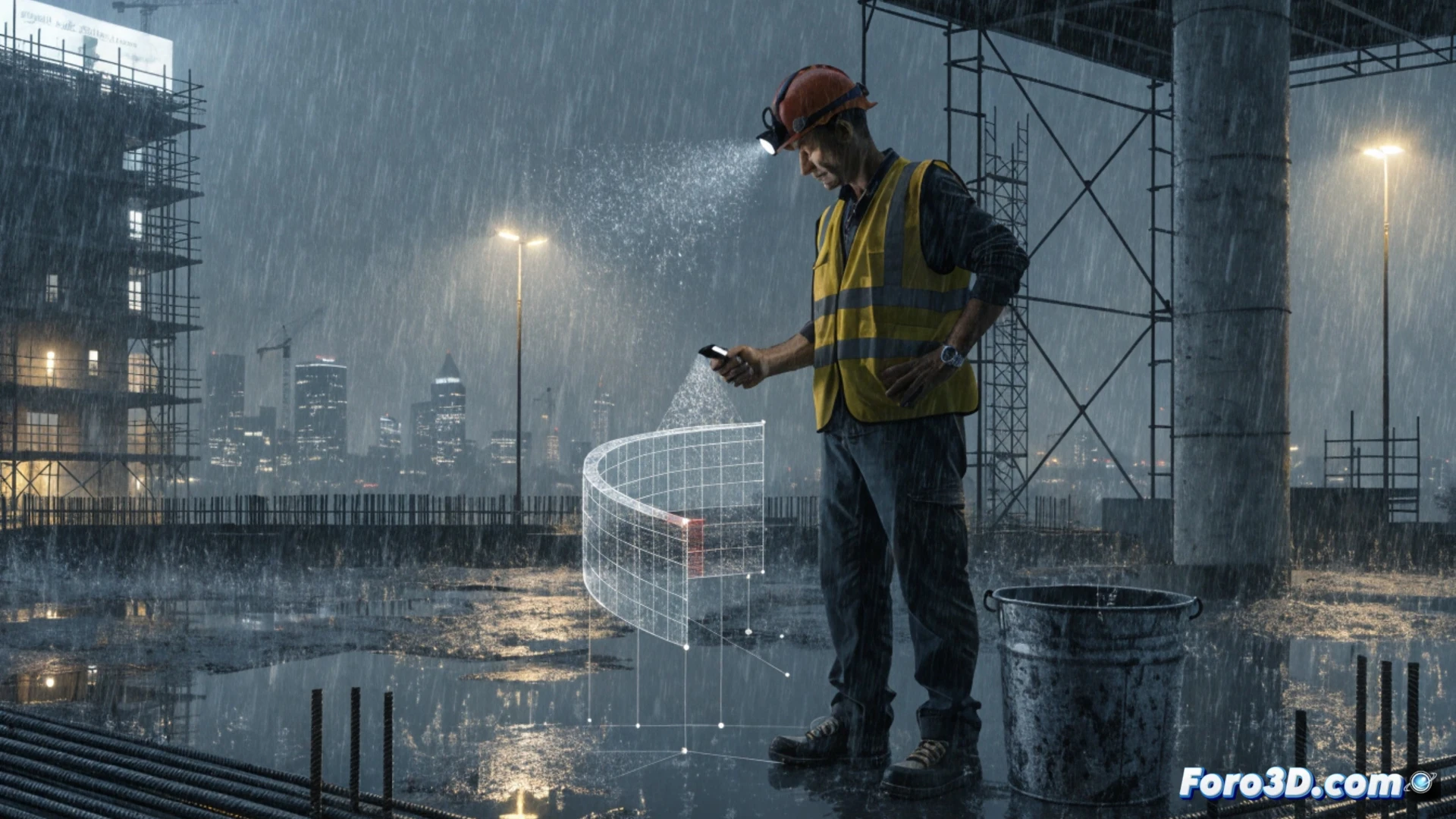
Plan in 3D to avoid sweating more 💪
Modeling software like Revit or SketchUp allows for creating the virtual formwork. The arrangement of panels, props, and beams is simulated, detecting interferences with installations. With a viewer like Navisworks, the site foreman reviews the assembly from the tablet. Additionally, layout programs like Trimble Field Link transfer the exact points to the terrain using a total station, saving tape measurements.
The formwork carpenter who doesn't get resin on their hands 🧤
Then Monday comes, it rains, and the digital plan gets wet. The foreman tells you to look at your phone, but your hands are covered in release agent. The touchscreen doesn't respond, and you end up measuring by eye, as always. 3D technology is all well and good, but no one has yet invented a mouse that can withstand a hammer blow. In the meantime, the spirit level remains the formwork carpenter's best friend.