The job of a crane operator demands millimeter precision to move heavy loads in complex environments. 3D technology allows simulating the work area, calculating boom angles, and avoiding collisions before lifting. A practical example: when mounting a beam on a building, the software models the outline of the structure and the load in real-time, showing the operator the optimal path.
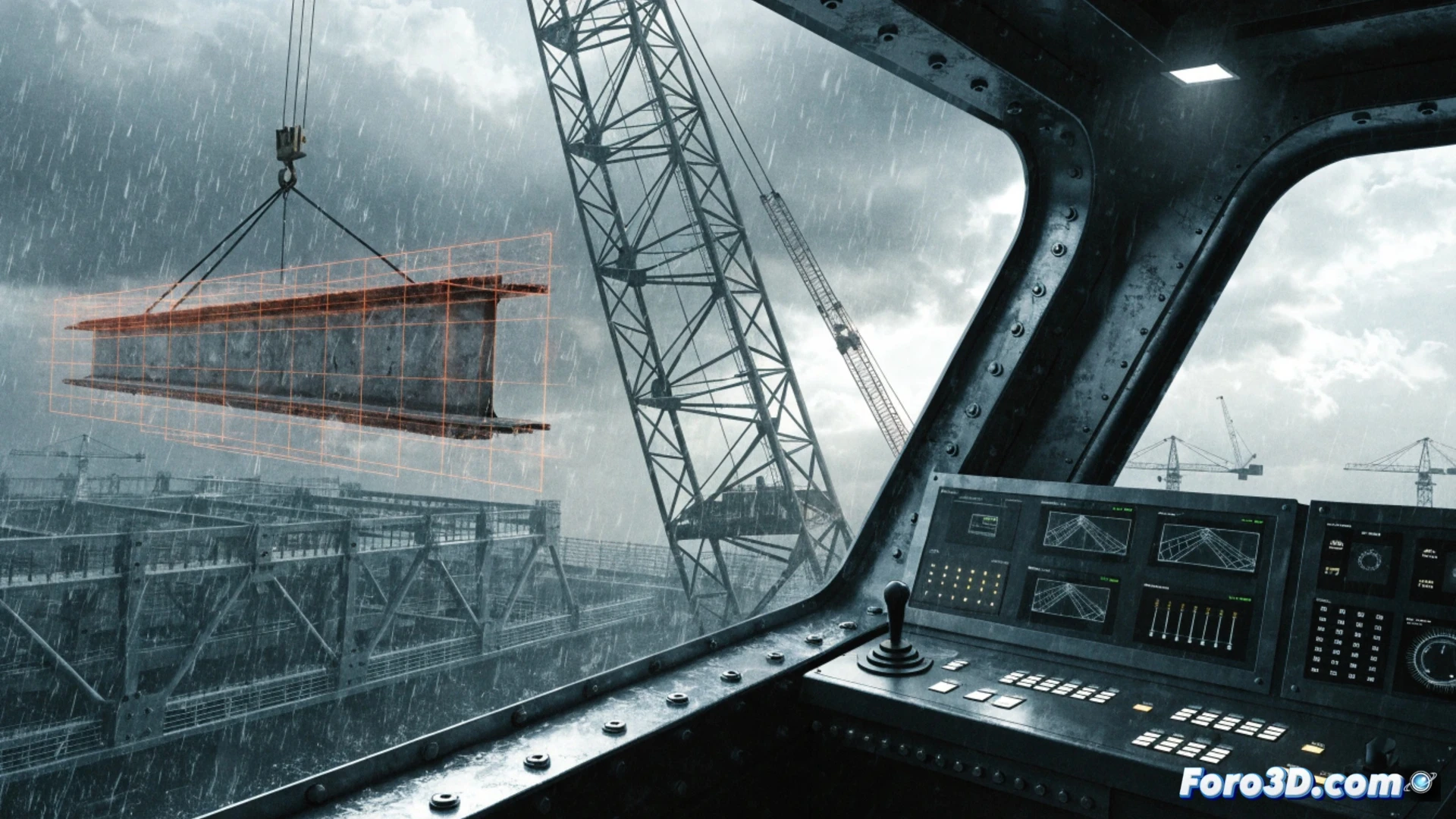
3D Simulation and Lift Planning Software 🏗️
Programs like Lift Planner or 3D Lift Plan allow importing CAD models of the terrain and the crane. The operator adjusts variables such as working radius, counterweight, and wind speed. The simulation calculates the load's center of gravity and the tipping moment. 3D laser scanners are also used to digitize the real environment and compare it with the virtual model, reducing errors in projects with confined spaces.
When the Software Says It Doesn't Fit, But Your Eye Says It Does 🤔
We all know that colleague who eyeballs the measurements and says: it fits just right, trust me. Then he spends half an hour readjusting slings while the foreman smokes his third cigarette. With 3D simulation, that same colleague discovers the beam hits a scaffold two seconds into simulating the swing. Fewer arguments and more time for coffee. Technology doesn't replace experience, but it prevents instinct from playing Tetris with the budget.