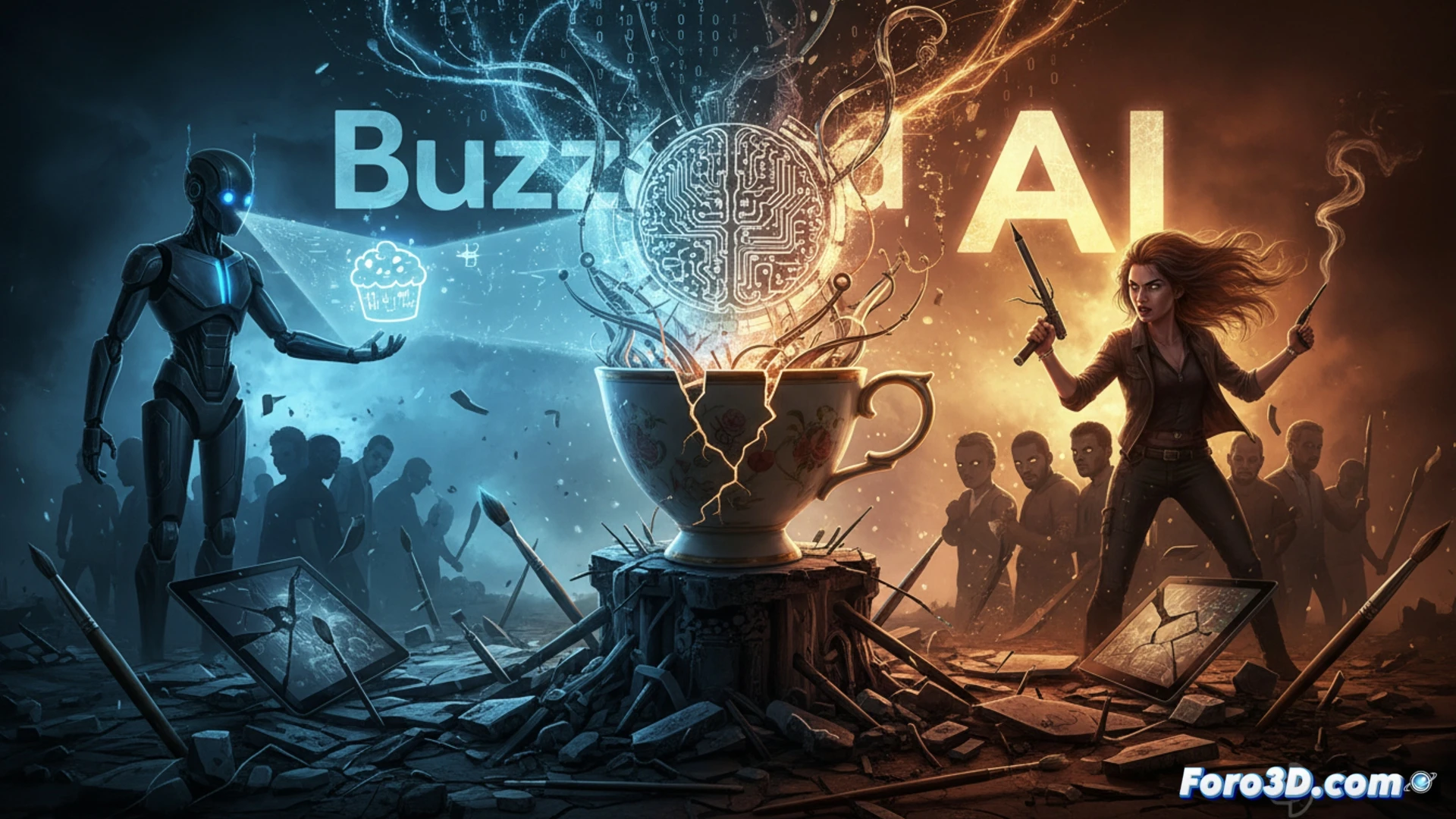
The creator of The Good Advice Cupcake, Loryn Brantz, denounced that BuzzFeed and Amazon plan to use her character in an animated series generated by artificial intelligence without her consent. She described the act as a direct attack on artists and called for a boycott of these productions. For the public, this highlights how AI can replace creative jobs and reduce the quality of entertainment. Rejection grows as employment and artistic authenticity are seen to be at risk.
How AI animation works without permission 🤖
The process involves training AI models with datasets that include copyrighted works, often without a license. In this case, the design of the talking cup would have been used to generate new frames and dialogues through video generation algorithms. Companies like BuzzFeed and Amazon use tools such as Stable Diffusion or proprietary models to reduce production costs. This eliminates the need for illustrators, scriptwriters, and animators, replacing their work with systems that mimic styles without understanding the creative context or respecting copyright.
The cup that speaks without asking permission ☕
So now an animated tea cup could have its own series without its creator seeing a penny. All thanks to the magic of AI, which borrows what it wants without asking. Next thing you know, animated cookies will demand royalties, or the cup character will refuse to serve coffee until it gets paid. Meanwhile, artists watch their characters come to life on other people's servers, hoping that a boycott will be more effective than asking a machine to have ethics.