In northern Iran stretches the Gorgan Wall, a gigantic brick barrier that stands as a testament to ancient military engineering. Known as the Red Serpent for the color of its materials, this 195-kilometer fortification surpasses the Great Wall of China in its original length. Its Persian Sassanid origin and defensive purpose are clear, but the construction methods and logistics required to build it remain an enigma for experts.
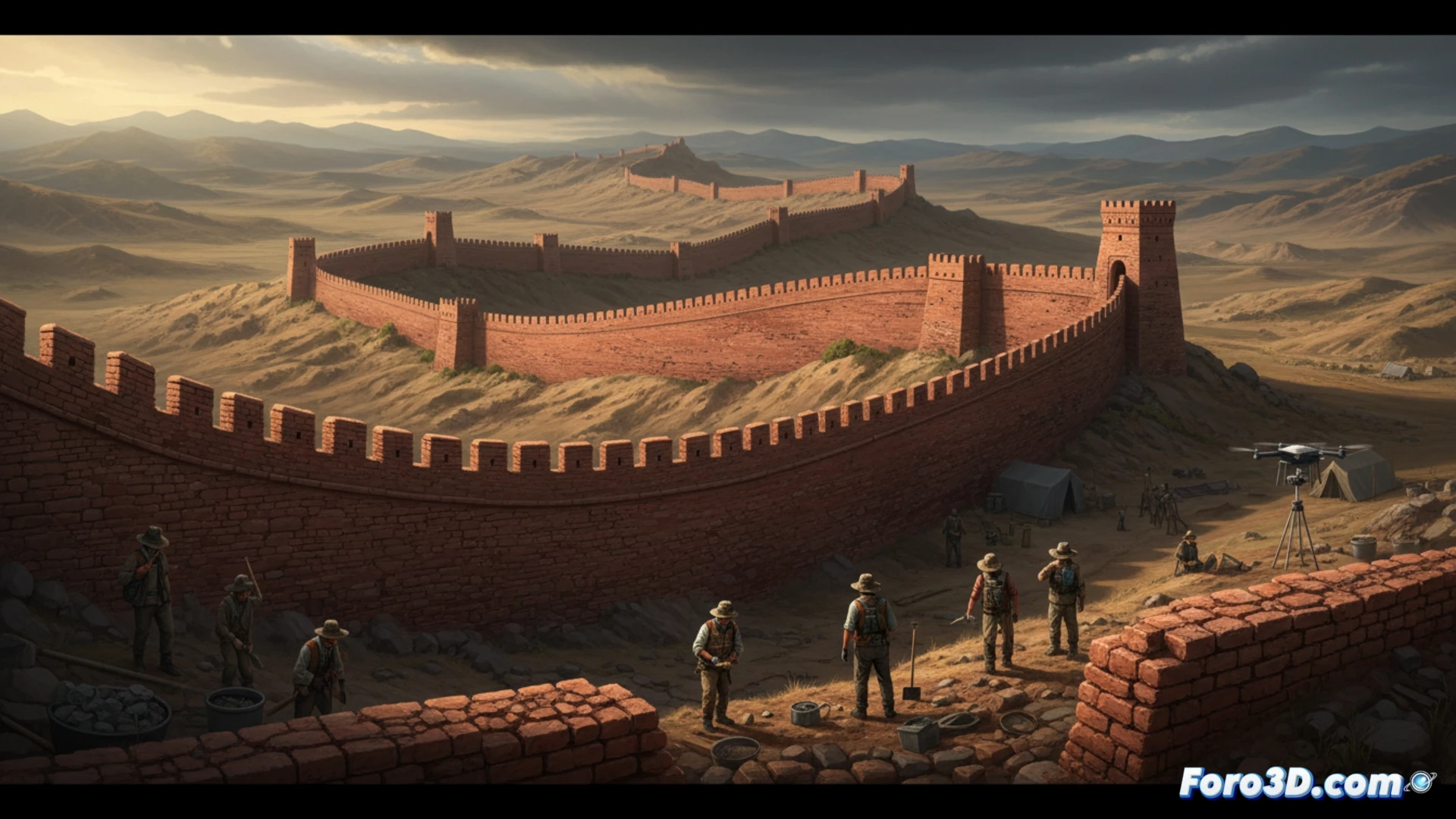
Fired brick engineering: the hydraulic technology of a forgotten empire 🏛️
The structure is not a simple wall. Archaeologists have identified over 30 fortresses and a system of canals that managed water in a flood-prone area. Each brick, uniform in size and fired in nearby kilns, was laid with a lime and sand mortar that has withstood centuries. Most striking is the precision of the design: the wall adapts to the terrain's topography, with a parallel moat that served as drainage and an additional barrier. The logistics of feeding workers and transporting materials over 195 kilometers suggest a supply chain more advanced than many contemporary Roman works.
The wall that couldn't stop the nomads (but did stop the archaeologists) 🧱
Despite its size, the Red Serpent did not stop invaders. In fact, historians believe it was abandoned before completion, making it the most expensive and least effective infrastructure project of antiquity. Imagine the budget: millions of bricks, decades of work, and in the end, the nomads entered from another side. Today, the wall serves as a point of debate for archaeologists, who argue whether it was defensive or just a way to keep subjects busy while the emperor had tea.