Seeing an actor play themselves in a series is a rare and cathartic pleasure. It is not a simple cameo, but a voluntary exposure to the satire of one's own public image. Bradley Cooper in Abbott Elementary or Bob Saget in Entourage demonstrate how these moments require complex visual planning so that the exaggerated version of the actor fits into the fiction without breaking the fourth wall.
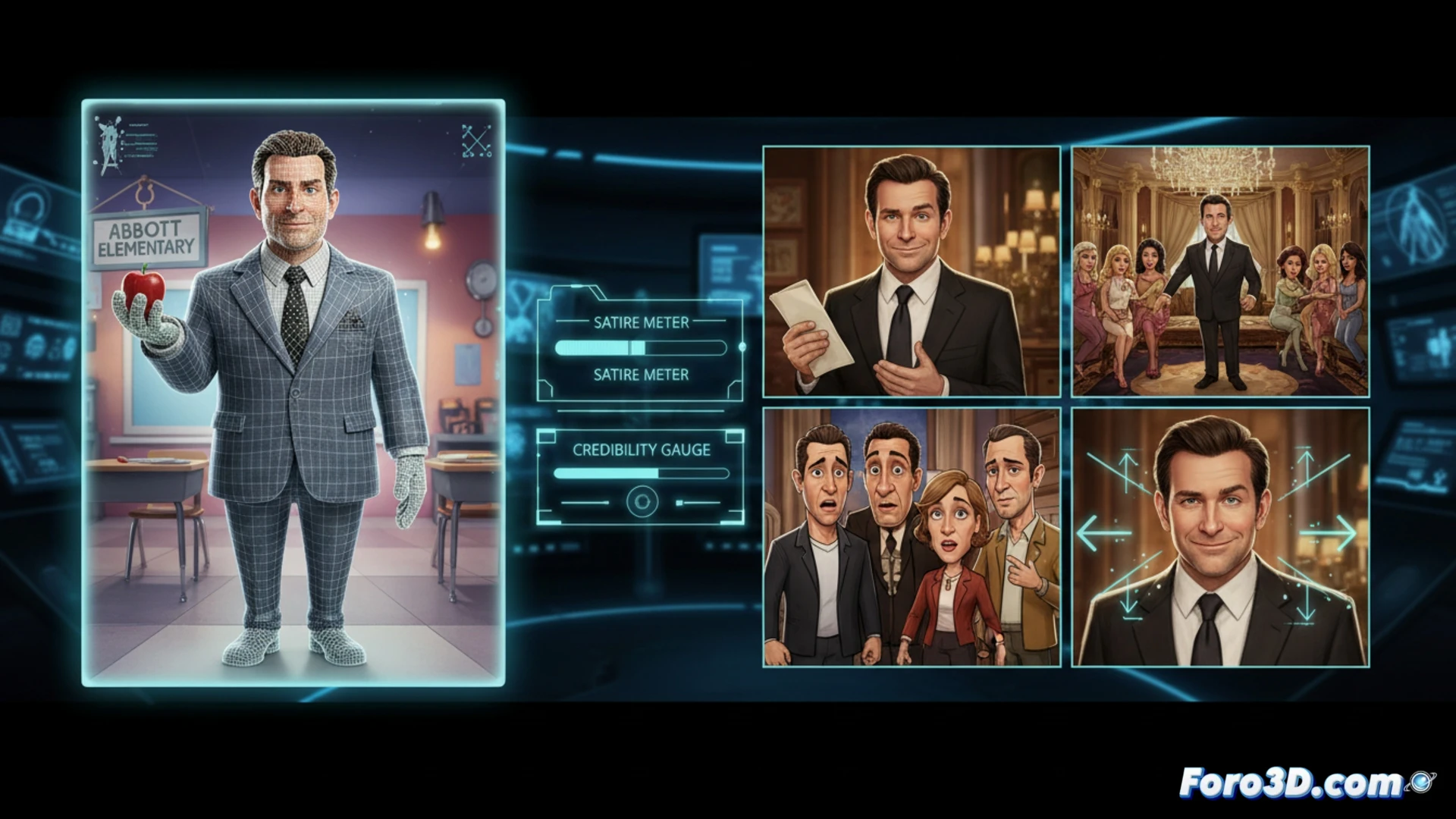
3D Storyboards for Integrating the Public Image 🎬
The technical key to these cameos lies in previsualization, specifically in creating 3D storyboards that anticipate the interaction between the real actor and the fictional cast. For example, in the Abbott Elementary episode, Bradley Cooper's entrance as himself required planning the framing so that his movie star aura visually clashed with the series' documentary aesthetic. Using animatics, cinematographers can adjust the lighting to highlight the incongruity: a harder, more contrasted light on the guest actor versus the soft lighting of the rest of the set. This reinforces the satire by making him appear as an object out of place, an element extracted from another narrative.
The Visual Choreography of Self-Awareness 🎭
The true art lies in choreographing the moment when the actor makes fun of themselves. In the case of Bob Saget in Entourage, 3D previsualization allowed rehearsing the transition from his familiar Full House image to his real obscene humor. The sequence shots and camera movements were designed to isolate his figure, creating a confessional space where the fictional character and the real person collide. Thus, the cameo ceases to be a trick and becomes a visual narrative statement, where the viewer is complicit in the breaking of the illusion.
How 3D previsualization affects the design of the mise-en-scène and the breaking of the fourth wall in television cameos where an actor plays themselves in a self-parodying way
(PS: Previs in film is like a storyboard, but with more possibilities for the director to change their mind.)