The Stone of Destiny, also known as the Stone of Scone, is one of the most enigmatic symbols of the Scottish crown. According to tradition, the kings of Scotland were anointed upon it until 1296, when Edward I of England took it as spoils of war. However, a persistent theory suggests that the monks of Scone hid the real stone and handed over a sandstone copy. Today, digital archaeology offers tools to solve this centuries-old mystery. 🏰
Photogrammetry and 3D Scanning: Virtual Autopsy of a Myth 🔍
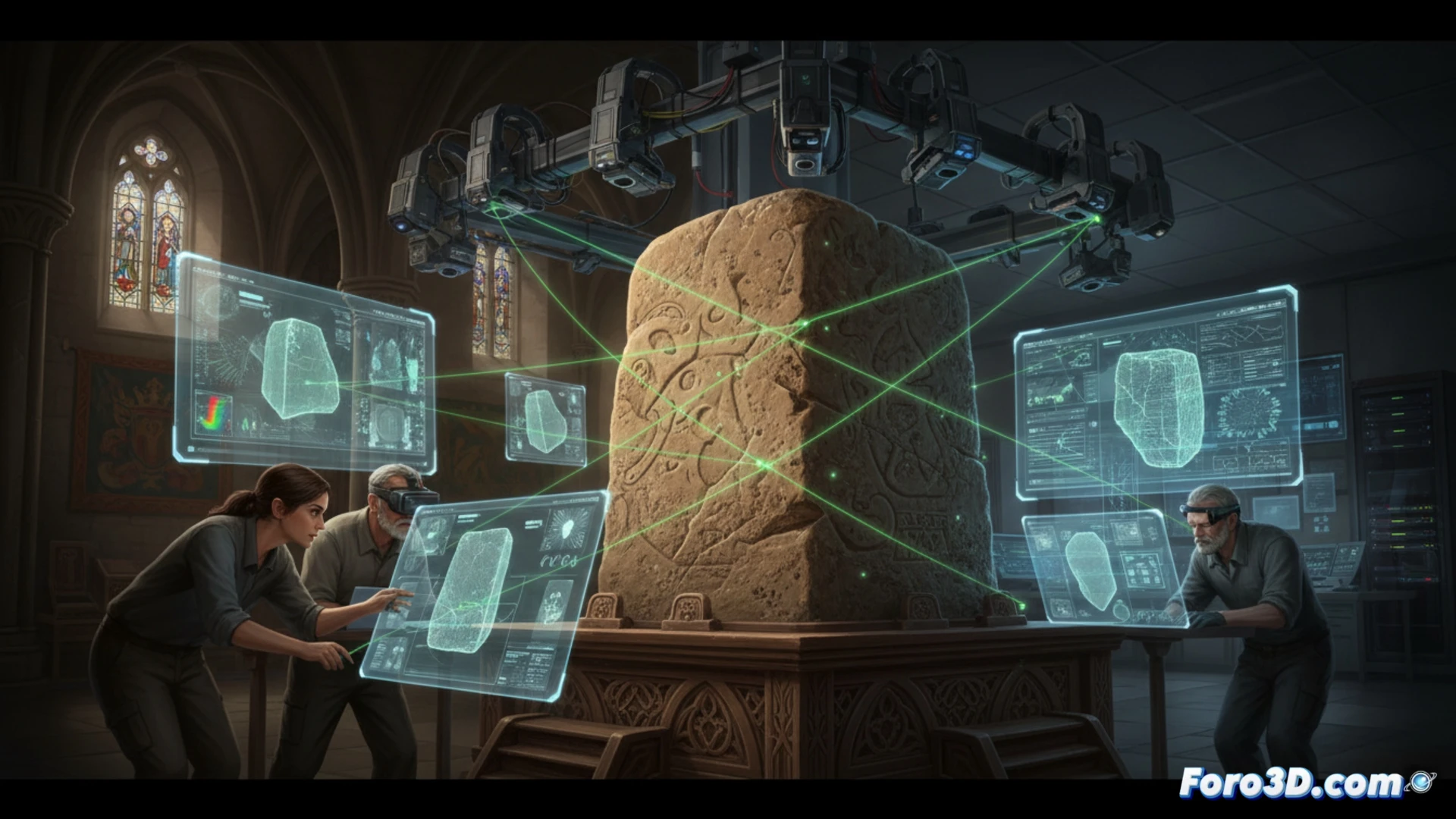
The application of laser scanning and high-resolution photogrammetry techniques would allow the generation of an exact digital twin of the current stone, kept at Edinburgh Castle. This 3D model could be compared with medieval historical descriptions, analyzing wear patterns, mineral inclusions, and quarry marks. A digital petrographic study would reveal whether the block's composition matches the sandstone quarries of Scone or, on the contrary, belongs to a different geological source, such as the quarries of Perthshire. Furthermore, surface micro-topography analysis could detect signs of artificial wear or modern alterations, determining whether the piece was carved to simulate an age it does not possess.
Digital Heritage as the Judge of History ⚖️
Beyond a mere technical exercise, this research poses a fascinating dilemma: if technology were to prove that the stone is a copy, should we continue to venerate it as a national symbol? Digital archaeology not only verifies authenticity but also allows for the virtual reconstruction of the lost original stone, returning to Scotland a piece of its identity that time and legend have concealed. In a world where the digital can preserve the tangible, the true Stone of Destiny might be waiting to be found in a three-dimensional data archive.
Is it possible to determine the medieval authenticity of the Stone of Destiny through a digital analysis of its wear, quarry marks, and microtopography without the need for destructive samples?
(PS: If you dig at a site and find a USB stick, don't plug it in: it could be Roman malware.)