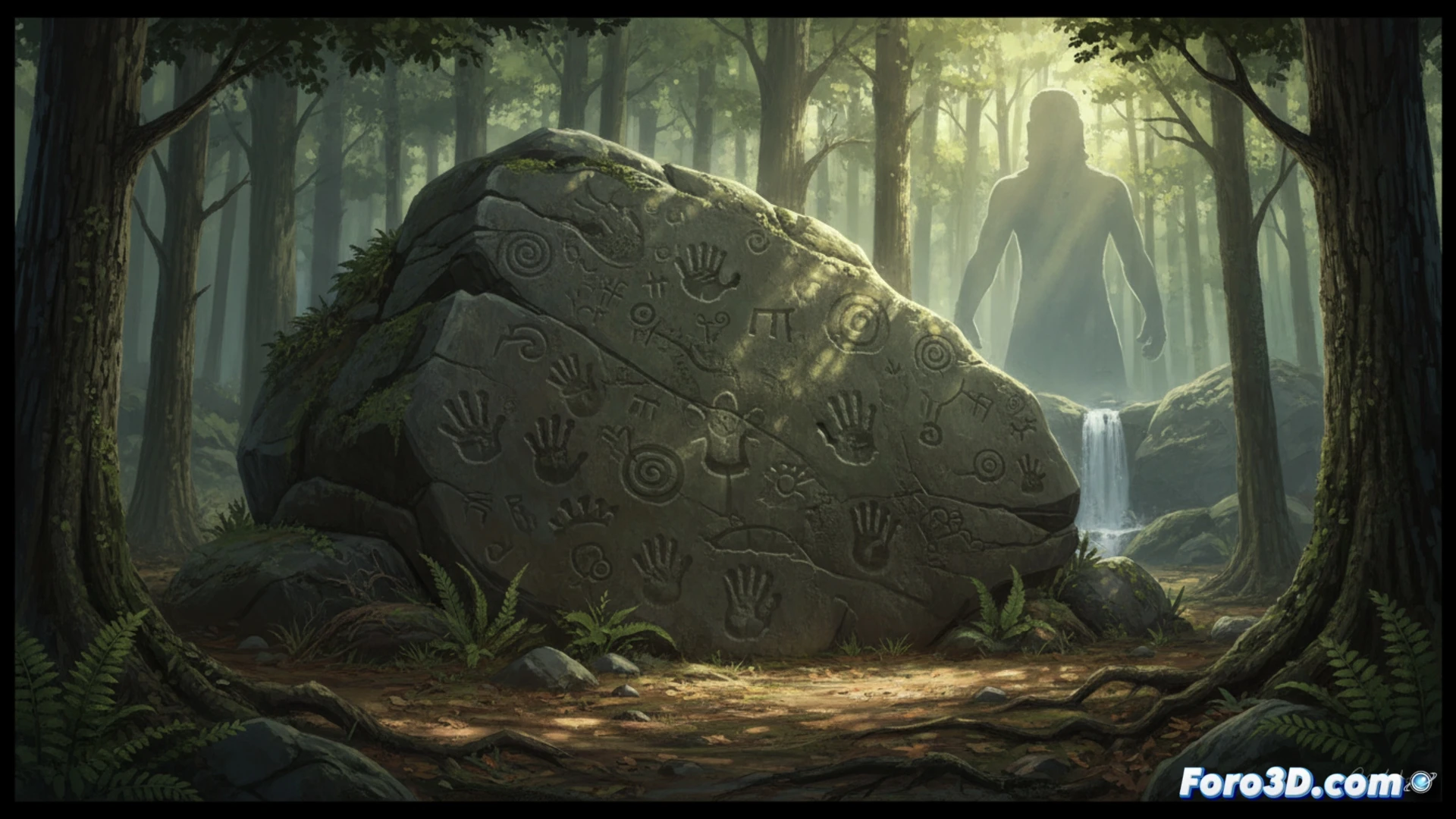
In Jackson County, North Carolina, lies a twelve-ton block of soapstone known as the Judaculla Rock. Its surface is covered in petroglyphs that do not match known Native American art: seven-fingered handprints, concentric circles, and geometric shapes. Local Cherokee people say it was created by a giant hunter, but no one has deciphered its true origin or function.
Technical analysis of the engravings and their possible dating 🧐
The petroglyphs were carved with stone tools, likely striking the soapstone with quartzite. Archaeologists have attempted to date the piece by analyzing the erosion of the grooves and the mineral's patina. Estimates place its creation between 500 and 1500 AD, but there is no consensus. The symbols do not match the writing systems or iconography of the region's tribes, suggesting external influences or a lost ritual purpose. The lack of direct archaeological context complicates any firm conclusions.
When a giant with seven-fingered hands leaves you his business card 🏔️
According to Cherokee legend, Judaculla was a giant who jumped between mountains and left his footprints on the rock. If the guy had seven fingers, perhaps he wasn't a hunter, but a frustrated pianist or a typing expert. The truth is, a thousand years later, we still don't know if it's a star map, a rental contract, or simply the first meme ever carved in stone.