When you upload a file to the cloud, it doesn't travel to a magical realm of floating data. Your photos, documents, and backups reside on physical hard drives stacked in data centers with cooling, surveillance, and electrical generators. Understanding this is not just technical curiosity; it's the first step to knowing where your information is and how to protect it from real risks like power outages or hardware failures.
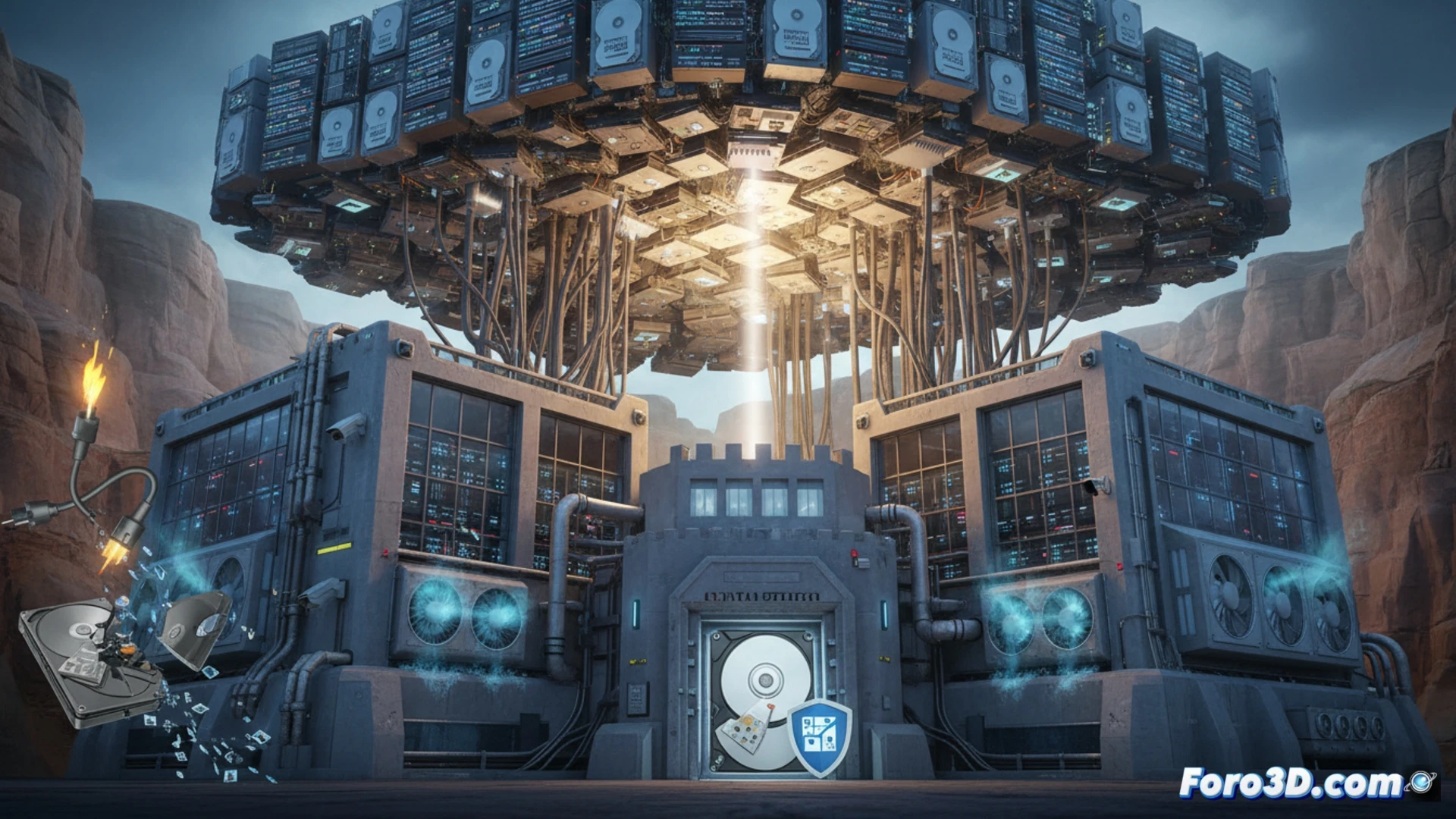
How Replicas and the Physical Location of Data Work 🗺️
Cloud providers replicate your data across multiple servers and geographic zones to prevent loss. Each file is fragmented, encrypted, and distributed among several disks. If one fails, the system rebuilds the information from another copy. However, location matters: local laws may allow government access without notice. That's why, when choosing a service, check where their centers are and what privacy policies they apply. Not everything that shines in the cloud is transparent.
Your Meme Folder Has an Air-Conditioned Closet ❄️
While you watch a dancing cat in the cloud, somewhere in Virginia or Dublin, a hard drive is spinning at 7200 RPM to show you that pixel. If the server overheats, a technician in a Star Wars t-shirt runs to replace it. Your entire album of blurry photos lives in a building with more security than your bank. And yes, if you don't pay the subscription, that hard drive shuts down, and your memes return to the digital oblivion from which they never should have emerged.