The city of Chongqing is moving towards a technology-driven economic model, but along the way it is forgetting the bangbang porters, informal workers who carry goods through the steep streets. Modernization eliminates their jobs without offering viable alternatives, revealing a social hypocrisy that celebrates progress while abandoning those who sustained local logistics for decades. Efficiency has a human cost that is not acknowledged.
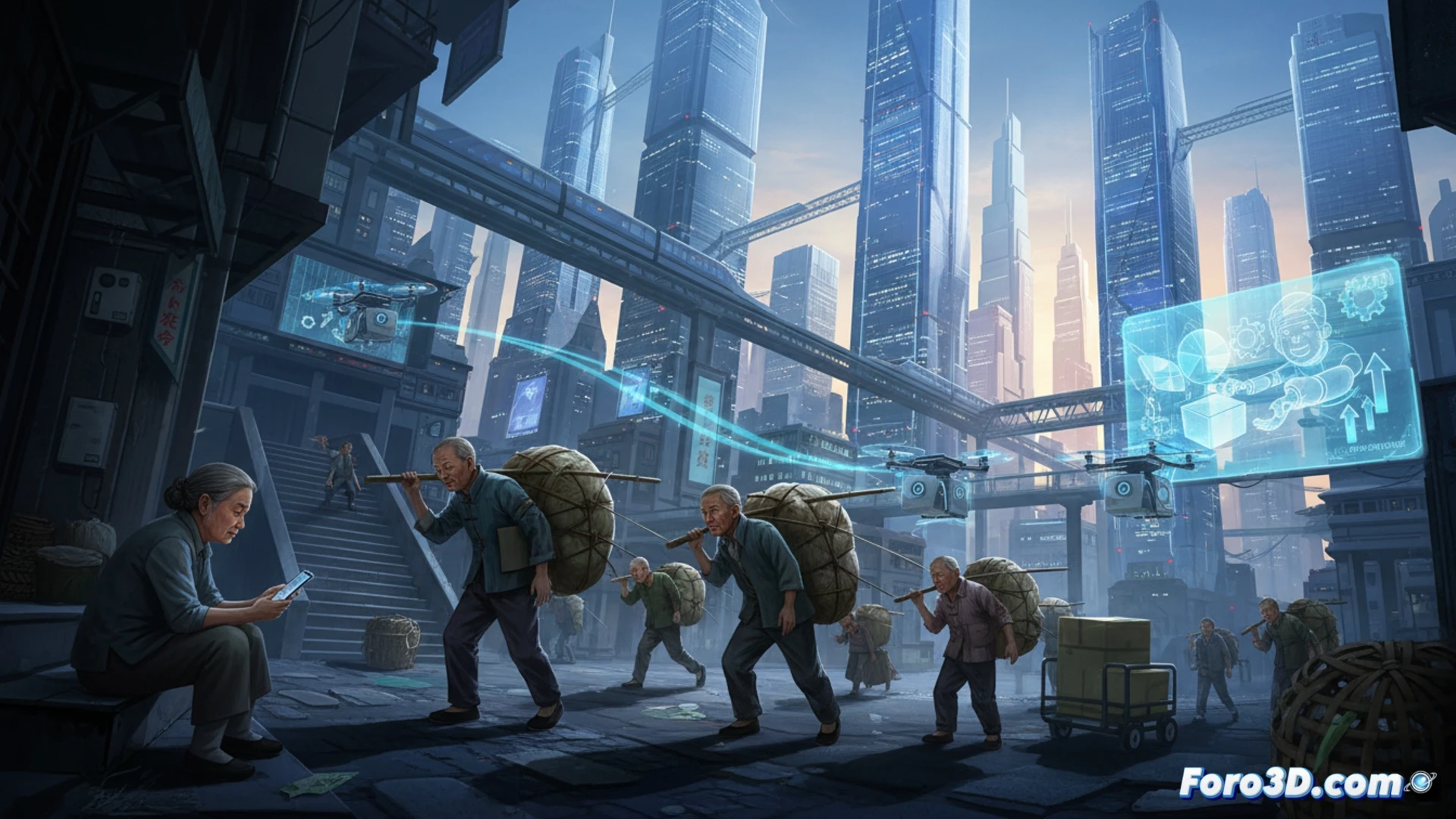
The hidden cost of technological efficiency on the streets of Chongqing 🏙️
Automated delivery systems and digital logistics platforms have reduced the demand for manual porters. According to local data, the number of bangbang has dropped by 40% in five years. The city benefits from clearer streets and fast deliveries, but it has not implemented job retraining programs or temporary subsidies for these workers. The economic transition is necessary, but without state support, it leaves thousands without immediate options or safety nets.
Progress that does not carry its own weight ⚖️
Now the bangbang no longer carries loads, but the weight of obsolescence. While the city boasts of its smart skyscrapers, they watch their trade disappear without a rescue plan. Perhaps the next step is to offer them an express Python programming course, just when they barely have time to learn how to use a smartphone. The irony is that modernization advances, but its human cost is still borne by the same people as always.