A recent study published in Nature reveals that global light pollution increased by 16% between 2014 and 2022. This increase in artificial light at night is disrupting the human sleep-wake cycle, suppressing melatonin with cool lights and raising the risks of diabetes, depression, and obesity. Wildlife is not spared either: migratory birds become disoriented, insects die, and nocturnal mammals lose their habitats.
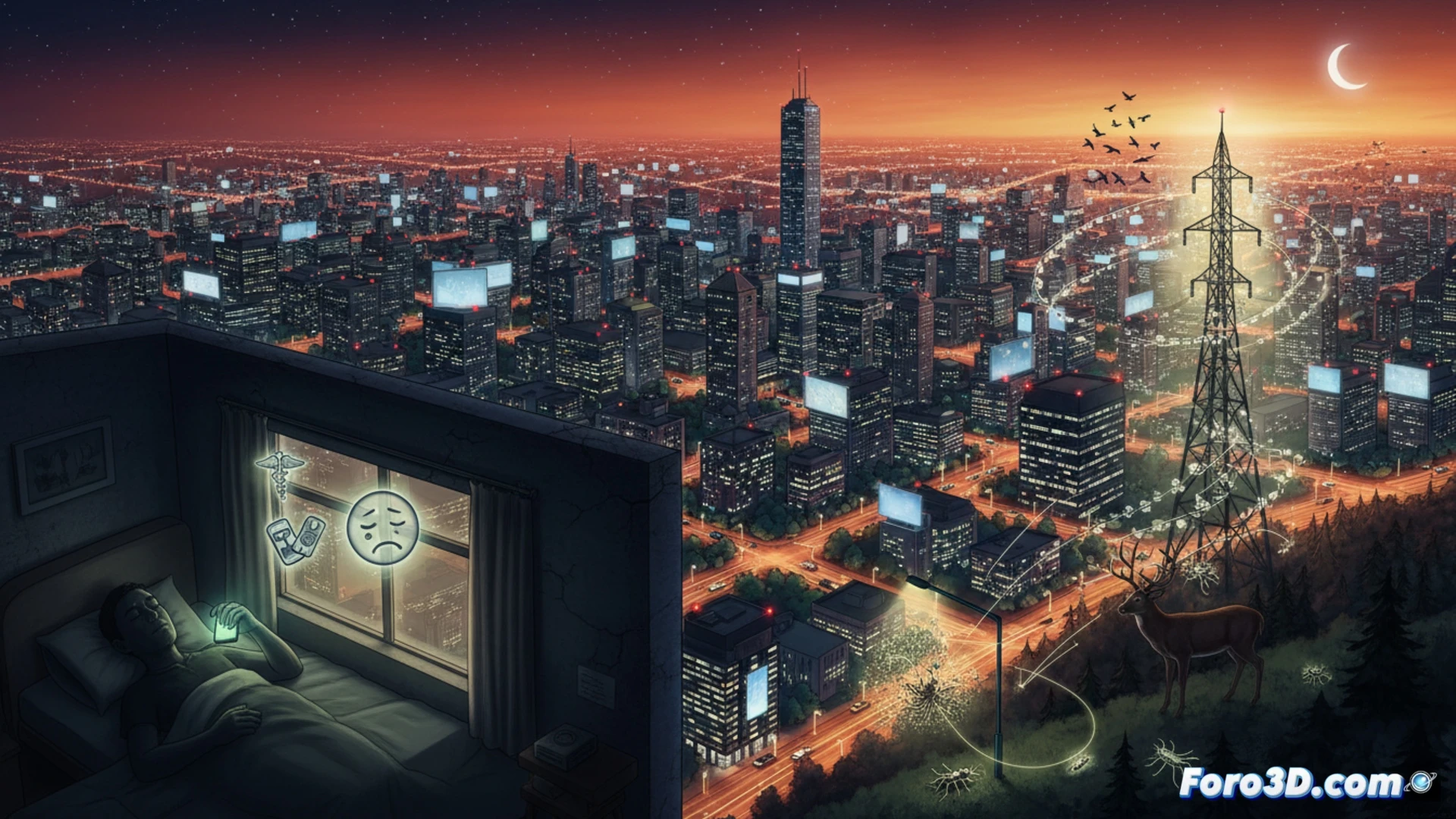
The technical challenge of mitigating light pollution 🌙
The solution involves redesigning public and domestic lighting systems. Warm-spectrum LED lights (below 3000K) emit less blue radiation, the main culprit in suppressing melatonin. Motion sensors and timers allow reducing light intensity when there is no activity. Outdoors, using fully shielded luminaires prevents beam dispersion toward the sky. These measures are viable and do not require turning everything off, only lighting with criteria.
Turn off that light, we are not fireflies in concert 🦇
It seems we have insisted on turning night into perpetual day, as if we feared darkness would devour us. Meanwhile, insects wonder why there are no more blind dates under the moon. And we, with our phones on the nightstand, complain that we cannot sleep. Perhaps the smartest thing is to imitate bats: go out at night, but without streetlights. Ironies of progress.