In Howl's Moving Castle, Hayao Miyazaki dismantles conventional war narratives. While other films explain causes and sides, here war is an absurd background noise that only interrupts breakfast. The plot advances through feelings: Sophie's love, Howl's fear, Calcifer's tenderness. It doesn't matter who fires first, but how the characters feel about the chaos. A screenwriting lesson that prioritizes the heart over the strategy manual.
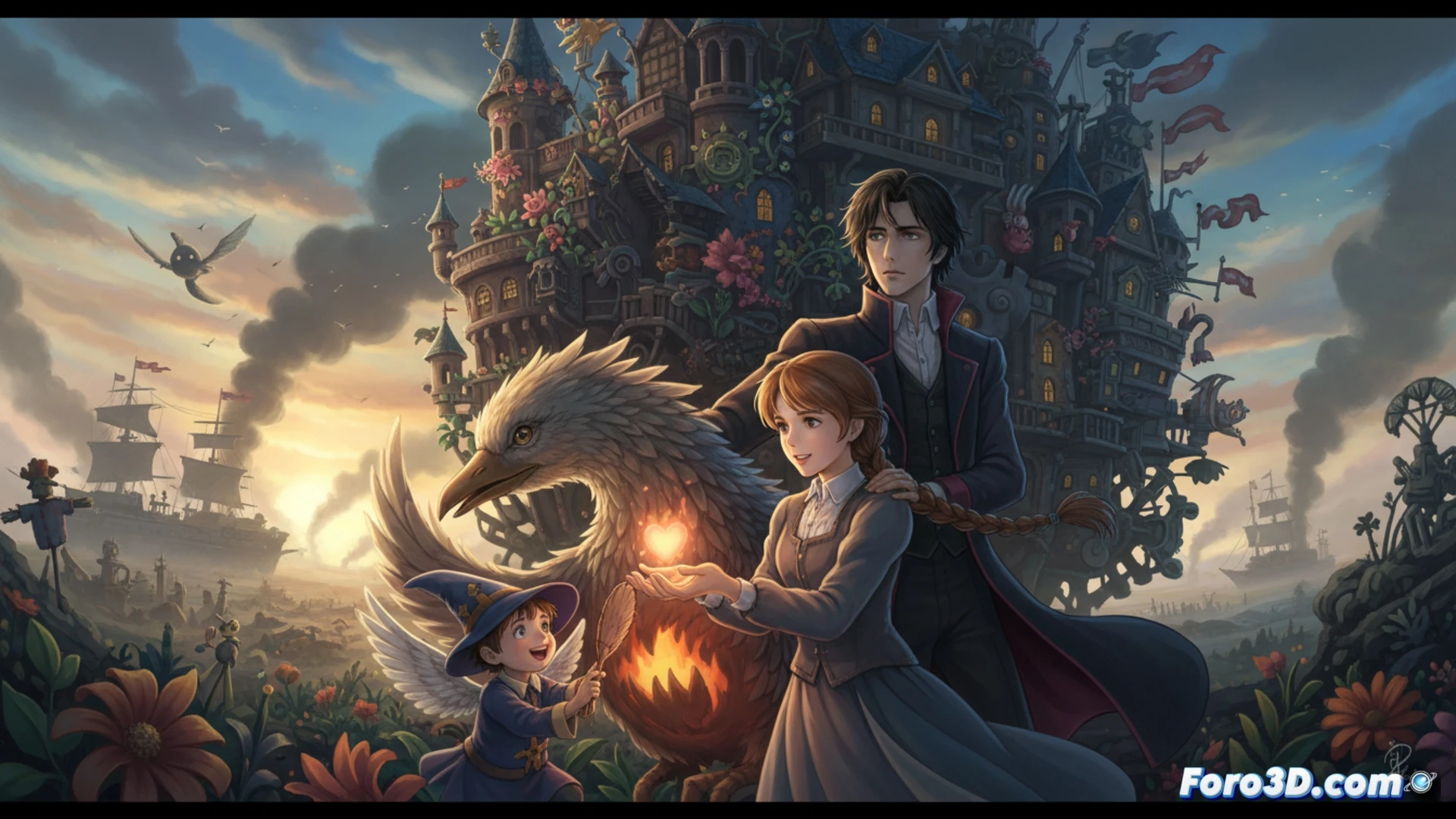
Animation as an emotional engine: textures and movement 🎨
Studio Ghibli applied hand-drawn animation techniques to reflect internal states. The moving castle moves with clumsy steps when Howl is depressed, but flies lightly when he feels free. The watercolor backgrounds change color according to emotional tension, not the time of day. The bombing sequence uses subjective shots that avoid showing the enemy, focusing on Sophie's panic as she protects others. It's a narrative design where technology serves feeling, not realism.
How to explain war to your partner while she sweeps the kitchen 🧹
Miyazaki shows us that, amidst bombings, the urgent thing is to sweep the house and prepare breakfast. While Howl transforms into a bird and confronts planes, Sophie organizes her closet and argues with a decrepit witch. The moral is clear: if your relationship survives a magical war without anyone putting on the washing machine, you have material for marriage. External chaos is less serious than leaving socks out of the basket.