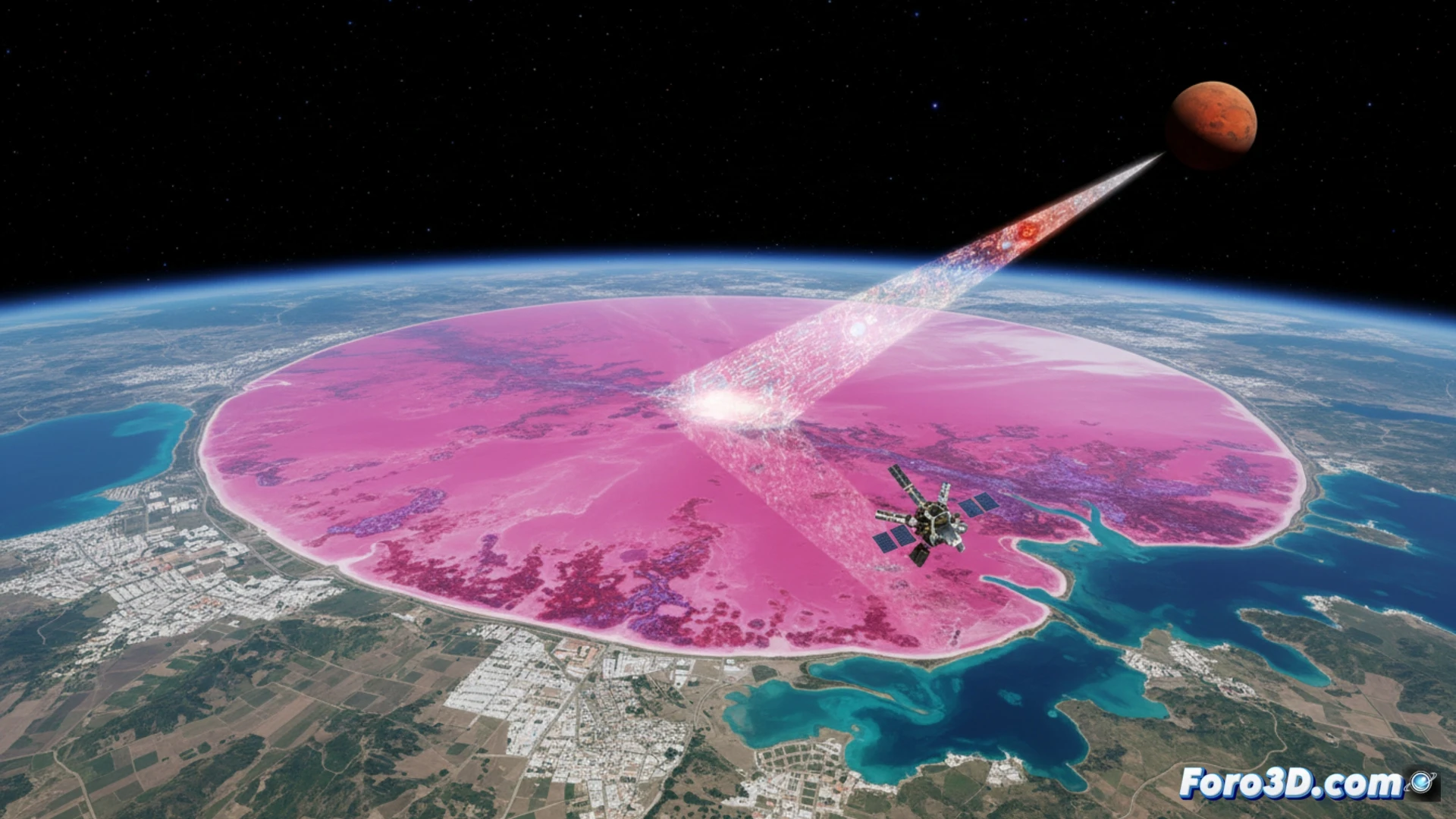
NASA has captured the intense pink color of the Torrevieja salt lagoon in Alicante from the International Space Station. This hue is produced by a microalgae and bacteria that thrive in high salt concentrations. The neighboring La Mata lagoon, with less salt, appears a dull green. It is not just a visual phenomenon: scientists study it to search for clues about life on Mars.
Extreme microorganisms as a model for Martian exploration 🚀
The conditions of the Torrevieja lagoon, with extreme salinity and high solar radiation, are a terrestrial analog of certain environments from Mars' past. Researchers analyze how the microalgae Dunaliella salina and halophilic bacteria survive in this hostile environment. The goal is to develop biosensors and detection techniques that allow identifying signs of life in future missions to Mars, where similar salt deposits have been found.
Martians are already in Alicante, but they are pink and don't pay property tax 😂
While NASA spends millions searching for life on Mars, it turns out we have it in the Vega Baja, taking photos from the ISS. The Torrevieja microalgae have been living like queens in salt water for centuries without paying taxes or asking for subsidies. That said, if we ever colonize Mars, we already know where to look for the first mayor: it will surely be a halophilic bacterium with a lot of nerve and a pink hue.