The Old Guard, by Greg Rucka and Leandro Fernández, is not just an action comic; it is a visual study on eternal exhaustion. Its noir style, based on a fierce contrast of black masses and cinematic storytelling, offers a perfect manual for 3D previsualization. Analyzing how to translate those heavy shadows and the solitude of time into a three-dimensional storyboard is the first step to capturing the essence of immortality on screen.
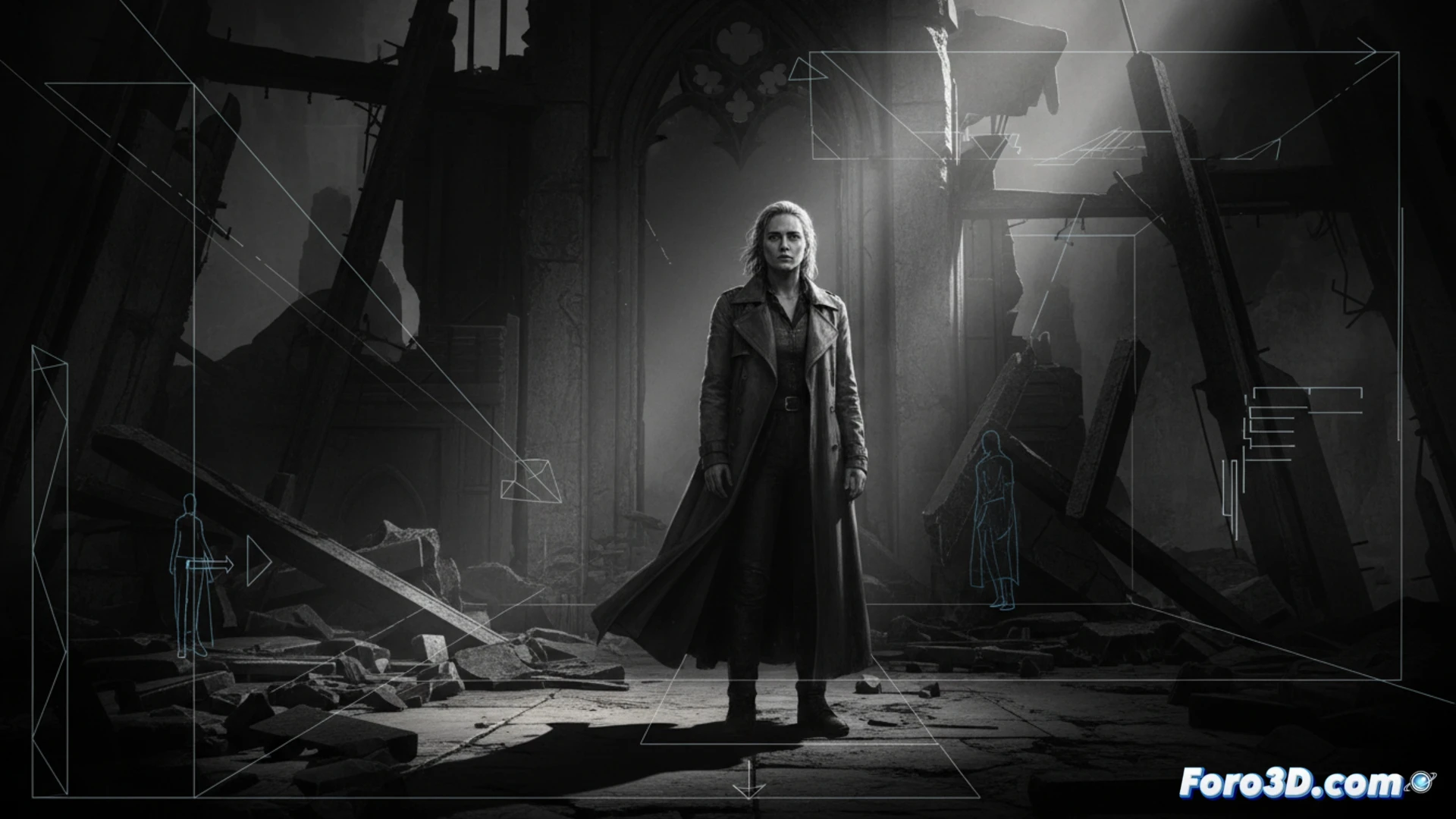
Volumetric Lighting and Noir Composition for Previs 🎬
To replicate the atmosphere of The Old Guard in previsualization software like Unreal Engine or Blender, the key lies in hard lighting and extreme contrast. We must avoid diffuse ambient light; instead, use single directional light sources (key light) that generate dense, deep shadows, hiding faces mid-frame. The digital chiaroscuro technique is achieved by mapping areas of total black in the composition, using volume cubes to simulate smoke or dust that attenuates the light. This allows the viewer to feel the weight of centuries on the characters, even in a preliminary 3D storyboard. The camera should prioritize wide open shots and reverse shots with plenty of negative space, reflecting the group's isolation.
The Weight of Time in the Three-Dimensional Storyboard ⏳
The visual narrative of The Old Guard demands that immortality feels like a visual burden. In previsualization, this translates to slowing down the pacing of the shots. It is not about fast action, but about static shots and slow tracking movements that allow light to traverse the space. The 3D storyboard must prioritize the texture of light over model detail. When lighting the characters, use hard shadows to hide their eyes, creating emotional distance. This technique, combined with a palette of grays and blacks, transforms a simple dialogue scene into a confession of centuries of war. Current technology allows these volumetric sketches to communicate more emotion than a polished render.
What do you think about this advancement?