3D technology does not replace the feel of leather or the smell of glue, but it does solve practical problems for the bookbinder. From creating precision tools to manufacturing spare parts for old presses, additive printing has become an unexpected ally. If your craft involves joining pages, perhaps it's time to understand how a plastic filament can save you hours of manual work.
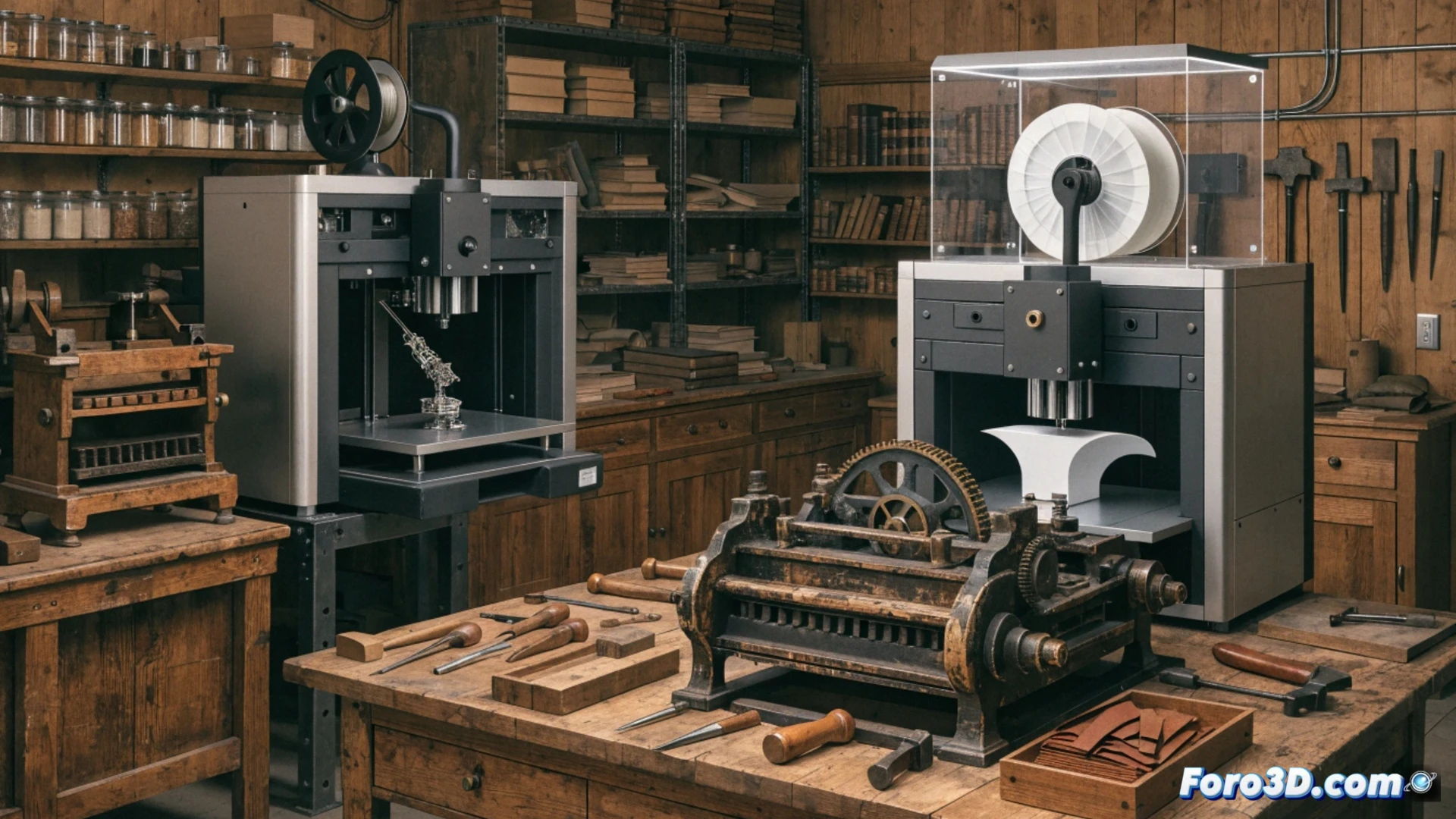
Real example: a curved spine and a custom guide 🛠️
Imagine you need to bind a book with a round spine and cannot find a metal guide of the exact thickness. With a 3D modeler like Fusion 360 or Blender, you design a curved template tailored to your measurements. You print it in PLA with an Ender 3 or Prusa, and in less than an hour you have a precise tool that prevents the cardboard from shifting when gluing the fabric. Programs like Cura convert the design into layers. The result: fewer errors and more consistency.
Because losing a 19th-century press is a drama 😅
I admit, seeing a bookbinder use a 3D printer has its ironic side. Your grandfather used a steel chisel; you use an .stl file. But when the wheel of your manual press breaks and the corner blacksmith no longer exists, you'll be glad to have a spool of PETG. That said, don't tell the purists that you repaired an 1890s tool with melted plastic from a machine that looks like a toy.